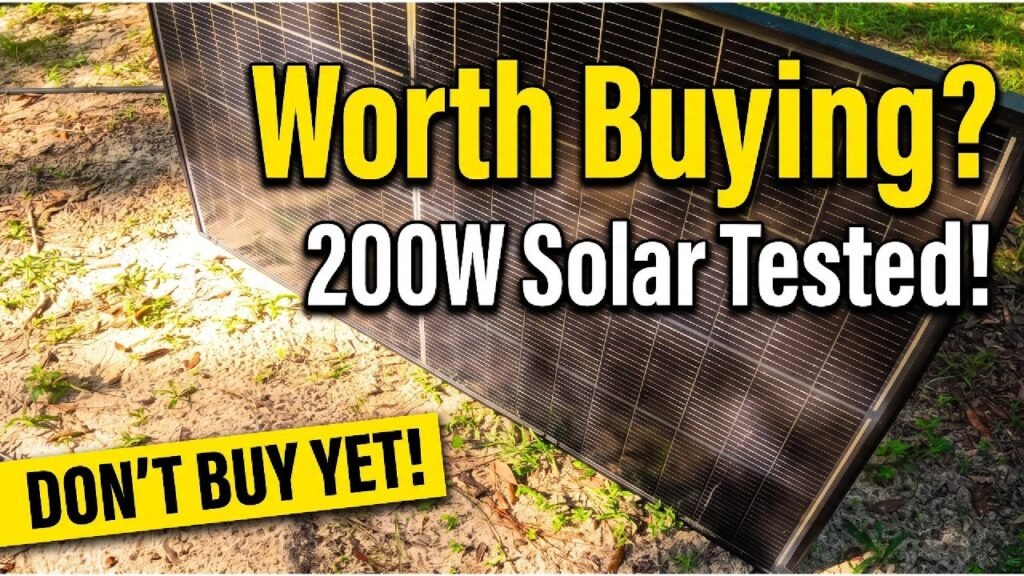
The Bluetti PV60F is a 60-watt monocrystalline solar panel designed for off-grid power needs. It features an ETFE lamination process for durability and a compact, eight-segment folding design. This panel integrates with portable power stations to provide reliable charging in remote locations, whether you’re powering camera gear, drones, or other essential electronics.
⚡ Quick Guide: How to Make It in 5-10 Steps
- Unfold the eight-segment panel to expose the monocrystalline surface.
- Secure the panel using the corner grommets or carabiners.
- Connect the DC5521 output cable to your power station.
- Verify the input voltage and wattage on the power station display.
- Adjust the angle toward the sun for maximum efficiency.
📋 In This Article
- Technical Specifications & Components
- Tools & Materials Used — what you will need for this project
- Understanding the PV60F Ecosystem
- Analyzing the Folding Architecture
- Configuring Mounting Options
- Identifying Output Ports
- Connecting to the Power Station
- Evaluating Real-World Power Output
- Managing Operating Temperatures
- Testing Weather Resistance and Versatility
- Monitoring Low-Light Performance
- Final Verdict on Portable Power
- FAQ
📊 Technical Specifications & Components
| Rated Power | 60W (45W realistic) |
| Cell Type | Monocrystalline Silicon |
| Cell Efficiency | 24.7% |
| Open Circuit Voltage (OCV) | 27.5V |
| Short Circuit Current (Isc) | 2.76A |
| Lamination | ETFE |
| Weight | 3.09lbs (1.4kg) |
| Unfolded Dimensions | 35.4 x 16.7 inches |
| Folded Dimensions | 8.9 x 8.3 x 2.8 inches |
| Operating Temperature | 14 to 149°F (-10 to 65°C) |
| Output Ports | DC5521, USB-A, USB-C |
| Waterproof Rating | IP65 |
📊 Project Overview & Costs
🔧 Difficulty Level: Easy
⏱️ Time Investment: DIY: 5 minutes | Pro: 2 minutes
💰 Professional Service Cost: C$179.00
💡 Verdict: Portable power independence is worth the investment for remote field work.
🛠️ Tools & Materials Used
• DC5521 to XT60 cable
• Carabiners
• Bluetti PV60F Solar Panel
Step-by-Step Assembly, Repair, Testing & Inspection
Understanding the PV60F Ecosystem
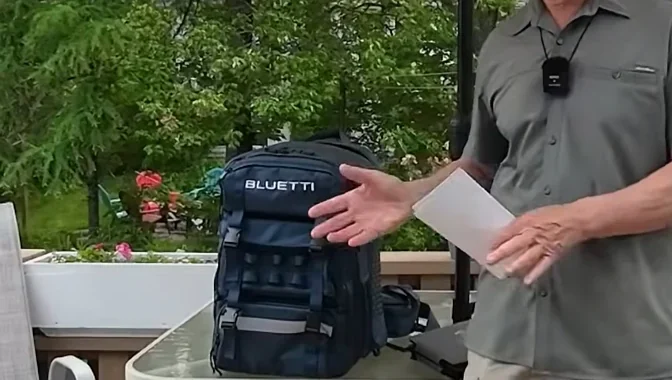
The Bluetti PV60F is built for users who need a portable, lightweight power solution. It pairs well with the Bluetti Hands-Free backpack and power station setup. This combination is ideal for carrying gear like drones or cameras into off-grid locations. It's a solid choice. The panel is designed to work with various power stations, not just the ones from the same manufacturer.
Analyzing the Folding Architecture
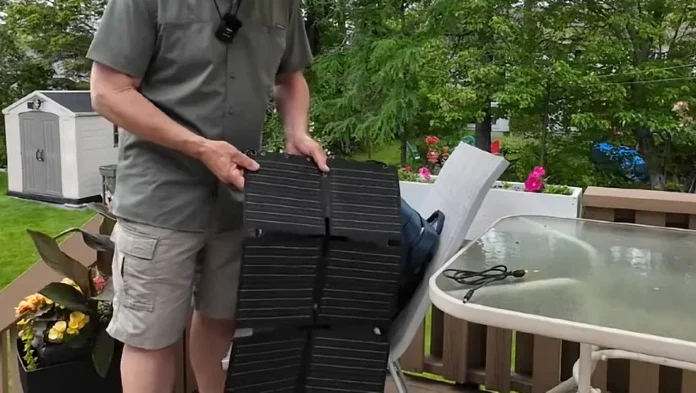
This panel utilizes an eight-segment folding design to maintain a small footprint. When fully extended, it measures approximately 39 by 24 inches. It weighs just over 3 pounds, which is manageable for hiking. The build quality feels sturdy. You'll find grommets at the corners for easy mounting on tents or vehicles. It's built to last.
Configuring Mounting Options
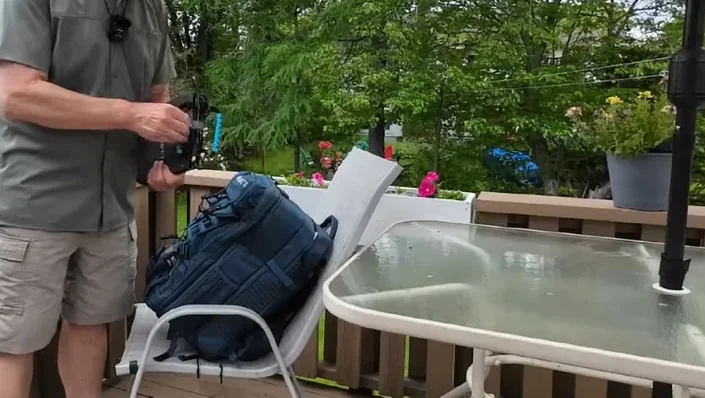
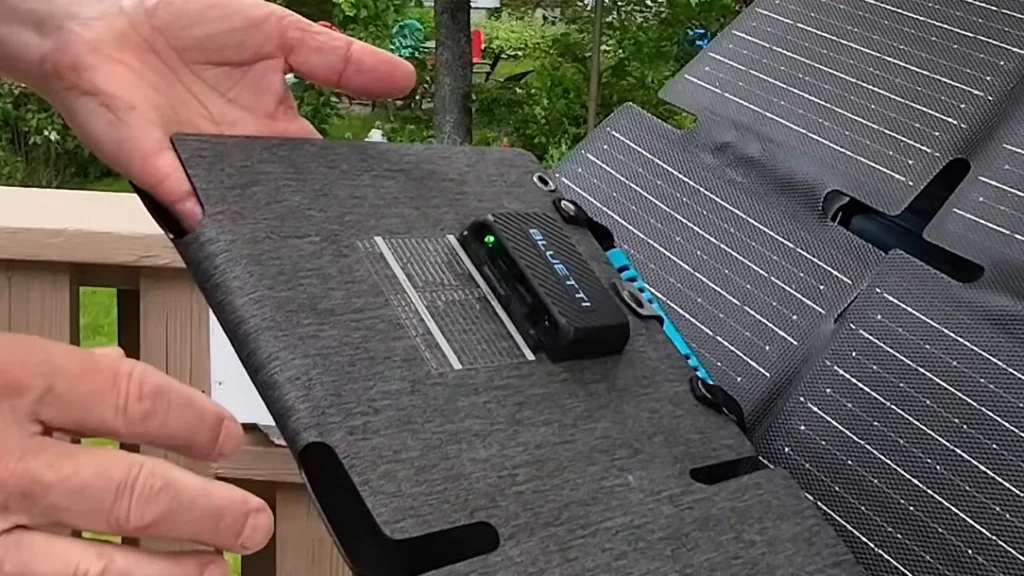
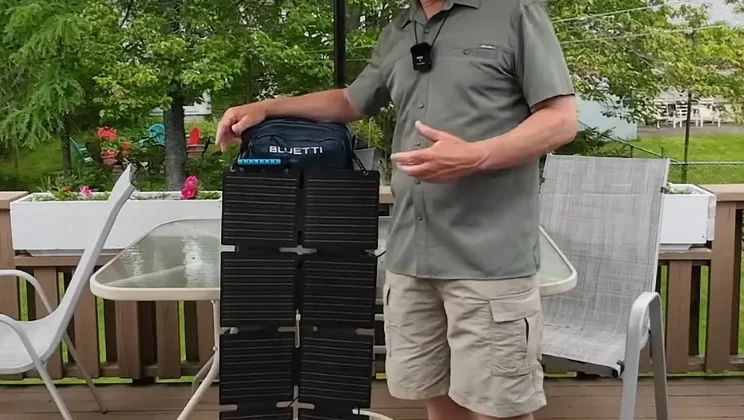
Flexibility is the main advantage of this design. You can drape it over a ridgeline or mount it flat on a vehicle roof. I'm attaching it to the backpack first to demonstrate the connection points. Cables plug directly into the panel's junction area. It's a simple process. You have several options for orientation depending on your environment.
Identifying Output Ports
The panel features three distinct output ports located at the bottom. The primary output is a 5521 jack, which connects to the included DC5521 to XT60 cable. Most modern Bluetti power banks rely on the XT60 connection for high-efficiency charging. It's a standard interface. Additionally, you get USB-A and USB-C ports for direct device charging. This allows you to power phones or cameras without a power bank. It's very convenient.
Connecting to the Power Station
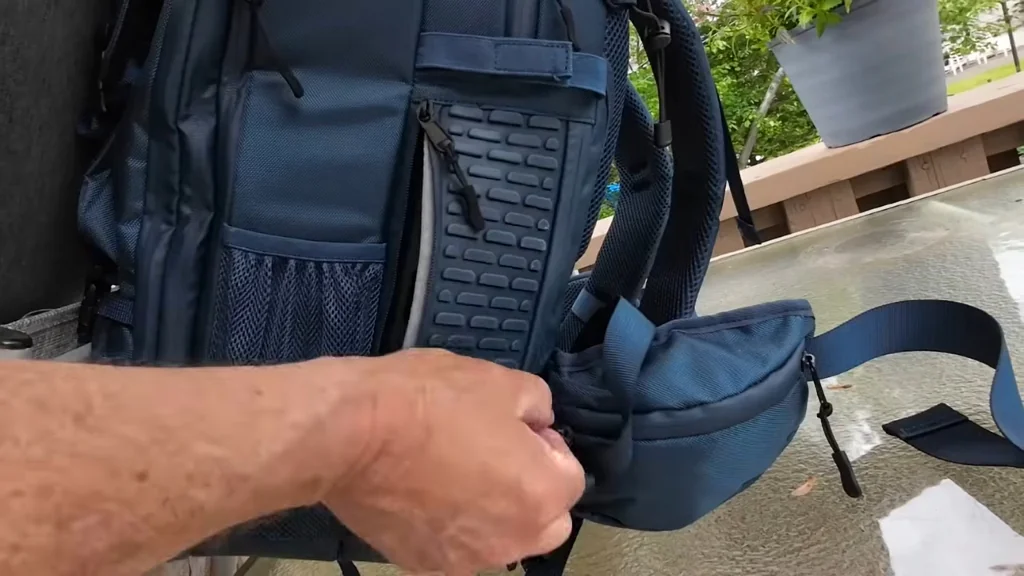
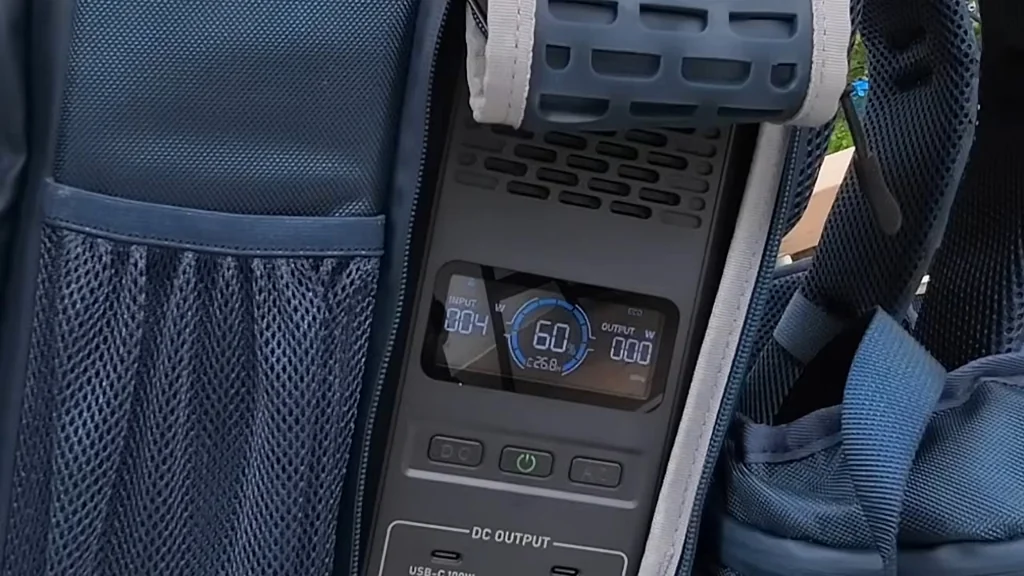
The backpack features ventilated side panels that house the power station controls and inputs. I'm plugging the panel into the DC input port now. It takes a few seconds for the station to handshake with the panel. The display will confirm the incoming charge. It's working perfectly. Don't expect massive charge rates, but it's consistent.
Evaluating Real-World Power Output
Under perfect conditions, this panel hits 45 watts. I'm testing this past peak sun hours under heavy cloud cover. Even in these conditions, it's pulling energy. Any power is better than none. You need to dial in the angle to get the most out of it. It's a decent result.
Managing Operating Temperatures
The operating range is 14 to 149°F. It's rated for most outdoor environments. Avoid leaving it inside a closed vehicle in the sun, as the internal temperature can easily exceed 149°F. That will damage the cells. The ideal working temperature is 77°F. Keep it cool.
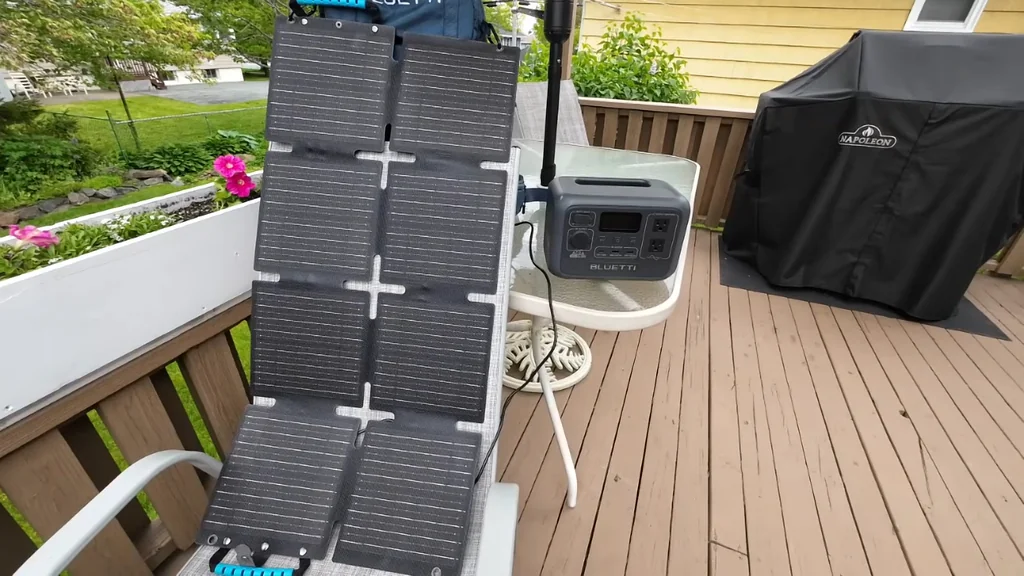
Testing Weather Resistance and Versatility
The panel is IP65 splash-resistant, meaning a light shower won't kill it. The connection box is the most sensitive part, so keep that dry. I'm also testing it with the AC2A power station to show it's not limited to one device. It works with any station that has the right input. It's very versatile.
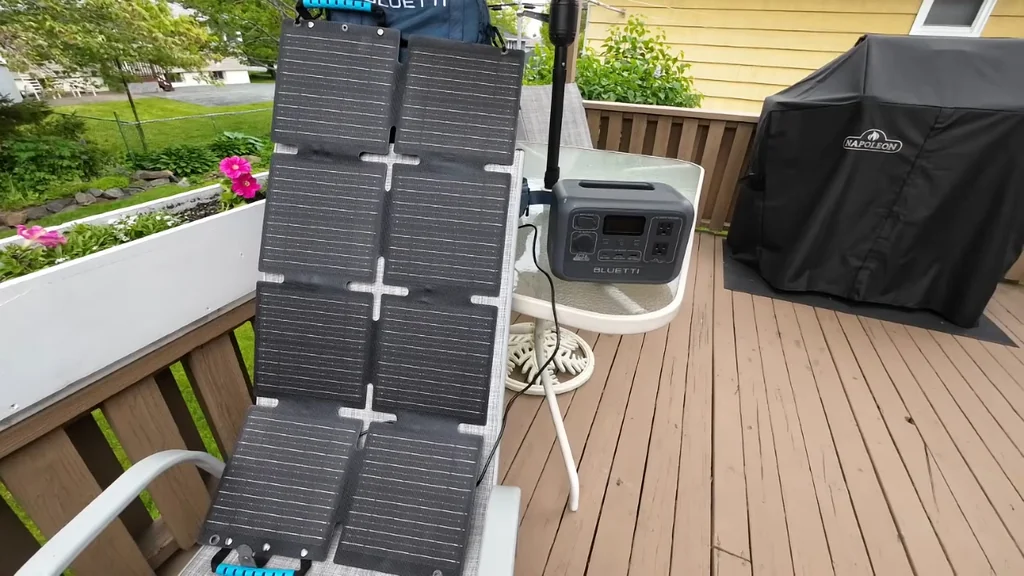
Monitoring Low-Light Performance
Even with cloud cover, I'm getting 3 watts of input. It's not much, but it keeps the battery topped off. It's still operating. I'll keep it out as long as there's no rain. It's a reliable trickle charger. Every bit helps.
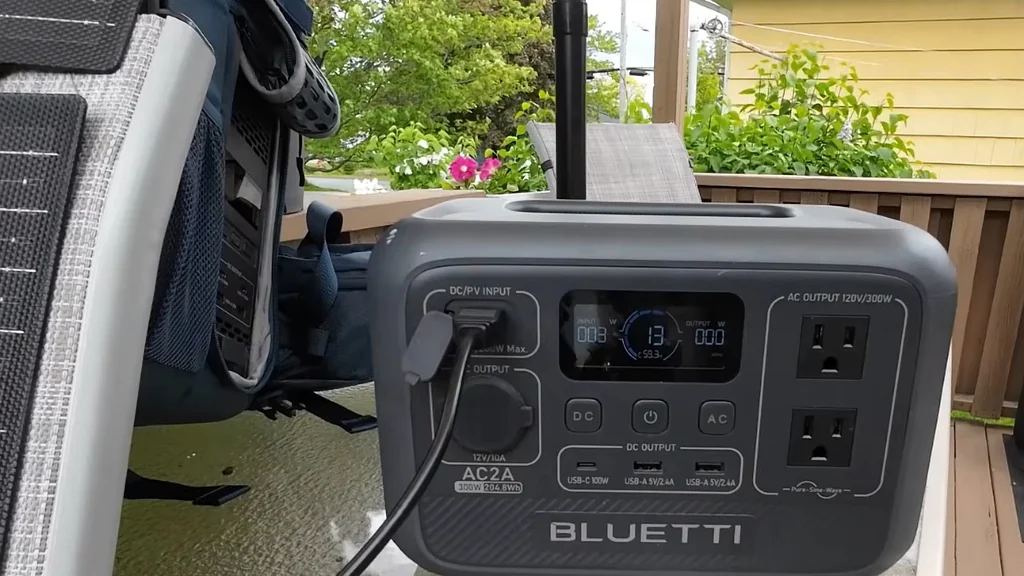
Final Verdict on Portable Power
This panel is a great addition for charging everything from small banks to larger stations. It's a slow process for big batteries, but it works. You can charge devices directly via USB ports. That's a huge plus. It's a solid, practical tool for any off-grid kit.
⚠️ CAUTION: SAFETY WARNING!
Do not leave the solar panel inside a closed vehicle under direct sunlight, as temperatures can exceed the 149°F rating and cause permanent damage. Always keep the connection junction box dry to prevent short circuits.
Summary & Tips
The Bluetti PV60F proves that portable solar power can be both durable and efficient. Its ETFE construction and compact folding design make it a reliable companion for field operations. While it won't replace a massive array, it provides essential power for keeping devices topped off. It is a solid, well-engineered piece of workshop-ready gear.
📋 FAQ
❓ Can I use this panel with non-Bluetti power stations?
Yeah, you can. As long as your power station accepts the DC5521 or XT60 input, it will work fine. Just check your station's voltage requirements first.
❓ Is the panel truly waterproof?
Not exactly. It has an IP65 rating, meaning it's splash-resistant. It can handle a light shower, but don't submerge it or leave it out in heavy rain.
❓ How much power can I realistically expect?
Honestly, expect around 45 watts in real-world conditions. The 60-watt rating is a peak laboratory figure. Clouds and angles will affect your actual output.
❓ Does the ETFE lamination make a difference?
It really does. It improves light penetration to about 95% and prevents the panel from discoloring or delaminating over time. It makes the surface dirt-resistant too.
Disclaimer: I purchased all tools for this guide with my own money to ensure an unbiased review. This post contains affiliate links, meaning I earn a small commission if you make a purchase at no extra cost to you.