You don’t need to drop a grand on a fancy portable power station just to keep your fridge running when the power goes out. A 1000W pure sine wave inverter paired with a 12V 100Ah LiFePO4 battery gets the job done for way less money. This project shows you how to build a simple, scalable emergency power setup that’ll protect your food during an extended blackout without breaking the bank.
⚡ Quick Guide: How to Assemble Your DIY Backup Power
- Pick a pure sine wave inverter that can handle your fridge’s startup surge.
- Choose a 12V LiFePO4 battery based on how long you want it to run.
- Put a fast-acting inline fuse on the positive battery terminal.
- Connect the inverter to the battery with the right gauge cables.
- Keep an eye on AC output and battery health while it’s running.
📋 In This Article
- Technical Specifications & Components
- Tools & Materials Used — what you will need for this project
- Runtime Calculator — estimate your backup time
- Bill of Materials — download the complete parts list
- Assessing Emergency Power Requirements
- Selecting Inverter and Battery Components
- Planning the Electrical Connection
- Evaluating the Inverter Layout
- Connecting Battery Cables and Terminals
- Installing the Inline Safety Fuse
- Finalizing Connections and Powering Up
- Verifying Inverter Output and Load
- Monitoring Long-Term Runtime
- Analyzing Battery Discharge and Load
- Interpreting System Performance
- Optimizing Inverter Sizing
- Comparing DIY vs. Portable Power Stations
- Considering Long-Term Maintenance
- Final Recommendations for Emergency Power
- FAQ
📊 Technical Specifications & Components
| Inverter Rated Output | 1080W continuous |
| Inverter Peak Surge | 3000W |
| Output Waveform | Pure Sine Wave |
| Conversion Efficiency | >90% |
| No-load Consumption | <10W |
| Battery Capacity | 100Ah |
| Battery Chemistry | LiFePO4 (Lithium Iron Phosphate) |
| System Voltage | 12V DC → 120V AC |
| Total Runtime Achieved | 22 hours (full-size fridge) |
| Total System Cost | $390–$540 (vs. $999+ for equivalent power station) |
📊 Project Overview & Costs
🔧 Difficulty Level: Easy
⏱️ Time Investment: DIY: 30-45 minutes | Pro: 15 minutes
💰 Professional Service Cost: $150-$300 depending on battery capacity
💡 Verdict: Building this yourself is way cheaper than buying a pre-built power station with the same capacity.
🔌 System Connection Diagram
Visual overview of how everything connects:
💰 Cost Comparison: DIY vs. Ready-Made Solutions
| Component | DIY System | Jackery 1000 | Bluetti AC200P |
|---|---|---|---|
| 1000W Pure Sine Inverter | $116 | Built-in | |
| 100Ah LiFePO4 Battery | $250-400 | Built-in | |
| Cables + Fuse | $25 | Included | |
| TOTAL COST | $390-540 | $999 | $1,699 |
| Usable Capacity | 1,200Wh | 1,002Wh | 2,048Wh |
| Expandable | ✅ Yes | ❌ No | ⚠️ Proprietary only |
| Repairability | ✅ Every component replaceable | ❌ Service center | ❌ Service center |
| Cost per Wh | $0.33-0.45 | $1.00 | $0.83 |
🛠️ Tools & Materials Used
• Digital Multimeter
• Fast-acting inline fuse
Step-by-Step Assembly, Repair, Testing & Inspection
Assessing Emergency Power Requirements
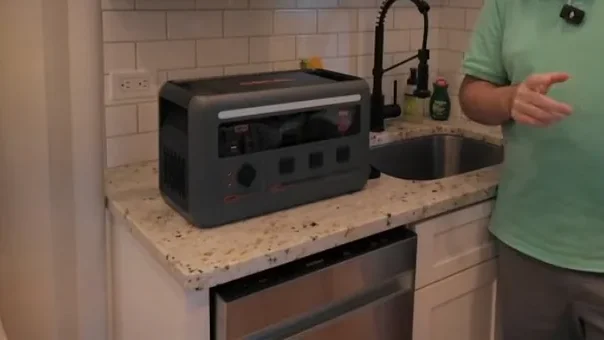
Losing a fridge full of food during an outage can cost you hundreds of dollars. Portable power stations are popular, but they're expensive for what you get. This setup takes a different approach — modular components that do the same job for a fraction of the price.
Selecting Inverter and Battery Components
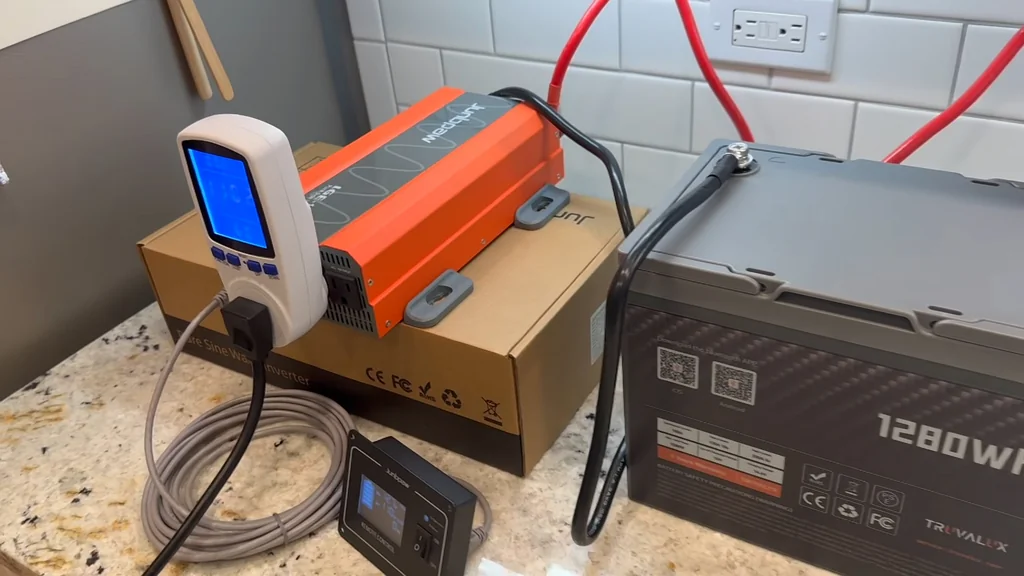
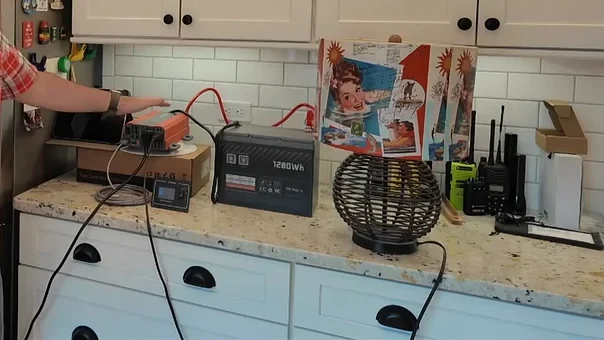
The heart of this setup is a 1000W pure sine wave inverter — about $116. That's what converts your 12V DC battery power into the 120V AC your fridge needs. You can use different battery chemistries, but LiFePO4 is the best bet for cycle life and steady discharge performance.
Planning the Electrical Connection
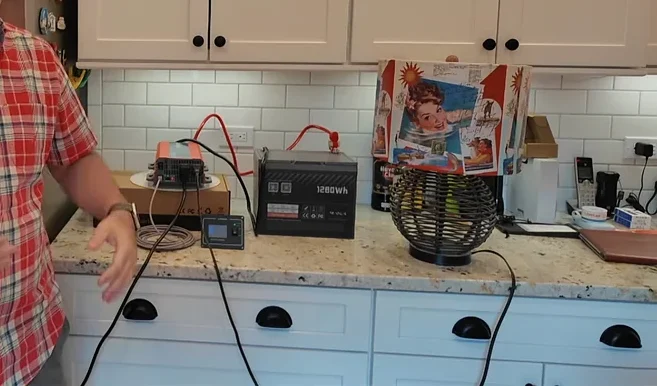
Safety first — you need an inline fuse on the positive battery terminal. If something shorts out, that fuse blows before your wiring catches fire. The setup itself is simple: battery connects to inverter, inverter converts DC to AC, fridge plugs into the inverter.
Evaluating the Inverter Layout
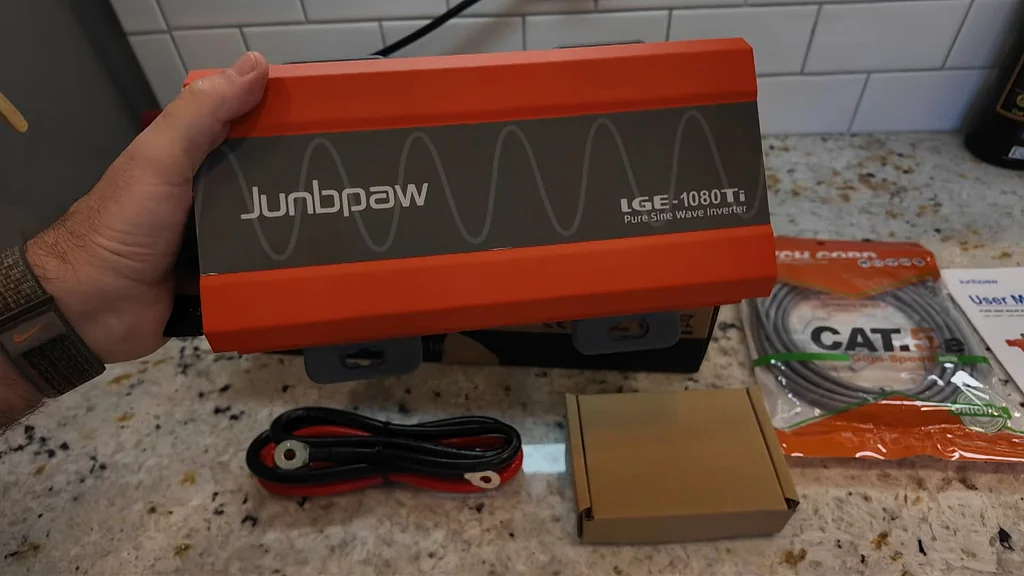
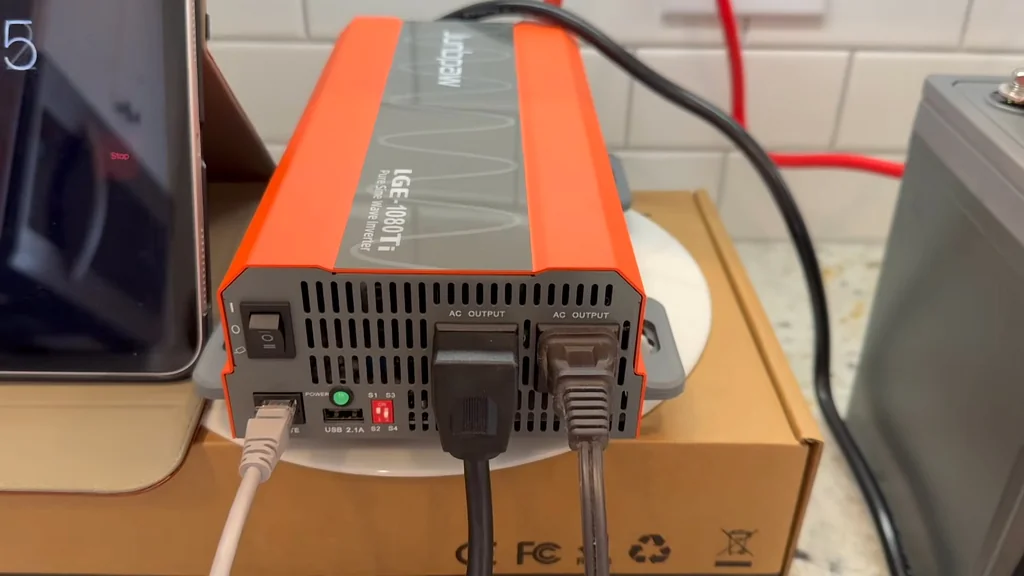
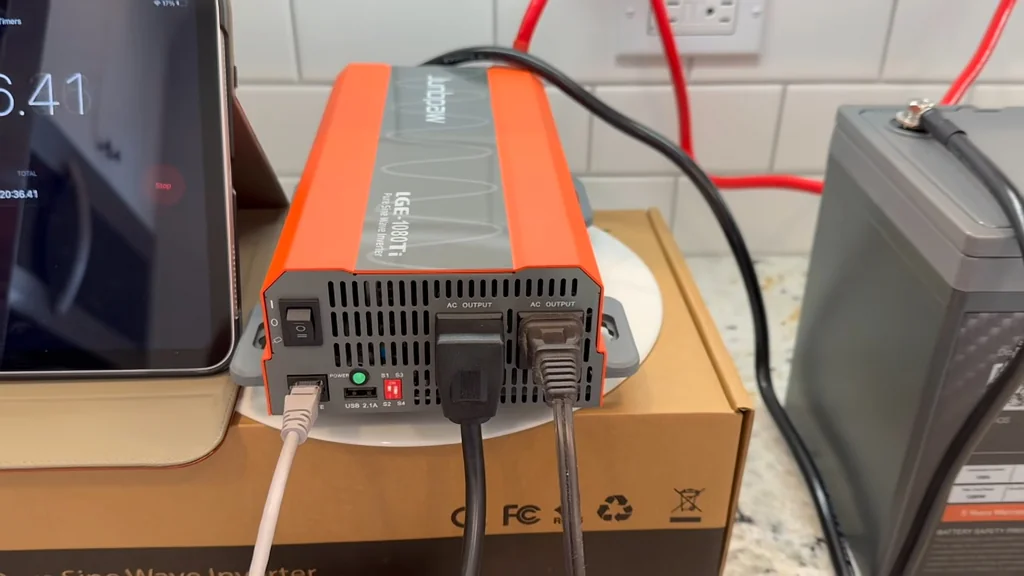
The JUNBPAW 1000W unit has a clean layout and decent cooling. It's built to handle the startup surge when your fridge compressor kicks on. I'm using a 100Ah LiFePO4 battery as a baseline, but you can scale up if you need more runtime. The nice thing about this modular approach is you can swap batteries or upgrade components without tossing the whole system.
Connecting Battery Cables and Terminals
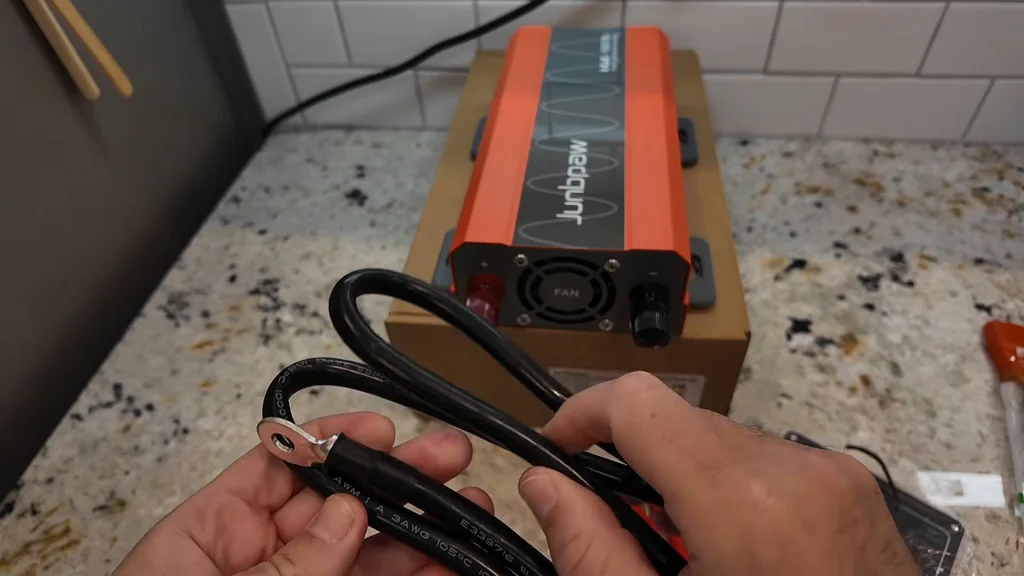
High current flows through these cables, so use the right gauge — don't cheap out here. Connect the negative and positive terminals securely. Hand-tight is fine, but make sure there's no wiggle room. A loose connection under load creates resistance, and resistance creates heat.
Installing the Inline Safety Fuse
The inline fuse goes on the positive cable as close to the battery terminal as you can get it. This is non-negotiable — it's what stops a short circuit from turning into a fire. If something goes wrong, that fuse blows instantly and cuts the current.
Finalizing Connections and Powering Up
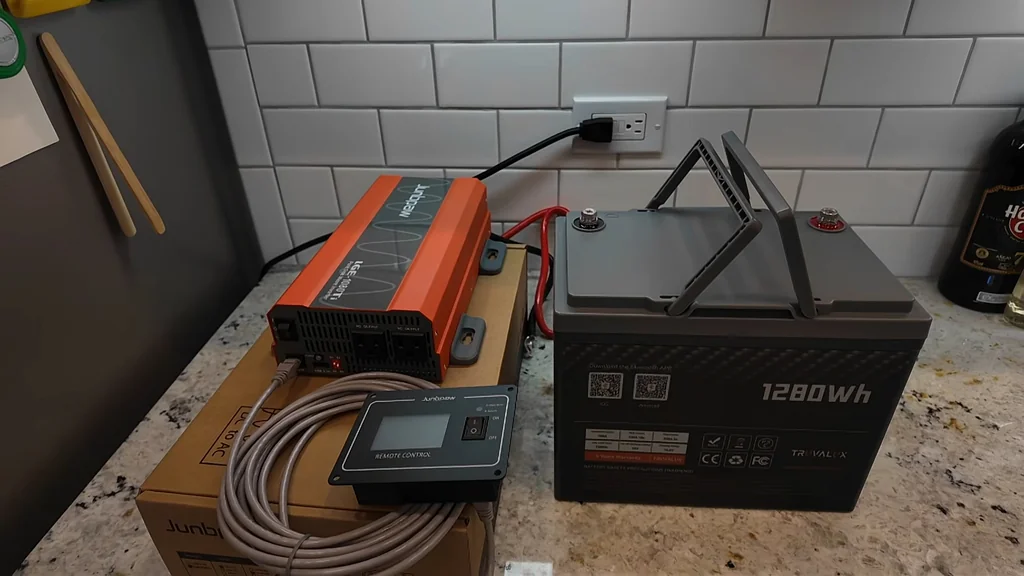
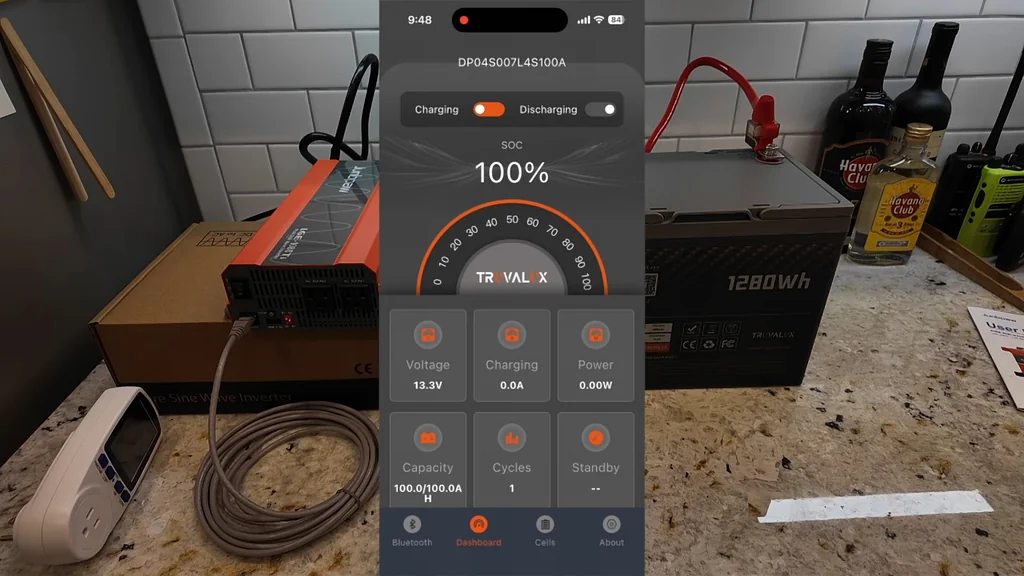
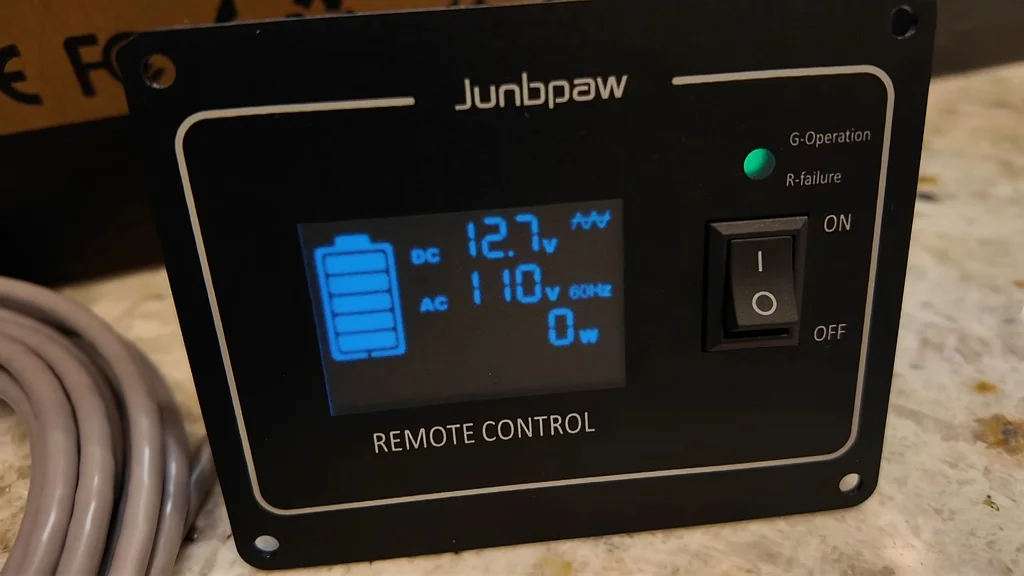
Everything's connected and the battery shows 100% state of health. I set the inverter to remote control mode using the rocker switch so I can operate it without digging around behind the unit once it's tucked away.
Verifying Inverter Output and Load
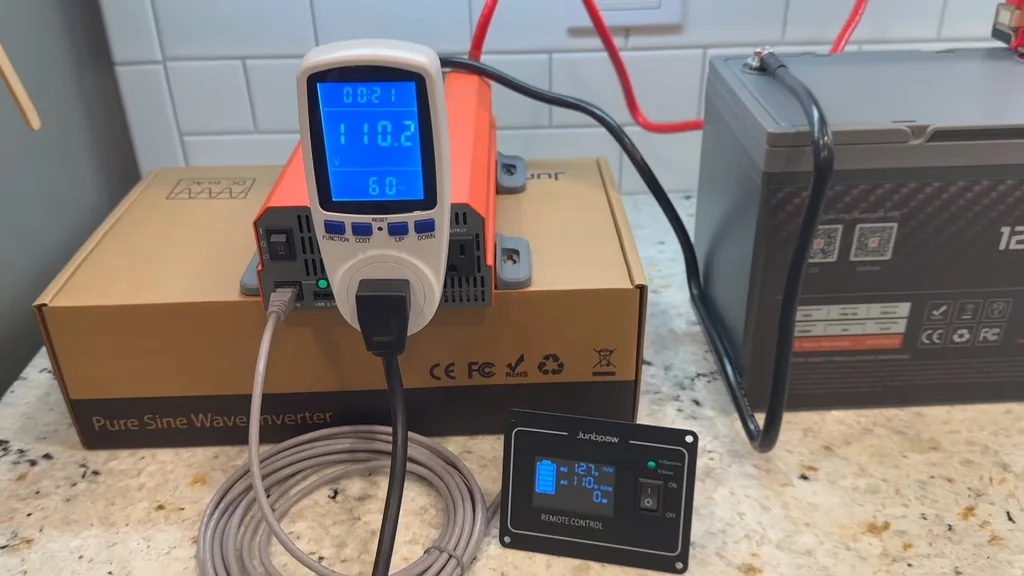
The inverter display shows a stable 110V at 60Hz — exactly what you want. The power meter confirms the fridge is pulling a low idle load, which means the system is ready for the compressor to cycle on and off.
Monitoring Long-Term Runtime
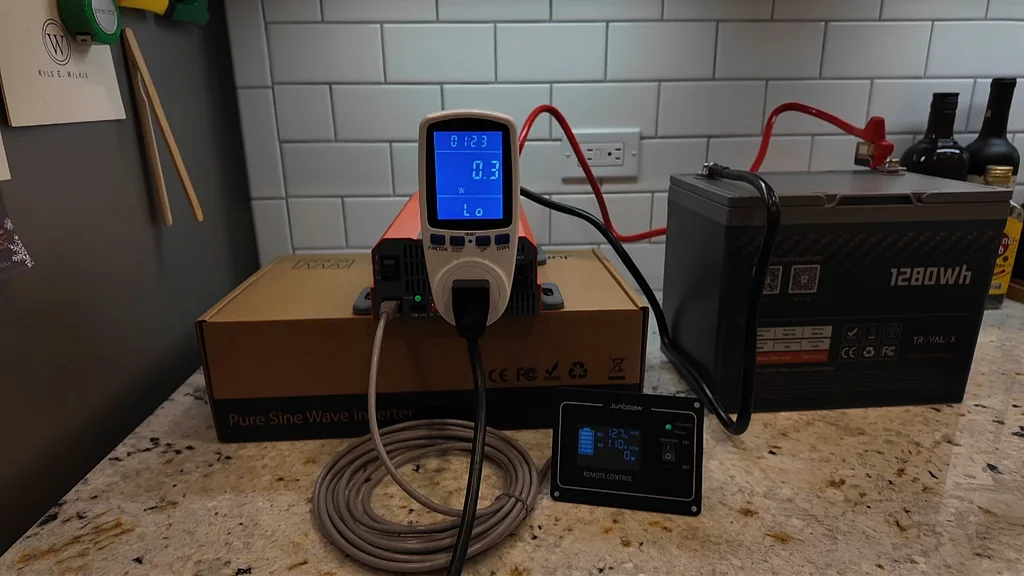
After 14 hours and 22 minutes, the battery is still sitting at 12.9V. The inverter's cooling fan cycles on and off like it should. The system is handling the fridge's intermittent load without breaking a sweat.
Analyzing Battery Discharge and Load
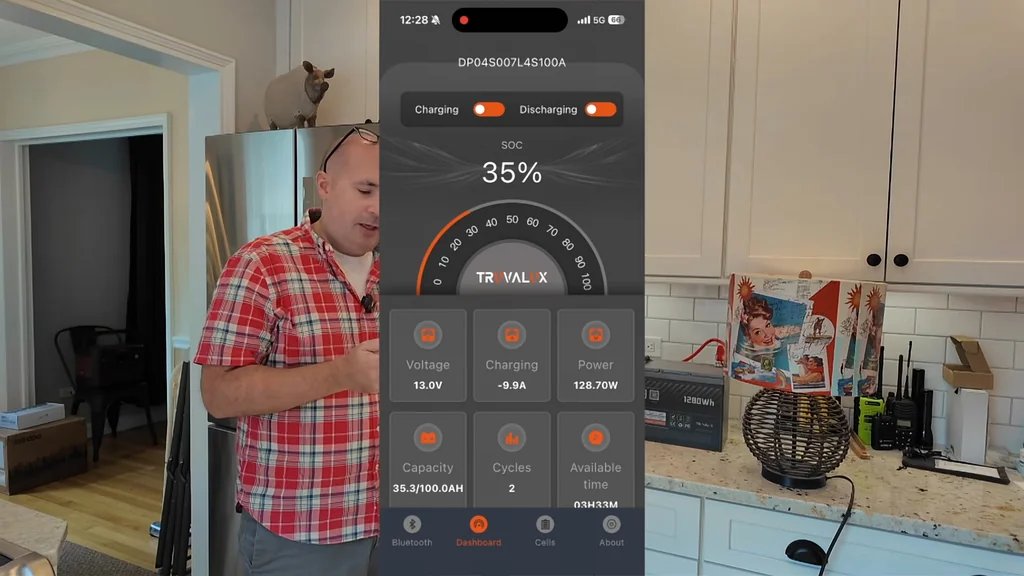
With the fridge pulling about 84-95 watts, the battery still has roughly 35% capacity left. That's several more hours of runtime available. The LiFePO4 battery and pure sine wave inverter combo is proving pretty efficient.
Interpreting System Performance
The 22-hour total runtime shows this DIY setup is legit. The pure sine wave inverter runs the fridge motor exactly like utility power would — no buzzing, no overheating, no stress on the compressor. That's the whole reason you don't cheap out with a modified sine wave unit.
Optimizing Inverter Sizing
Size matters here. A 1000W inverter is the sweet spot for this load. If you went with a 3000W unit, you'd burn extra power just idling, which cuts into your total runtime. Match the inverter to what you're actually running.
Comparing DIY vs. Portable Power Stations
Building your own system means you pick exactly what goes in it. You're not paying for features you don't need or settling for a battery that's too small. You choose the capacity, the inverter size, everything — and it costs way less than a comparable pre-built unit.
Considering Long-Term Maintenance
These components are durable if you treat them right. The inverter doesn't have a set lifespan — it'll keep working as long as you don't abuse it. And since everything's modular, you can replace individual parts as needed instead of buying a whole new unit.
Final Recommendations for Emergency Power
Always go pure sine wave for anything with a motor or sensitive electronics. This setup is a proven way to keep your fridge, lights, and communication gear running when the grid fails. It's simple, reliable, and won't empty your wallet.
⚠️ CAUTION: SAFETY WARNING!
This system involves high-current 12V DC power that can cause serious burns or start a fire if shorted. Always install a properly rated fuse at the battery terminal and make sure every cable connection is tight and insulated.
Summary & Tips
This DIY backup system ran a full-size fridge for 22 hours on a single 100Ah battery. The modular approach works, it's customizable, and it costs way less than an equivalent portable power station. The two things you can't skip: a properly rated fuse and the right cable gauge. Get those right and this setup will serve you well for years.
📋 FAQ
❓ Why do I need a pure sine wave inverter for a refrigerator?
Fridge compressors are designed for clean utility power. Modified sine wave inverters make them run hot, buzz, or fail early because the waveform is distorted.
❓ Can I use any 12V battery for this setup?
You need a battery that can handle the high discharge current the inverter pulls. LiFePO4 works great, but check the BMS specs to make sure it can supply the amperage you need.
❓ How do I figure out how long my fridge will run?
Use the calculator above — input your battery capacity, system voltage, and average load to get an estimated runtime. The formula is: (Battery Ah × Voltage × Depth of Discharge × Efficiency) ÷ Load Watts.
❓ Is it dangerous to build my own power system?
It's safe if you respect the electrical stuff and use proper over-current protection. Right cable gauge and tight connections are the key to avoiding heat problems. Always use a fuse and double-check polarity before powering up.
Disclaimer: I purchased all tools for this guide with my own money to ensure an unbiased review. This post contains affiliate links, meaning I earn a small commission if you make a purchase at no extra cost to you.