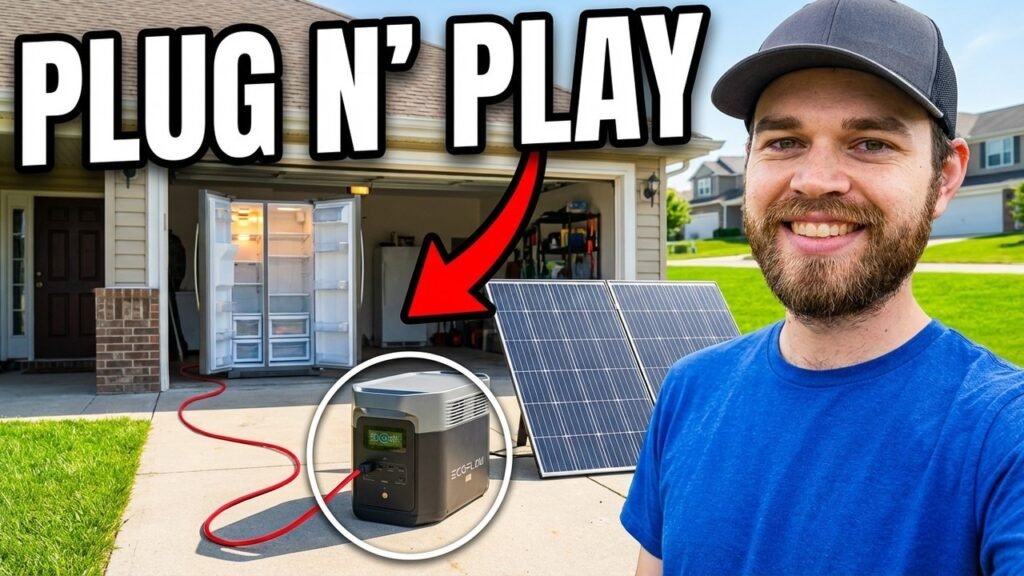
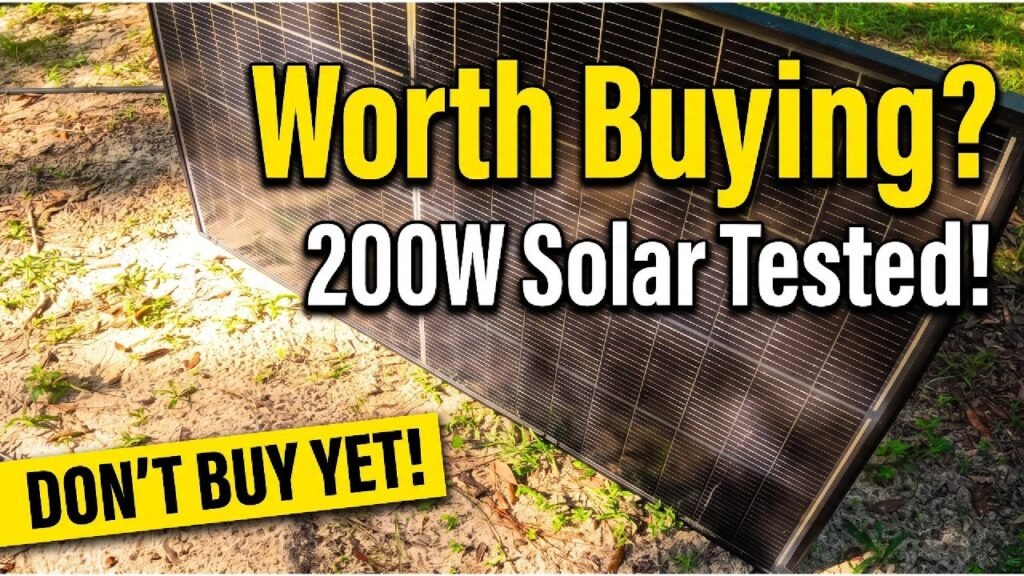
Okay, so we’re gonna pit these new BougeRV 16BB N-Type TOPCon 100W bifacial solar panels against my old, trusty EcoFlow 9BB units. It’s a straight-up, no-BS shootout to figure out if that fancy bifacial stuff really pulls more power when you’re actually using it. We’ll go through the wiring, crunch some numbers, and I’ll show ya the best ways to hook ’em up to your power station.
⚡ Quick Guide: How to Optimize Your Solar Array
- Verify your MPPT controller voltage limits before buying.
- Choose between 12V or 24V panels based on system demand.
- Avoid mixing dissimilar panels in series if possible.
- Maximize solar input by matching panel voltage and amperage.
- Use bifacial panels where ground reflection is available.
- Wind Resistance and Sizing
- Calculating Series Array Limits
- Comparing Panel Specifications
- Optimizing Solar Input Math
- BougeRV Array Configuration
- Maximizing Solar Harvest
- Cold Weather Array Planning
- Testing Mixed Panel Arrays
- Parallel vs Series Performance
- Final Verdict on Solar Panels
📋 In This Article
- Technical Specifications & Components
- Tools & Materials Used — what you will need for this project
- Reviewing New Solar Panel Tech
- Unboxing and Inspection
- Testing Series Wiring Efficiency
- Analyzing Bifacial Performance
- Temperature and Efficiency Drop
- Wind Resistance and Sizing
- Calculating Series Array Limits
- Comparing Panel Specifications
- Optimizing Solar Input Math
- BougeRV Array Configuration
- Maximizing Solar Harvest
- Cold Weather Array Planning
- Testing Mixed Panel Arrays
- Parallel vs Series Performance
- Final Verdict on Solar Panels
- FAQ
📊 Technical Specifications & Components
| BougeRV Model | 16BB N-Type TOPCon Bifacial |
| Panel Wattage | 100W or 200W |
| Voltage Options | 12V or 24V |
| EcoFlow Model | 9BB Non-Bifacial |
| Max MPPT Input Voltage | 150V |
| Max MPPT Input Amperage | 15A |
| Efficiency | 25% (BougeRV) vs 23% (EcoFlow) |
| Array Configuration | Series/Parallel Hybrid |
📊 Project Overview & Costs
🔧 Difficulty Level: Medium
⏱️ Time Investment: DIY: 2-4 hours | Pro: 1 hour
💰 Professional Service Cost: $200-$600 depending on panel count
💡 Verdict: Optimizing your array layout saves you from buying unnecessary extra panels.
Step-by-Step Guide
Reviewing New Solar Panel Tech
Alright, so first up, let's check out these new BougeRV 16BB N-Type TOPCon bifacial panels. They sent me a couple of 100W ones, but hey, they make 200W versions too if you need more punch. And get this, you can snag 'em in either 12V or 24V setups. I gotta say, it seems like a pretty sweet upgrade. But, seriously, make sure you keep an eye on your MPPT controller's limits when you're deciding on voltage. You don't wanna end up frying your expensive equipment, right?
Unboxing and Inspection
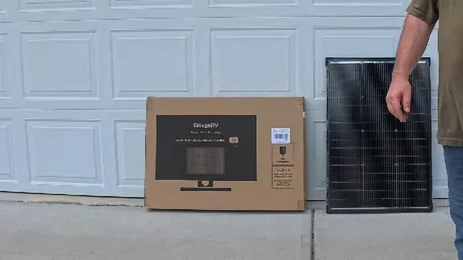
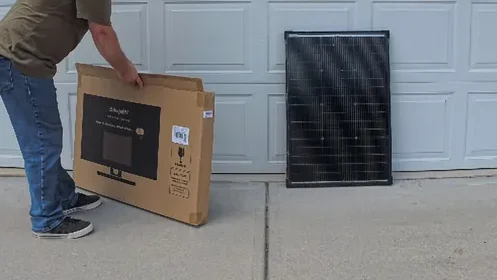
Man, the packaging was actually pretty good, which surprised me. They put foam on both the front glass and the back, which is smart, so nothing cracked when it got shipped. Plus, the corners had this heavy-duty cardboard stuff, really beefed up. So, yeah, it showed up totally intact. That's a huge win when you're getting panels delivered, you know? Zero cracks, no dents, nothing.
Testing Series Wiring Efficiency
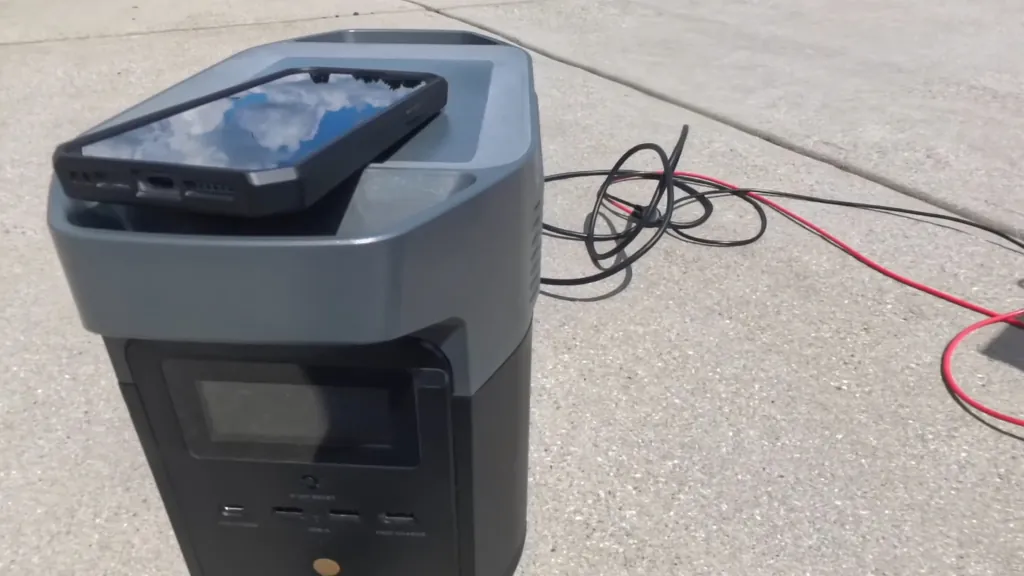
So, I just slapped these bad boys on the driveway to see what kinda power they'd pump out. But if you cover, like, two-thirds of the panel, it just completely stops producing anything. I ended up rewiring 'em in series, so one hooks right into the next. That trick doubles your voltage, and your amperage pretty much stays the same. And, yep, it's actually doing its thing. Looks like those bypass diodes are working exactly how they should.
Analyzing Bifacial Performance
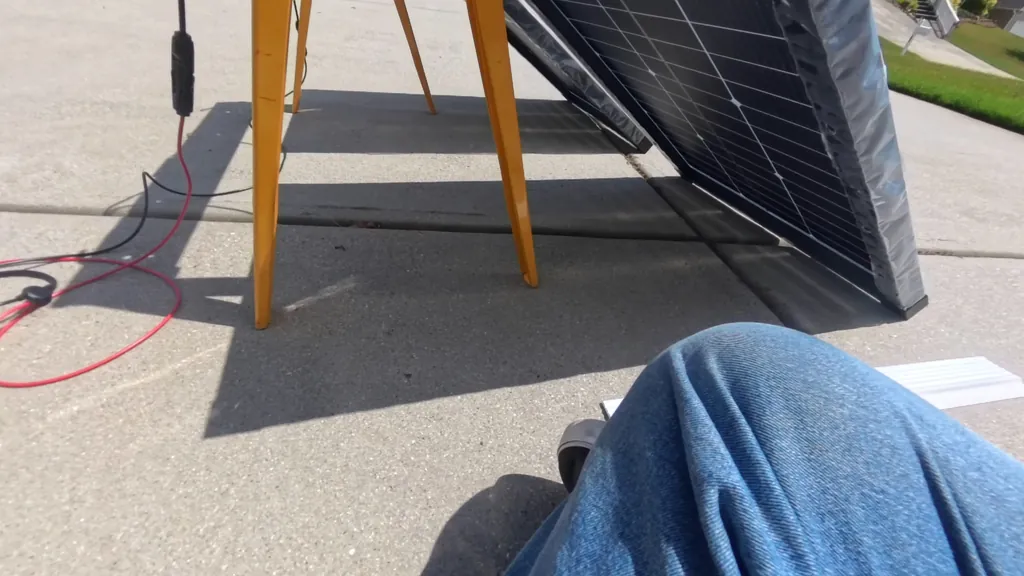
Alright, so check this out: it's barely past noon, and there's no light bouncing off the ground at all. So right now, that whole bifacial thing? Not really pulling its weight. I bet it'd probably kick in more during the early mornings or late evenings when the sun's lower. Honestly, right here, right now, it's just acting like any regular panel sitting in direct sunlight. Don't expect any crazy magic from it. It's just how physics works.
Temperature and Efficiency Drop
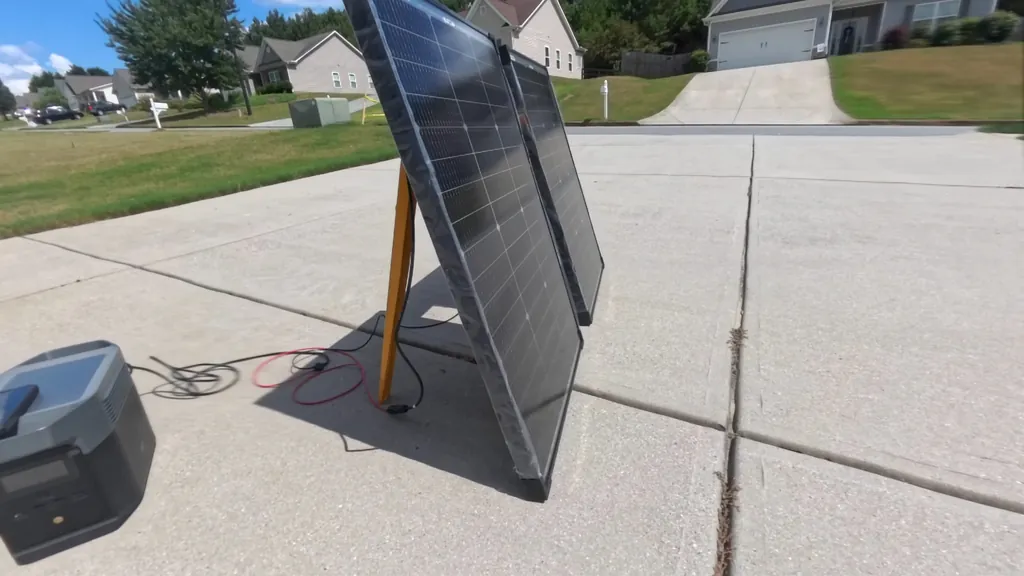
Man, heat just absolutely kills efficiency, you know? My old EcoFlow panels start dropping off once they hit, like, 90 degrees. Those 100-watt panels pretty much become 80-watt ones, just like that. And that's a problem you see all the time with solar. But these BougeRV panels, they feel a bit better, running at 25% efficiency compared to the 23% on those basic 9BB panels. So far, they're really holding their own.
Wind Resistance and Sizing
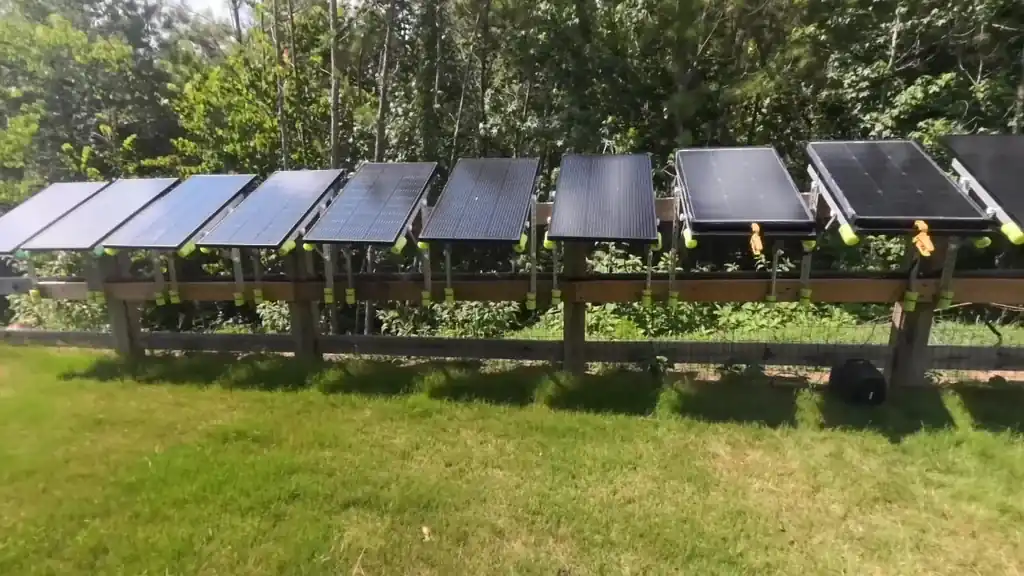
So, these are actually smaller than my EcoFlows, even for the same wattage. And where I live, buddy, that's a massive bonus. We're talking 50 to 70 mph wind gusts that just shred everything. You can see it in the trees around here, they've got this permanent bend from all the wind. So, smaller panels? That means way less surface area for the wind to catch. Yeah, that's a really clever design if you ask me.

Calculating Series Array Limits
I could probably string together seven of these in series, no problem. But then I'd be slamming right up against that 150-volt MPPT limit, especially in the dead of winter. The numbers actually show it *can* work with these panels, though. Just gotta be super careful you don't go over what your controller can handle. It's a really tight line, so don't push it.
Comparing Panel Specifications
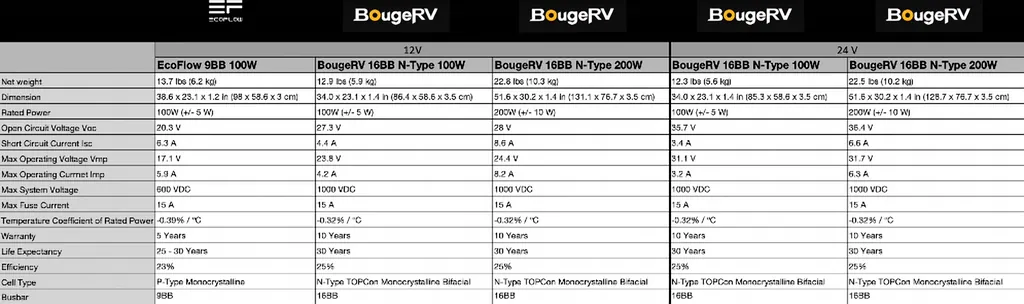
So, I've got all the specs written down, pitting the EcoFlow 9BB 100-watt panels against these BougeRV 16BB in both 100W and 200W. And we're looking at both the 12V and 24V options here, too. Really, it just boils down to finding the perfect panel that jives with your exact power station setup. The numbers are right there, they don't lie. It's super obvious.
Optimizing Solar Input Math
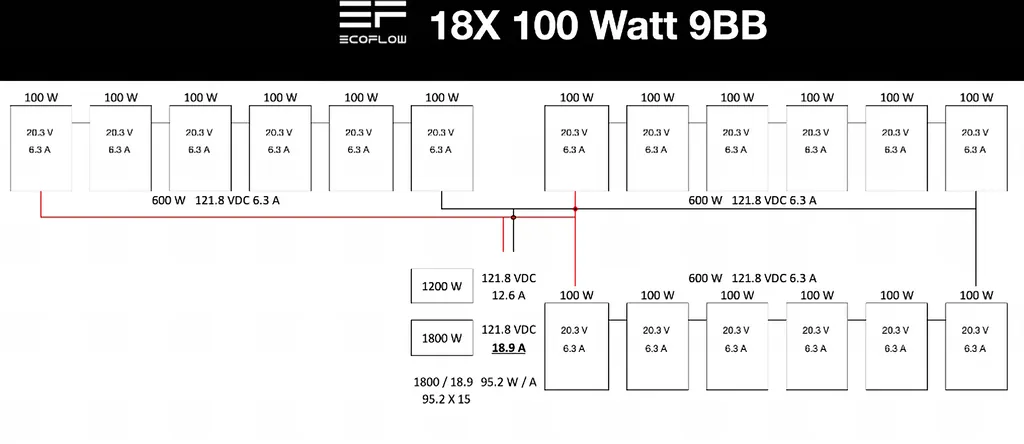
Okay, so if I grab that 95.2 watts and crank it up by the 15-amp max my unit can handle, we're talking about a sweet 1428 watts total. Now, that's only if everything's dialed in perfectly, pointed just right around 12:30 in the afternoon. It's pretty much a dream number, a theoretical best-case scenario. You're probably never gonna hit that exact number, perfectly. But hey, it gives you something solid to aim for.
BougeRV Array Configuration
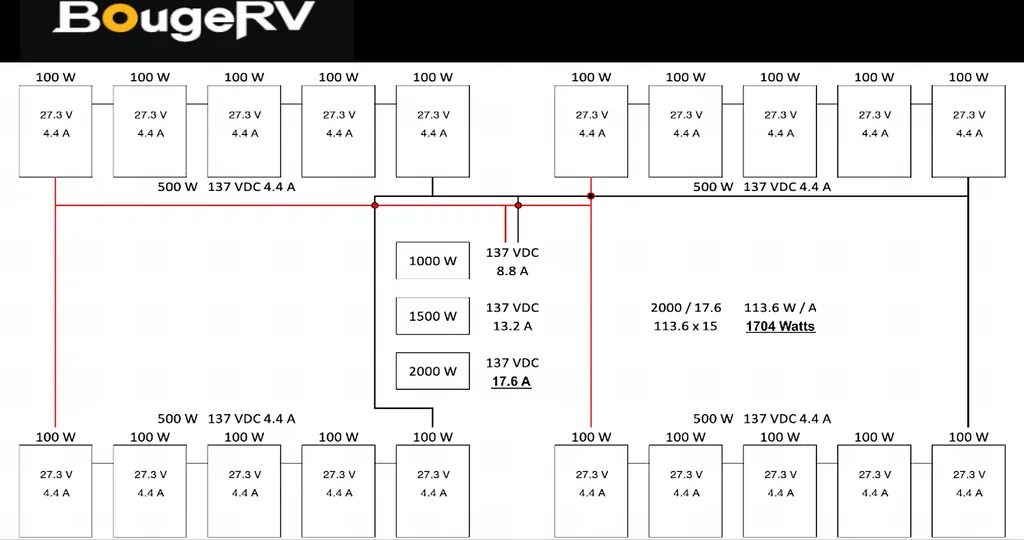
So, I went ahead and crunched all the figures using the 12V specs. Even though BougeRV usually pushes for 24V when you're dealing with systems over a thousand watts, the 12V panels just play nicer with my specific 15-amp limit. I've gone over a bunch of different configurations, trying to find what clicks. It's like a tricky balancing game, you know? You really gotta pick your setup carefully.
Maximizing Solar Harvest
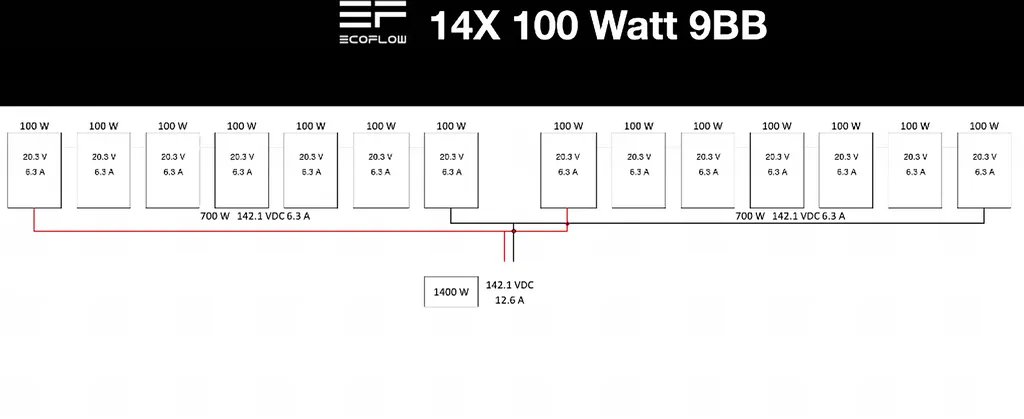
Assuming everything's pointed perfectly at 12:30, you'll definitely see some decent power coming in. And the cool part about setting it up this way is you've got plenty of wiggle room as the amperage naturally dips in the morning or evening. It's a really dependable setup. Yeah, it just works.
Cold Weather Array Planning
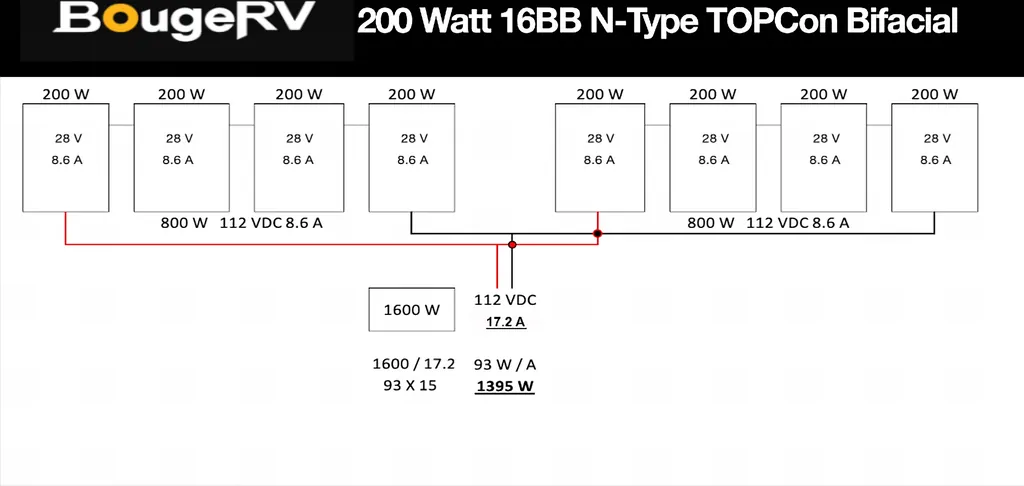
Now, being way down here in the south, freezing cold isn't usually a big problem for me. If I went and got ten of those 200W panels, I could totally wire up five of 'em in series. That'd put me at 140 volts and 8.6 amps for each group, which is pretty good. And the best part? It stays well below that 150V limit. So yeah, that's absolutely perfect. Completely safe.
Testing Mixed Panel Arrays
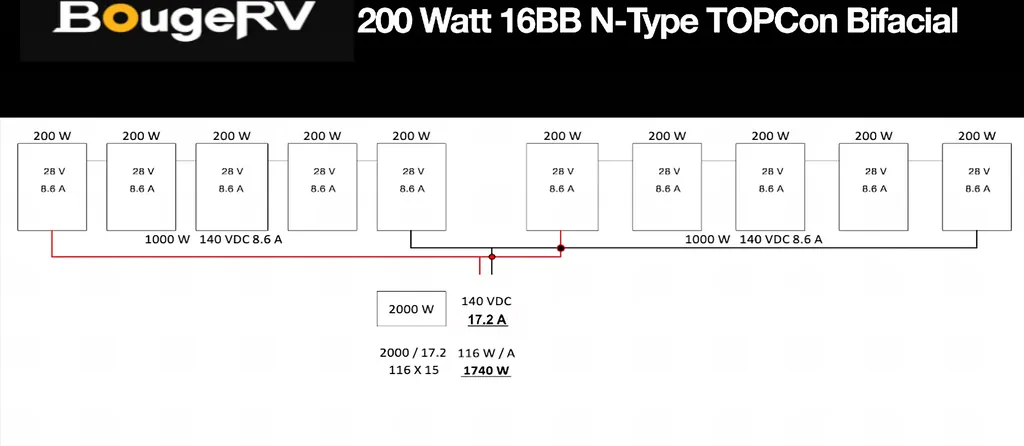
So, can you actually mix different panels together? Well... If I toss just one more into each series, I'm hitting 149.1 volts. And man, that's just way too freaking close to the 150V cutoff for me to feel good about it. Remember, in a series, whatever panel has the lowest amperage, that's what limits your whole string. You're just gonna lose a ton of efficiency. Seriously, don't even bother; it's just not worth the trouble.
Parallel vs Series Performance
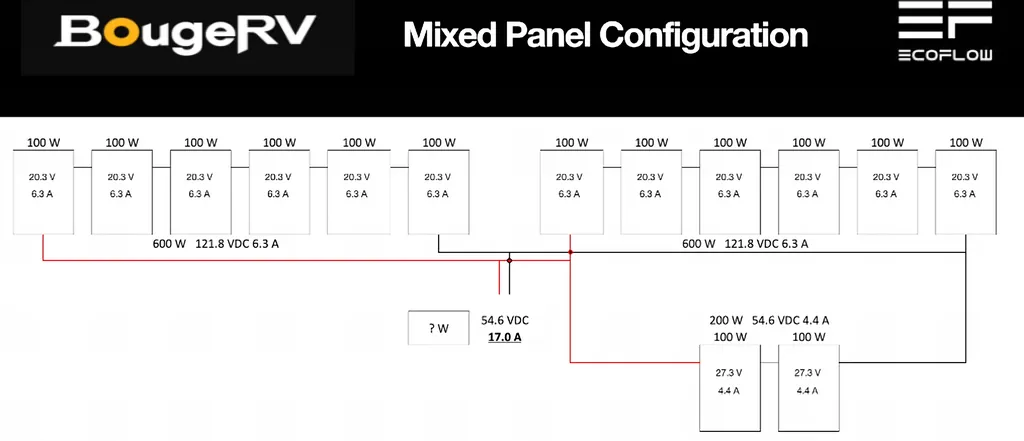
I actually gave it a shot, adding these two as their own separate series. The BougeRV panels were pumping out 200 watts at 54.6 volts and 4.4 amps. But then when you try to parallel that with another series, guess what? The lowest voltage takes over and dictates everything. So, the total output just tanked down to a measly 928 watts. Yeah, that was definitely a garbage setup. It just totally bombed.
Final Verdict on Solar Panels
So, yeah, we're actually pretty darn impressed with these BougeRV panels. They're a seriously solid bit of gear. Honestly, when my old EcoFlows eventually kick the bucket, I'm definitely thinking about swapping them out for these. And hey, if you haven't caught our other video where we talked all about the EcoFlows, you should totally go watch it. It's got some really useful stuff in there. Alright, that's everything for today.
⚠️ CAUTION: SAFETY WARNING!
Seriously, always, *always* double-check what your MPPT controller can handle, both its max voltage and amperage, before you even think about hooking up any solar panels. If you push past those limits, you're gonna fry your power station for good.
Summary & Tips
So, these BougeRV panels are honestly a big jump in how efficient they are and how they're built. They really stand up to the wind better than those regular panels I've been running. And yeah, I'm definitely keeping an eye on them for when I wanna expand my setup later on. They're just a really solid, common-sense pick for anyone serious about their DIY solar.
📋 FAQ
❓ Can I mix bifacial and non-bifacial panels?
Honestly, it's a bad idea. You'll run into voltage and amperage mismatches that kill your efficiency. Stick to one type of panel for the best results.
❓ Why does my panel output drop in the heat?
Yeah, it's just physics. Solar panels lose voltage as they get hotter. That's why keeping them ventilated is so important.
❓ Is bifacial tech worth the extra cost?
Depends on your setup. If you have a reflective surface like a white roof or ground cover, it's worth it. Otherwise, you might not see the gains.
❓ What happens if I exceed my MPPT voltage limit?
You'll likely fry the controller. It's an expensive mistake. Always double-check your series wiring math before plugging it in.
Disclaimer: I purchased all tools for this guide with my own money to ensure an unbiased review. This post contains affiliate links, meaning I earn a small commission if you make a purchase at no extra cost to you.