Planetary gearboxes are mechanical powerhouses, packing high torque and multiple gear ratios into a compact footprint. By breaking down a 3D-printed model, we can visualize the interaction between the sun gear, planet carrier, and ring gear. This setup demonstrates how changing which component remains stationary dictates the output speed and direction.
⚡ Quick Guide: How to Make It in 5-10 Steps
- Model the sun gear, ring gear, and planet carrier in CAD software.
- Adjust gear tolerances to ensure smooth rotation between components.
- Print parts using a 3D printer with appropriate material settings.
- Sand contact surfaces to minimize friction and binding.
- Assemble the gear set using adhesive on structural handles.
- Apply lubricant to internal gear teeth for smoother operation.
📋 In This Article
- Technical Specifications & Components
- Tools & Materials Used — what you will need for this project
- Identifying Planetary Gear Components
- Designing for 3D Printing Tolerances
- Refining Gear Mesh and Spacing
- Assembling the Gearbox Base
- Surface Finishing for Smooth Operation
- Operating the Gearbox Handles
- Analyzing Gear Interaction and Ratios
- Calculating Reduction and Increase Ratios
- Testing Reverse Gear Ratios
- Demonstrating the 3:1 Reduction Ratio
- Exploring Complex Gear Combinations
- Applying Gearboxes in Transmissions
- Using the Gear Ratio Reference Chart
- Calculating Ratios Based on Stationary Gears
- Finalizing the Demonstration
- FAQ
📊 Technical Specifications & Components
| Gearbox Type | Planetary |
| Primary Components | Sun Gear, Planet Carrier, Ring Gear, Planet Gears |
| Gear Ratios | 3:1, 2:1, 3:2, 2:3, 1:1 |
| Design Software | Fusion 360 |
| Material | 3D Printed Plastic |
| Assembly Method | Super glue and mechanical interference |
📊 Project Overview & Costs
🔧 Difficulty Level: Medium
⏱️ Time Investment: DIY: 4-6 hours | Pro: 2 hours
💰 Professional Service Cost: $50-$100
💡 Verdict: Building a custom model is far cheaper than sourcing industrial gear assemblies for prototyping.
🛠️ Tools & Materials Used
• Super glue
• Silicone oil
• Sandpaper
• Fusion 360 CAD software
Step-by-Step Assembly, Repair, Testing & Inspection
Identifying Planetary Gear Components
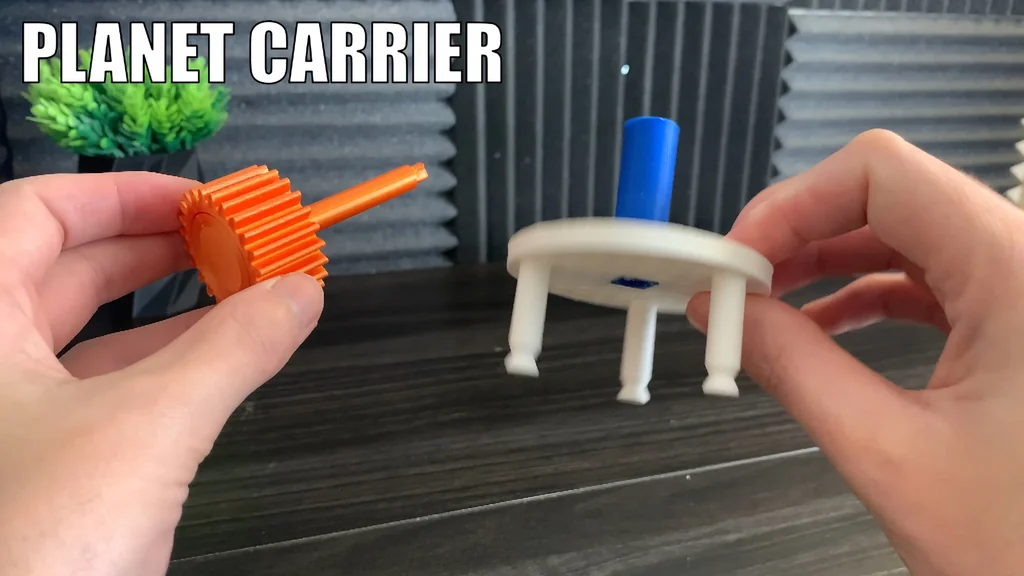
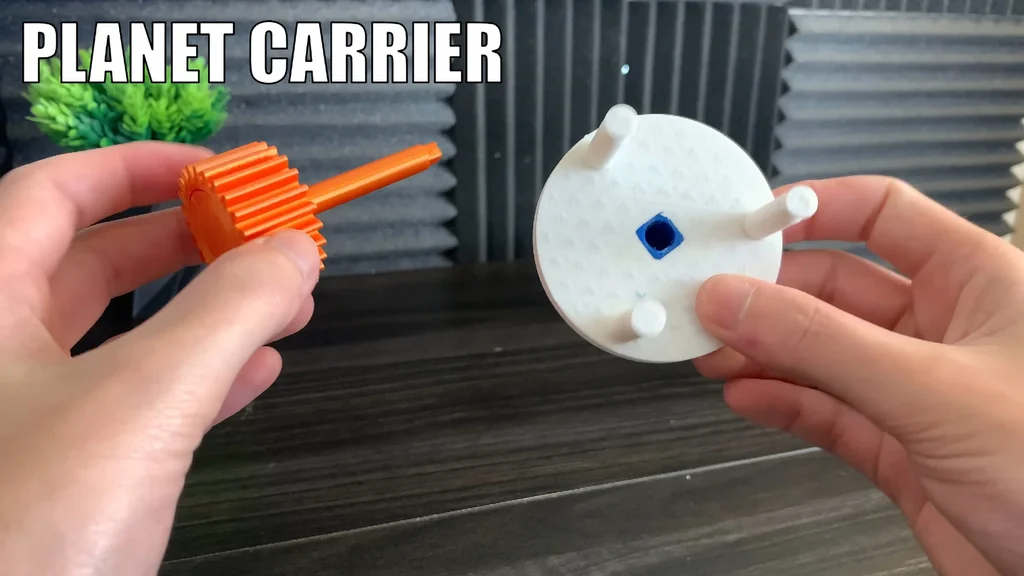
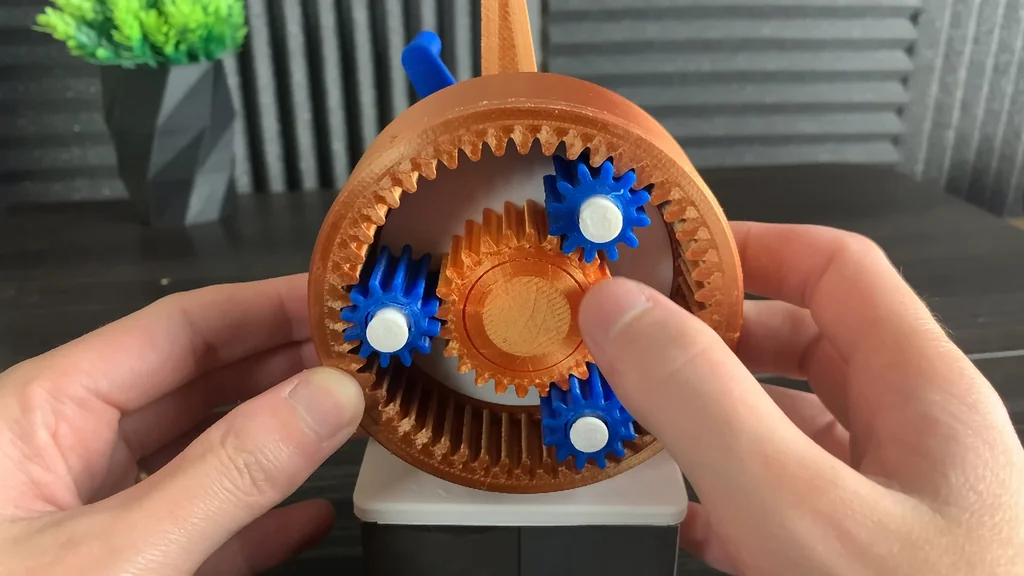
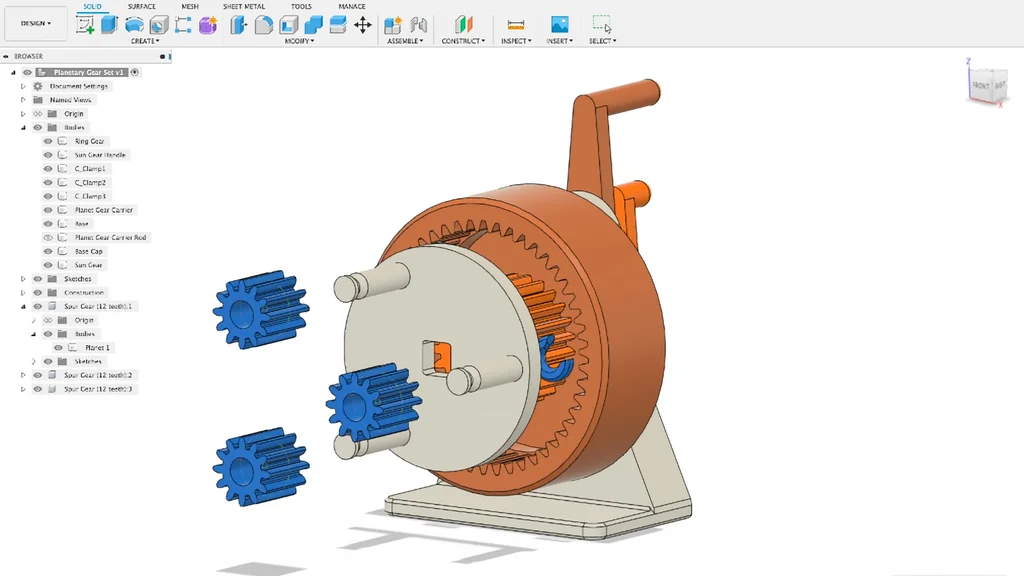
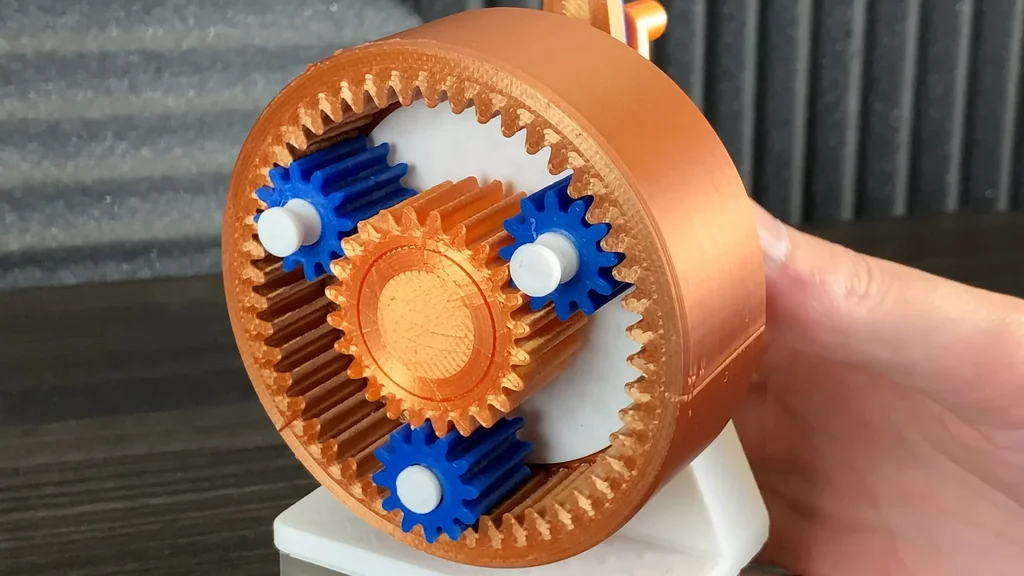
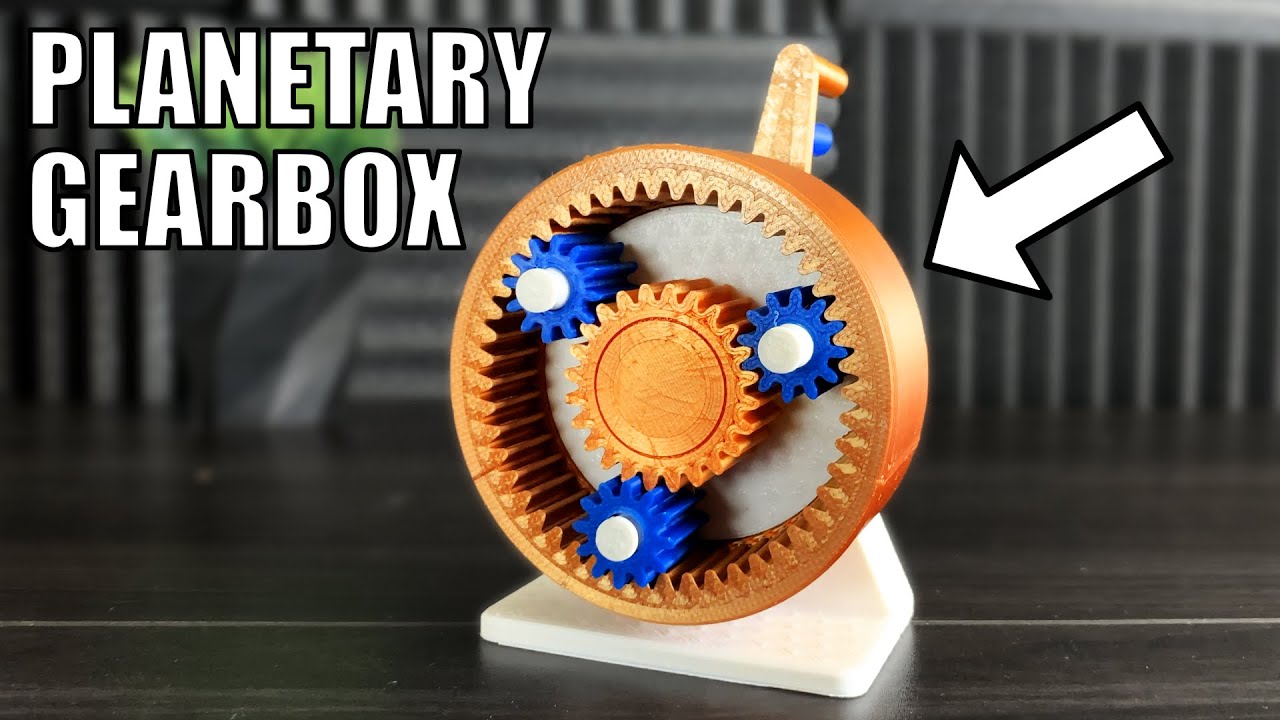
A planetary gearbox looks simple, but it's a complex system. It relies on four main parts: the sun gear, the planet carrier, the ring gear, and the planet gears themselves. The sun gear sits at the center of the assembly. Its axle inserts directly into the planet carrier. The planet carrier holds the planet gears in place. These gears orbit the sun gear. It's a precise system.
Designing for 3D Printing Tolerances
Designing for 3D printing requires careful tolerance management. The ring gear, named for its circular shape, often needs specific spacing adjustments. If the gap between teeth is too tight, the gears bind. I had to go back into the CAD program to shrink the planet gears. This allows each component to spin independently. Precision is key.
Refining Gear Mesh and Spacing
Back in Fusion 360, I adjusted the gear outlines. By offsetting the outline and extruding it, I made the teeth slightly smaller. This creates more clearance between the gears. It's hard to see the difference, but it matters. The new gears run much smoother than the original design. Small changes yield big results.
Assembling the Gearbox Base
Now it's time to assemble the unit. I'm using super glue to attach the handles to the base. It's a messy process. My glue tube leaked everywhere. I have glue all over my fingers now. Be careful with adhesives. Always work on a protected surface.
Surface Finishing for Smooth Operation
Sanding is a critical step. You should sand down any 3D printed parts before assembly. It removes burrs and layer lines. This improves the fit significantly. It's worth the effort.
Operating the Gearbox Handles
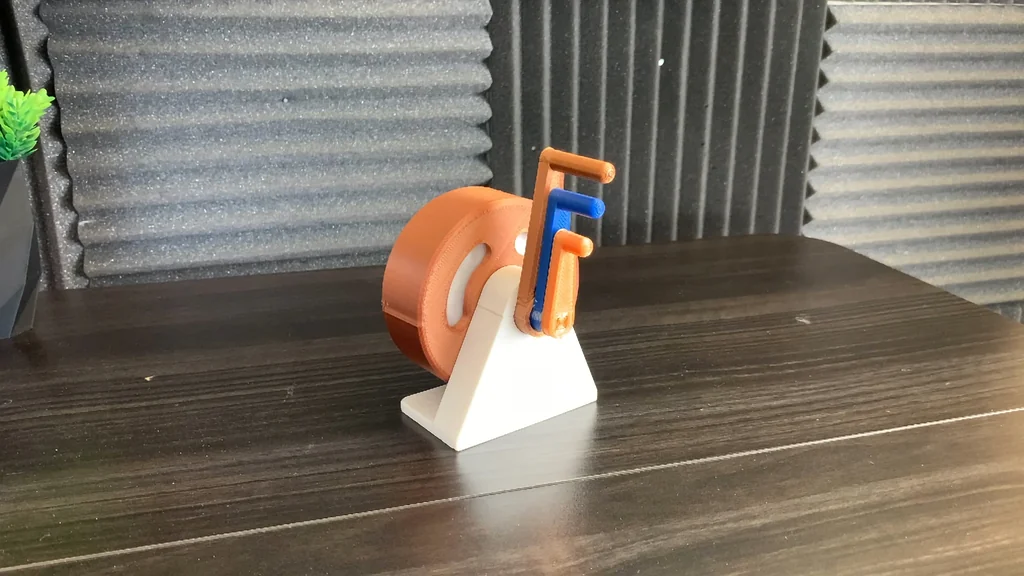
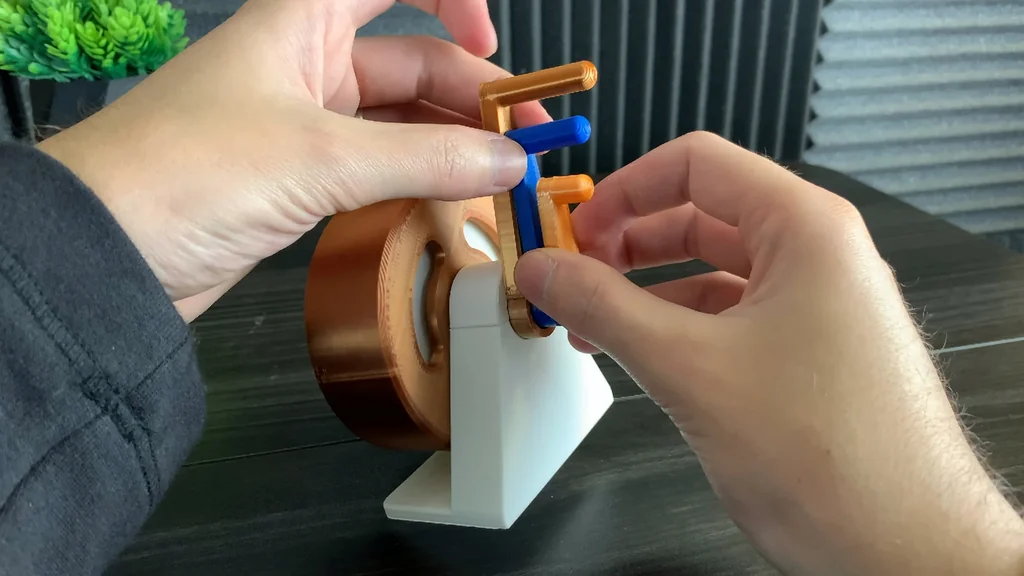
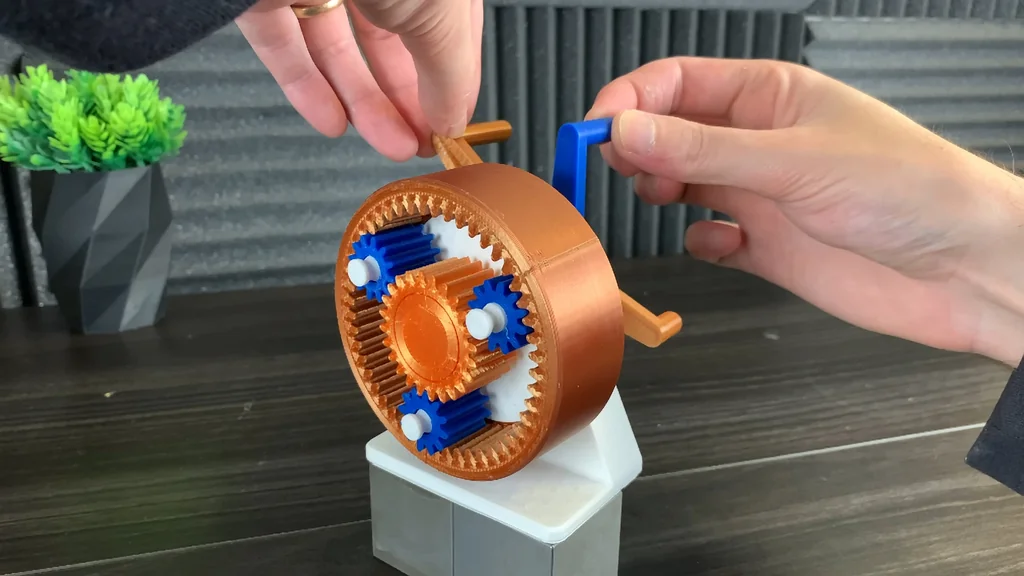
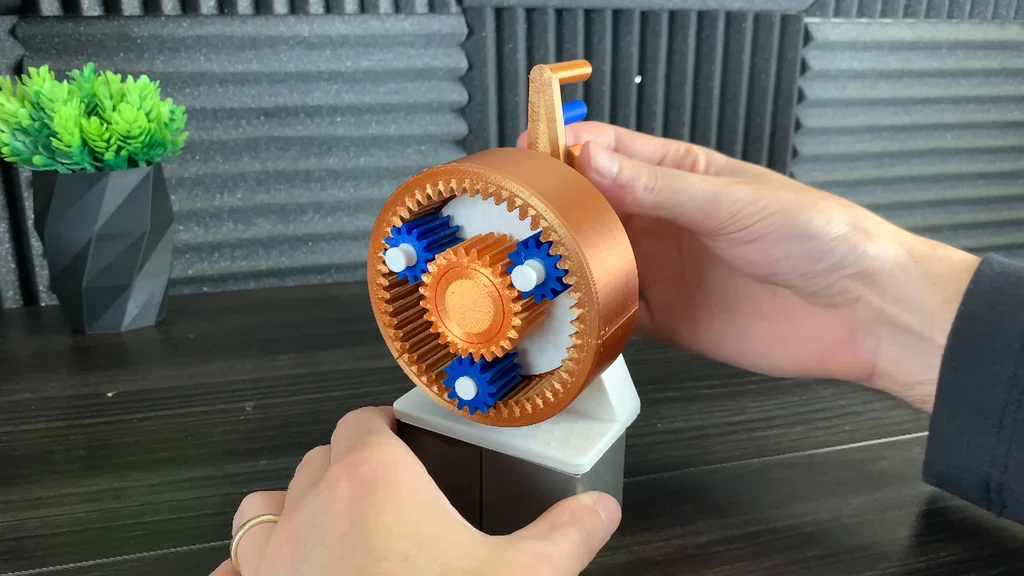
The gearbox is ready for testing. The orange handle controls the sun gear. The blue handle moves the planet carrier. The copper handle rotates the ring gear. When the sun gear spins, the planet gears rotate around it. They are held in place by the carrier. The mechanism is fascinating.
Analyzing Gear Interaction and Ratios
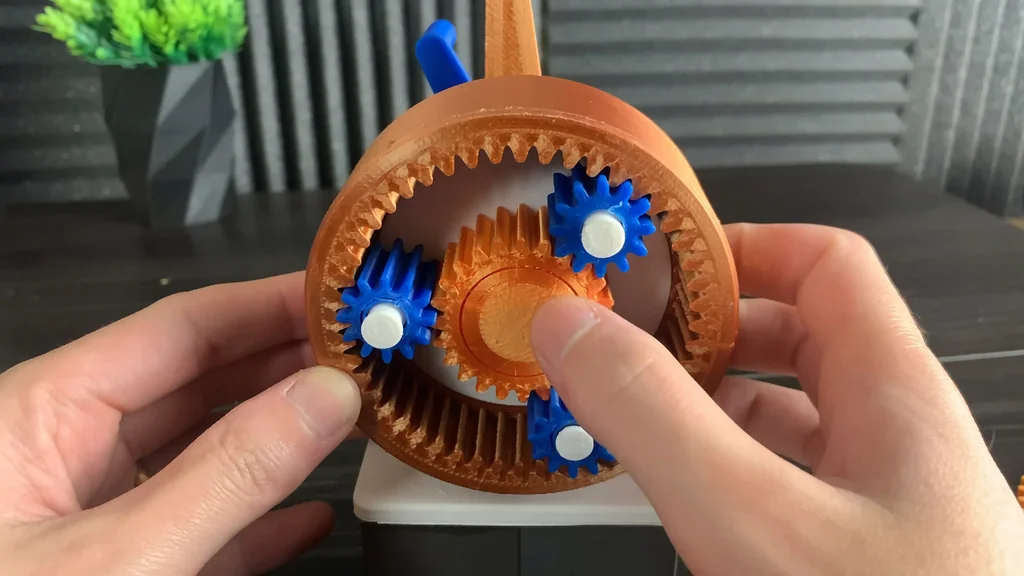
Spinning the orange handle drives the planet gears inside the ring gear. If you hold the sun gear steady and move the ring gear, the planet gears still rotate. There are six different gear ratios built into this unit. It depends on which handle you hold steady. It's a versatile design.
Calculating Reduction and Increase Ratios
Holding the ring gear steady while spinning the sun gear creates a 3:1 reduction. You spin the orange handle three times for one blue handle rotation. If you spin the planet carrier, it's a 3:1 increase. Holding the planet carrier steady changes everything. We get a 2:1 ratio. It's quite clever.
Testing Reverse Gear Ratios
We can achieve a 2:1 reverse increase by spinning the ring gear. It sounds complicated, but it's simple. Every time you spin the copper handle, the orange handle spins twice in the opposite direction. Holding the sun gear steady gives a 3:2 ratio. The copper handle spins three times while the blue spins twice. It's a precise dance.
Demonstrating the 3:1 Reduction Ratio
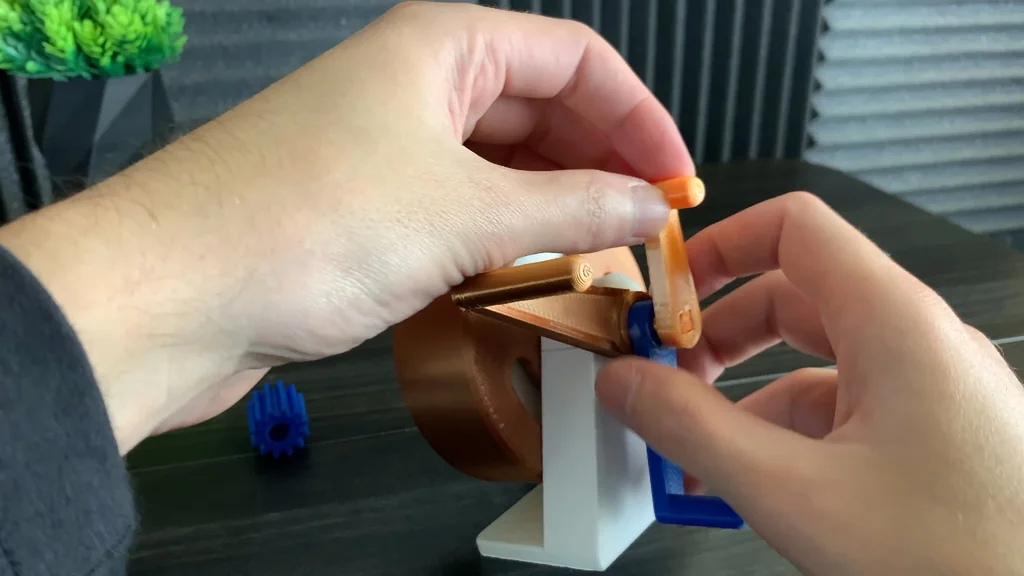
Let's look at the 3:1 ratio again from the front. I'll count the rotations of the orange handle. One, two, three. That's one full rotation of the blue handle. It's a 1:3 ratio. The interaction is clear.
Exploring Complex Gear Combinations
We also have the 2:1 ratio. Every time the orange handle spins twice, the copper handle spins once in reverse. Then there is the 3:2 ratio. There's even a 1:1 ratio. It doesn't seem to make sense at first glance. You have to see it in context.
Applying Gearboxes in Transmissions
Think about an automatic transmission. It changes gears based on speed. A 1:1 ratio is called direct drive. The engine spins at the same speed as the output. Planetary gearboxes are perfect for this. They offer many variations. It's an elegant solution.
Using the Gear Ratio Reference Chart
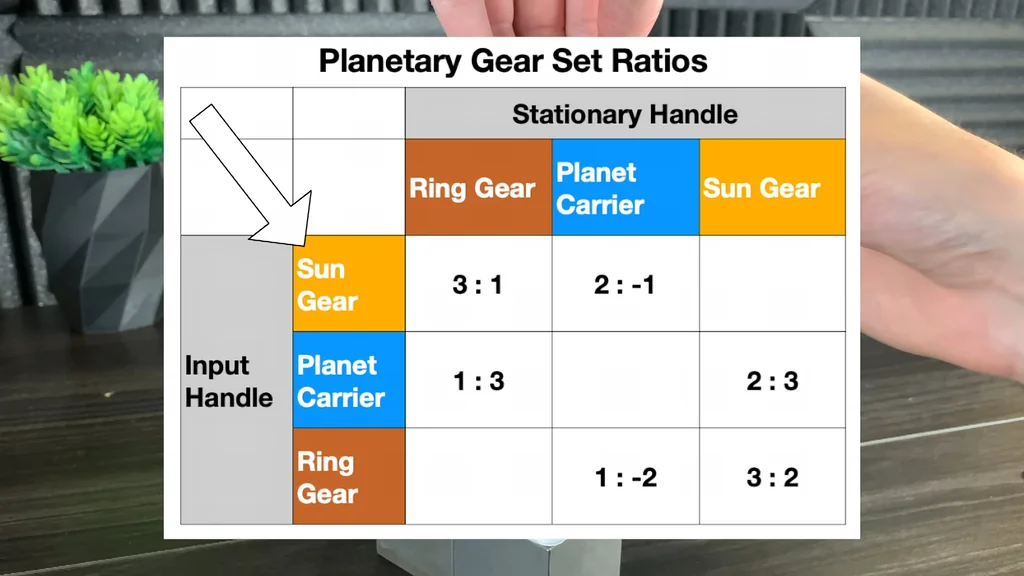
I'm launching a new program on February 2nd, 2022. It's my most comprehensive course yet. I've also curated free STL files on my website. I made a convenient chart to help you predict gear ratios. It's a useful tool. Check it out.
Calculating Ratios Based on Stationary Gears
The chart shows which handle to spin and which to hold. If you spin the planet carrier but hold the sun gear, you get a 2:3 ratio. We can see that here. The ratios depend on the number of teeth on each gear. It's all math. Formulas define the output.
Finalizing the Demonstration
This contraption shows how powerful these systems are. Thanks for watching. I hope you learned something new. Consider supporting the channel on Patreon. There are plenty of free files on the website. Happy printing.
⚠️ CAUTION: SAFETY WARNING!
Super glue can bond skin instantly; keep fingers away from the nozzle and use caution during assembly. Always wear eye protection when sanding plastic parts to avoid debris.
Summary & Tips
Planetary gearboxes represent a masterclass in mechanical efficiency. By manipulating the input and stationary components, you can achieve a wide array of torque and speed outputs. This 3D-printed model proves that complex engineering concepts can be simplified for the workshop bench. Understanding these ratios is the first step toward building your own custom transmissions.
📋 FAQ
❓ Why do planetary gearboxes have so many ratios?
They use multiple components that can be locked or driven. Depending on which part is stationary, the output changes. It's a flexible design.
❓ Can I print these gears on any 3D printer?
Yes, most consumer printers work fine. You just need to dial in your tolerances. Precision is mandatory for smooth movement.
❓ What is the 1:1 gear ratio used for?
It's known as direct drive. The input speed matches the output speed exactly. It's common in automotive transmissions.
❓ How do I calculate the gear ratio?
Honestly, it depends on the tooth count of the sun, planet, and ring gears. You use specific formulas for that. The chart helps simplify it.
Disclaimer: I purchased all tools for this guide with my own money to ensure an unbiased review. This post contains affiliate links, meaning I earn a small commission if you make a purchase at no extra cost to you.