When solar harvesting stops for days, panels won’t keep battery banks charged. An inverter generator provides a necessary emergency backup. The primary challenge involves matching the generator output to the power station’s AC draw to prevent tripped breakers or unnecessary fuel consumption.
⚡ Quick Guide: How to Make It in 12 Steps
- Select a pure sine wave inverter generator.
- Verify voltage output using a power meter.
- Position generator for external exhaust ventilation.
- Configure power station input for low draw.
- Scale charging speed to match generator capacity.
- Operate engine at load to reduce total runtime.
- Maintain generator size below 3600W.
- Calculate pass-through loads before appliance use.
- Test system limits under heavy load.
- Perform breaker reset if voltage trips occur.
- Estimate AC to DC conversion efficiency losses.
- Execute shutdown sequence upon battery completion.
📋 In This Article
📊 Technical Specifications
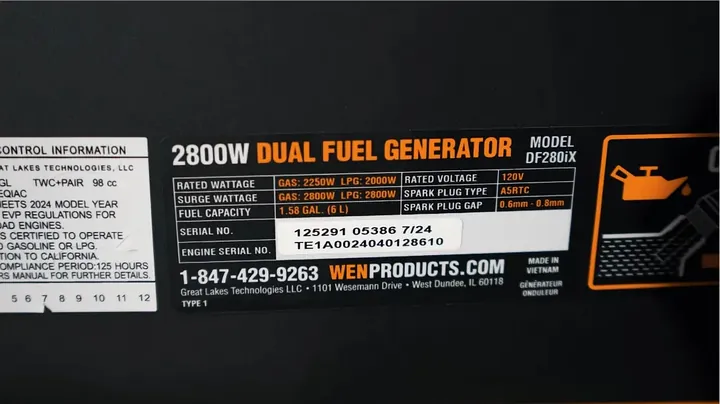
| Generator Model | WEN DF280iX Dual Fuel Inverter |
| Generator Peak Output | 2800 Watts |
| Generator Continuous Rating | 2000 Watts |
| AC Voltage Output | 123V AC |
| Max Standard 15A Outlet Limit | 1800 Watts |
| OUPES Exodus 600 Charge Rate | ~300W AC Input |
| OUPES Exodus 2400 Fast Charge | 1400W AC Input |
| OUPES Mega 2 Pro Max Charge | 1800W AC Input |
| OUPES Guardian 6000 Battery Capacity | 9.2 kWh (with G5) |
| Generator Runtime (Full Load) | ~5.5 Hours per tank |
📊 Project Overview & Costs
🔧 Difficulty Level: Easy
⏱️ Time Investment: DIY: 30 minutes | Pro: 15 minutes
💰 Professional Service Cost: $50
💡 Verdict: Correct generator sizing prevents overloads and protects lithium battery systems from power spikes.
Step-by-Step Generator Sizing and Recharging Guide
Choose the Right Portable Inverter Generator
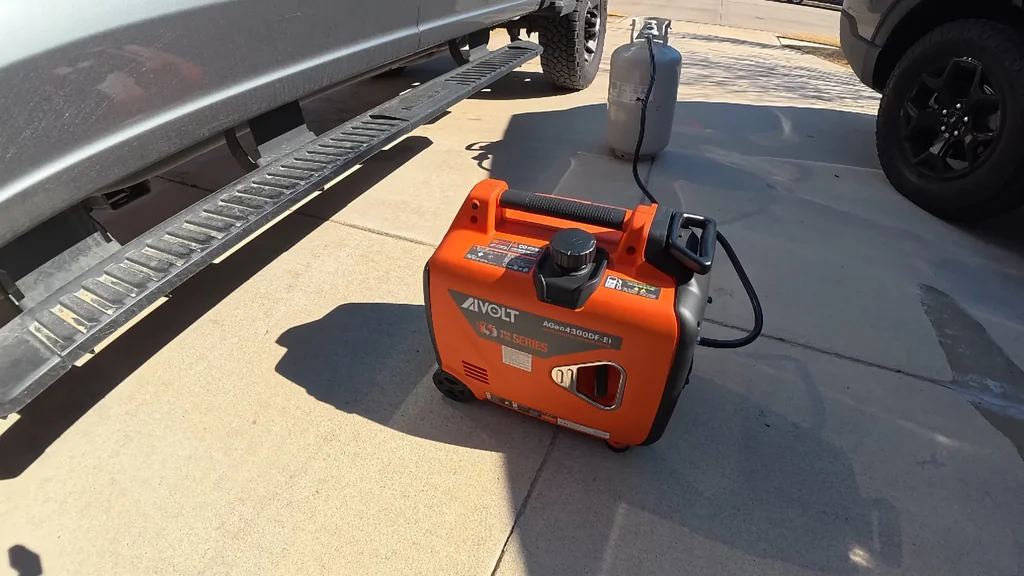
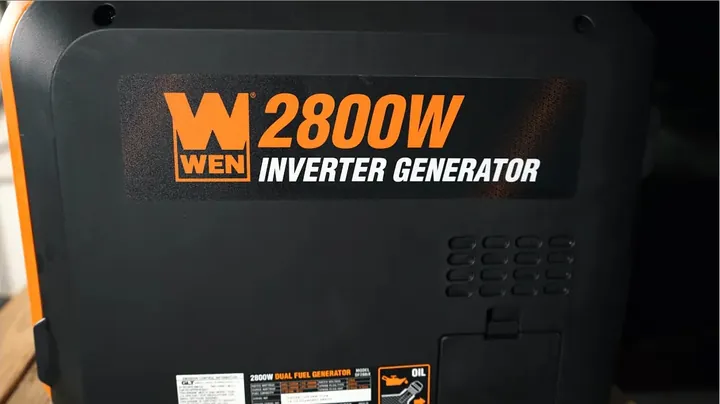
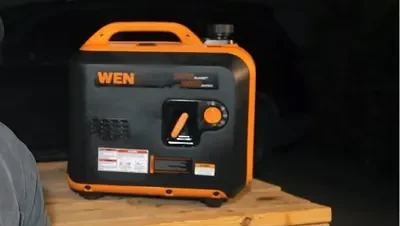
Solar power isn't always reliable. Storms limit recharge capability. I use a small gas or propane inverter generator as a secondary power source. The WEN DF280iX dual-fuel unit provides 2,800 surge watts and roughly 2,000 running watts. It costs approximately $400. Dual-fuel functionality allows for propane operation when gasoline storage is limited.
Set Up Safe Outdoor Exhaust Ventilation
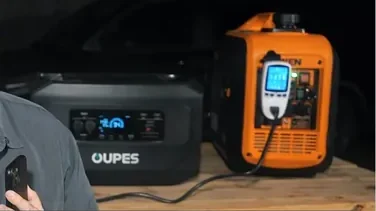
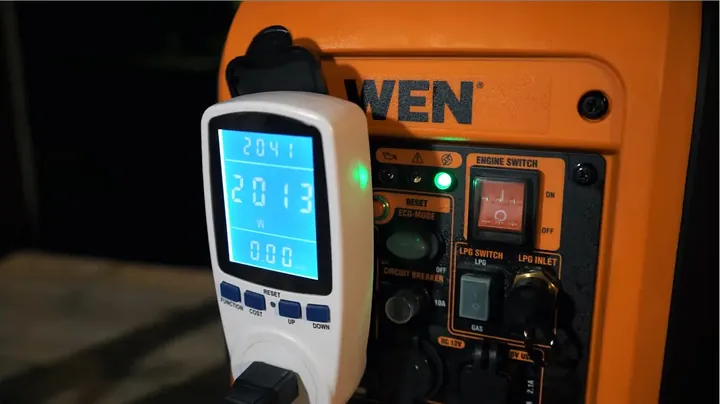
Never operate engines in enclosed areas. Carbon monoxide build up poses fatal risks. I place the generator outdoors, ensuring exhaust vents away from any structure. I measured 123 volts AC using an inline power meter. Plugging in the OUPES Exodus 600 resulted in a 300-watt draw. Inverter generators shift during operation on smooth surfaces, so I secure the unit accordingly.
Verify Pure Sine Wave Voltage Output
Standard generators create power instability. This often causes battery management systems to reject the charge. I rely on a pure sine wave inverter generator to convert output into clean, regulated 120V AC. Using this equipment allows me to recharge the battery bank before silencing the motor for quiet operation.
Calculate Maximum AC Input Draw Limits
Generator output must exceed station demand. I tested the OUPES Exodus 2400. Slow charging pulls 700 watts, while fast charging increases demand to 1,400 watts. Setting a charge rate exceeding the generator's running wattage will trigger an immediate breaker trip. A 2,000-watt continuous generator handles these medium-capacity stations reliably.
Adjust Power Station Charging Wattage Settings
I connected the OUPES Mega 2 Pro, which features adjustable input up to 1,800 watts. I initiated charging at 900 watts. Increasing the setting to 1,400 watts forced the generator throttle open, resulting in increased engine noise. I recognize the 1,800-watt threshold as the continuous limit for standard 15-amp household circuits.
Optimize Engine Load vs Fuel Consumption
High-load operation burns fuel faster, but this is efficient for battery charging. Household appliances require low consumption for runtime. Conversely, power station recharging should occur at maximum allowed rates. I prioritize rapid charging to fill cells, minimize engine hours, and decrease noise duration.
Determine Maximum Generator Size Thresholds
Oversized generators represent poor value. Units exceeding 3,600 running watts are unnecessary for 120V charging. If a station caps input at 1,800 watts, an oversized generator only wastes fuel. A 2,000 to 2,500-watt unit offers the optimal balance of weight and efficiency.
Monitor EPS Pass-Through Power Demands
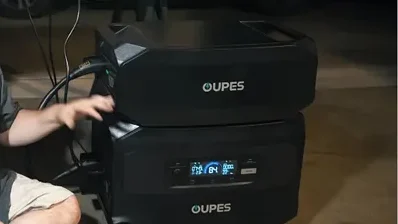
Pass-through charging creates potential overloads. I connected an OUPES Guardian 6000 in Emergency Power Supply (EPS) mode. The station directs incoming AC power to appliances while simultaneously charging the battery. If charging consumes 1,800 watts and an appliance adds 600 watts, total demand reaches 2,400 watts. This will overload a 2,000-watt generator.
Test High-Load Pass-Through Thermal Overloads
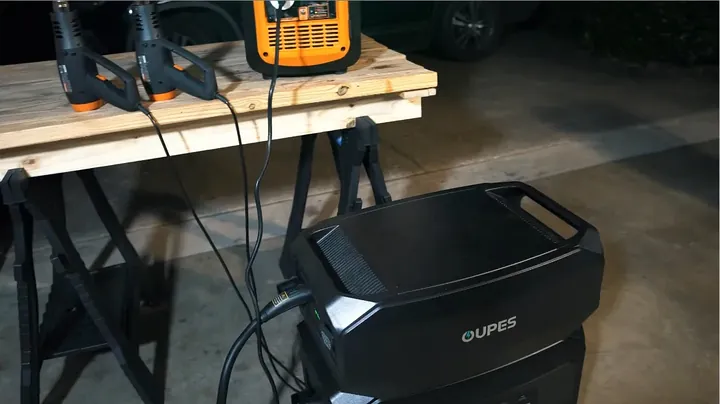
I induced a pass-through overload. With the generator at 1,750 watts, I activated a heat gun via the station output. Demand exceeded 2,400 watts. The generator's electronic protection cut power immediately to prevent coil damage. The engine remained running while the system reset.
Recover from Generator Voltage Trips
Overload recovery requires reduced draw. I lowered the charge rate to 900 watts. Activating the heat gun at 768 watts resulted in a combined load of 1,668 watts. The generator maintained stability. I recommend leaving thermal headroom if operating appliances during charging.
Account for AC-to-DC Conversion Losses
Conversion efficiency is never 100%. Mechanical energy, AC output, and station rectification each introduce heat losses. One gas tank provides 5.5 hours at full load, theoretically yielding 9.9 kWh. Actual energy stored in the battery is slightly lower due to resistance, but it remains sufficient to fill large systems.
Establish an Emergency Off-Grid Recharging Routine
Emergency backup requires established operating parameters. A compact inverter generator serves as an insurance policy for extended outages. I match generator output to station limits, monitor pass-through demand, and prioritize efficiency. Silencing the generator allows for quiet battery-powered operation at night.
⚠️ CAUTION: SAFETY WARNING!
Never operate generators in living areas or unventilated spaces. Carbon monoxide is lethal. Maintain a 20-foot distance from structures.
Summary & Tips
Recharging requires balancing running wattage against battery limits. Pure sine wave output protects sensitive electronics. Managing pass-through load prevents overloads. A 2,000-watt inverter generator offers optimal portability and economy.
📋 FAQ
❓ Can I charge a solar power station with a standard open-frame generator?
Open-frame generators often produce unstable voltage with high harmonic distortion. Most battery management systems will reject this input to prevent internal damage.
❓ What size generator do I need for an 1800W power station charger?
A 2,000-watt continuous inverter generator is required to provide sufficient overhead above the 1,800-watt draw.
❓ Why did my generator overload when I turned on a heat gun?
Pass-through loads are cumulative. The generator must supply power for both the battery charging and the appliance draw simultaneously, leading to potential trip events.
❓ Is propane better than gas for emergency generator backup?
Propane offers superior shelf stability, preventing carburetor issues associated with long-term gasoline storage.
Disclaimer: I purchased all tools independently. This guide includes affiliate links for relevant products.