Freezing temperatures and lithium batteries don’t mix. To fix that, this project swaps in three Bluetti B1232 314Ah LiFePO4 batteries—each with built-in self-heating—for a total of 942Ah. That’s enough reliable power for winter boondocking. Below: unboxing, wiring, and how it all goes together in the camper.
⚡ Quick Guide: How to Make It in 5-10 Steps
- Unbox and inspect the Bluetti B1232 battery units.
- Calculate total capacity requirements for your specific load.
- Identify a secure mounting location within the camper.
- Wire the batteries in parallel to maintain 12V output.
- Install a battery cutoff switch for safety.
- Integrate with existing system monitors and test connections.
📋 In This Article
- Technical Specifications & Components
- Tools & Materials Used — what you will need for this project
- Unboxing the Bluetti B1232 Units
- Initial Battery Inspection
- Calculating System Capacity
- Wiring the Battery Bank
- Selecting the Mounting Location
- Securing Battery Terminals
- Installing the Cutoff Switch
- Removing Terminal Covers
- Final Visual Inspection
- Reviewing the Setup
- System Integration and Testing
- Verifying Connections
- Monitoring Charge Status
- Final System Load Test
- Completion and Verification
- FAQ
📊 Technical Specifications & Components
| Battery Type | LiFePO4 |
| Individual Capacity | 314Ah |
| Total System Capacity | 942Ah |
| Voltage | 12.8V |
| Feature | Integrated Self-Heating |
📊 Project Overview & Costs
🔧 Difficulty Level: Medium
⏱️ Time Investment: DIY: 4-6 hours | Pro: 2-3 hours
💰 Professional Service Cost: $300 - $600
💡 Verdict: Doing it yourself saves the labor cost—and you'll actually know how your system is wired.
Step-by-Step Assembly, Repair, Testing & Inspection
Unboxing the Bluetti B1232 Units
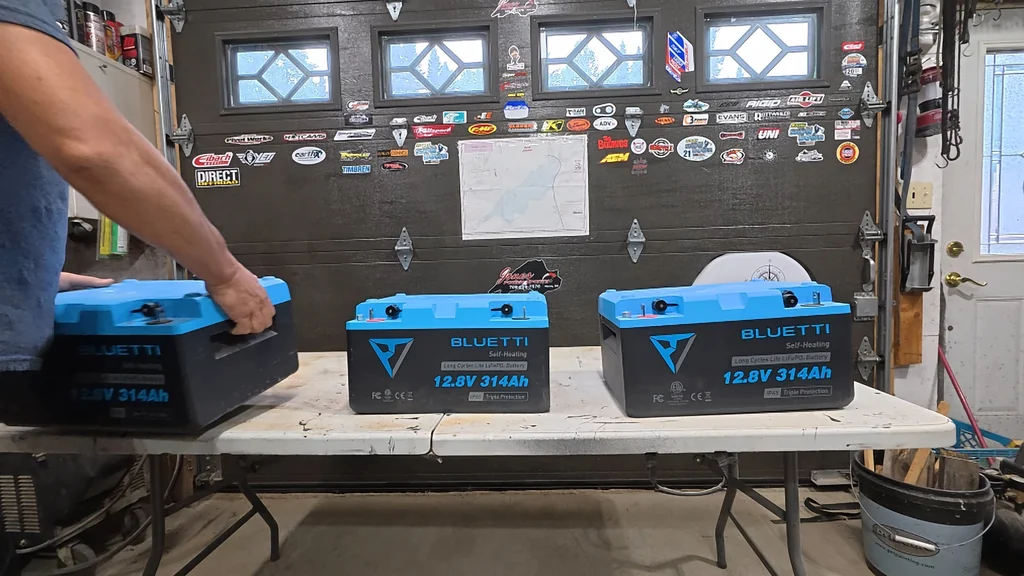
Start by unboxing all three Bluetti B1232 units. Check each one for shipping damage and make sure the terminals are clean. These batteries are built for cold weather—that's the whole reason for this upgrade.

Initial Battery Inspection
Pull each battery out and look over the casing and terminal posts. It's a quick check, but it catches manufacturing defects or shipping damage before they become a problem down the road.
Wiring the Battery Bank
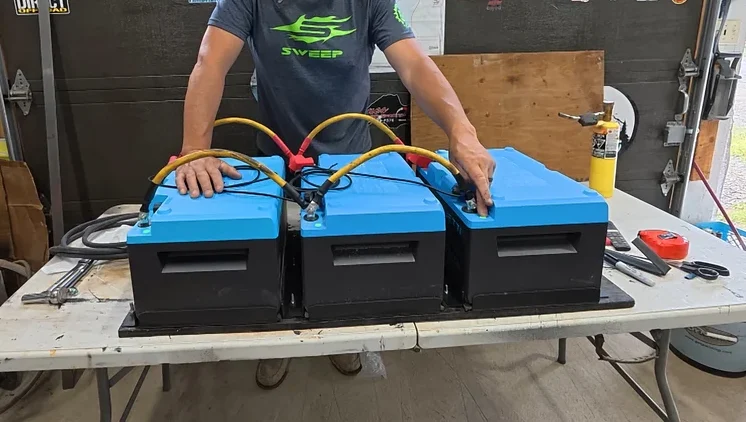
Connect the positives together and the negatives together—standard parallel wiring. Use copper cable sized for your current draw so you don't get voltage drop. Tie the cables down well; an overland camper vibrates a lot, and you don't want connections working loose.
Selecting the Mounting Location
Pick a spot that keeps the weight balanced and still lets you get at the batteries for maintenance. Good ventilation is a plus.
Securing Battery Terminals
Tighten every terminal with a torque wrench. Loose connections mean resistance, and resistance means heat—exactly what you don't want when you're pulling a heavy load.
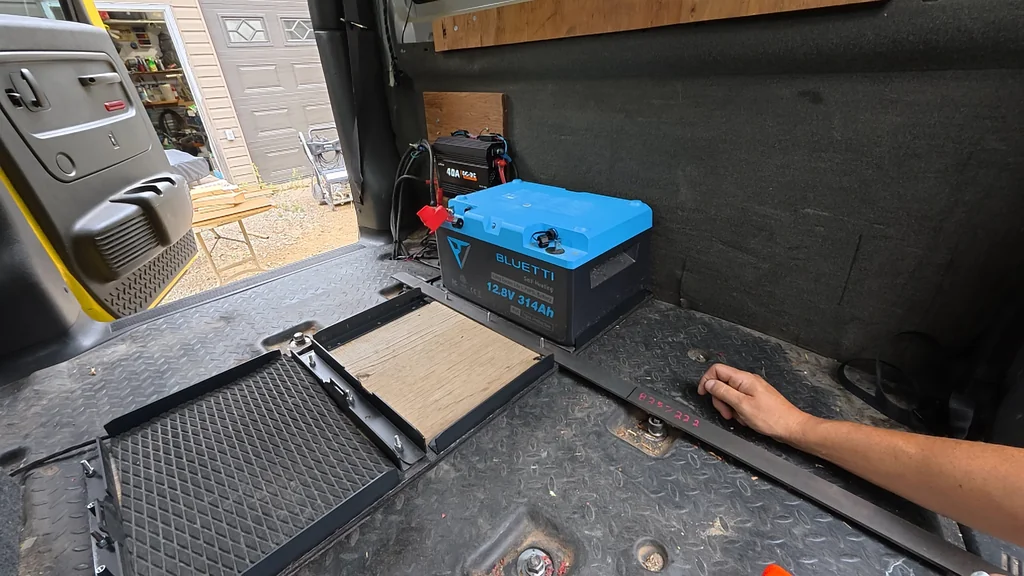
Final Visual Inspection
Before you button it up, look everything over. No pinched wires, nothing rubbing on sharp metal. That's what keeps a system reliable years from now.
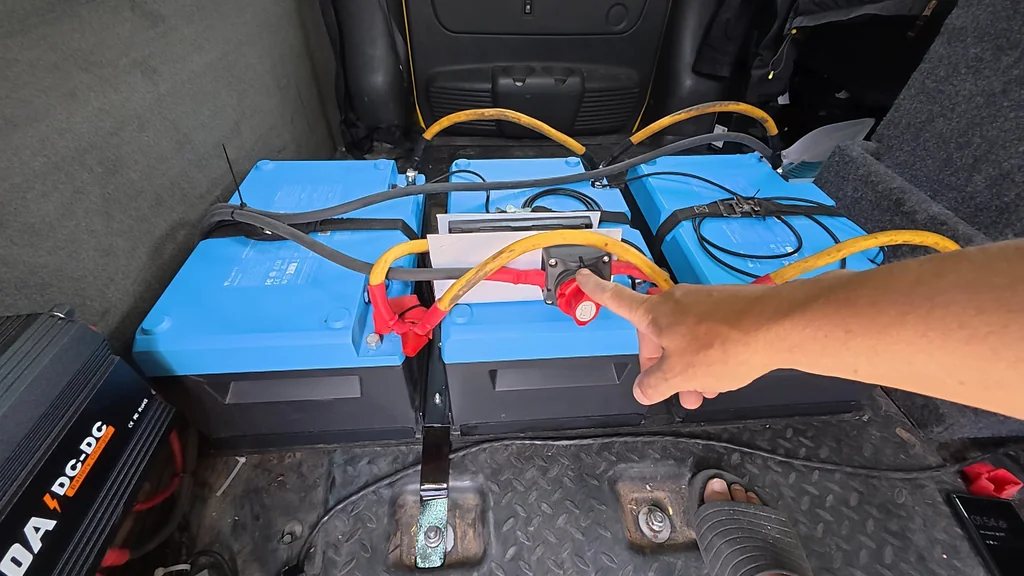
Reviewing the Setup
Double-check that all three batteries are wired the same way. Once that's confirmed, you're ready to hook up the charge controllers and inverter.

System Integration and Testing
Hook the bank up to the Victron monitor, power on, and confirm it reads the new capacity and voltage correctly.
Watch the charge status to make sure the self-heating kicks in when it's cold. That's the whole point of these batteries, so you want to see it working.
That's it—the system's running and monitored, with the extra capacity and self-heating ready for winter overlanding.

⚠️ CAUTION: SAFETY WARNING!
A lithium bank this size holds a lot of energy. Cut the main power before touching any wiring, and make sure every connection is insulated. One accidental short can mean sparks or fire.
Summary & Tips
Three Bluetti B1232s triple the camper's power, and the self-heating takes care of the cold-weather problem. Every connection was checked for tightness and good contact. The system is wired in and ready for off-grid use.
📋 FAQ
❓ Why use self-heating batteries for overlanding?
Charging a standard lithium battery below freezing damages it. Self-heating batteries warm up first, then accept a charge—so you can still use solar or the alternator in cold weather.
❓ Can I mix different battery brands in a parallel bank?
Better not to. Different brands or capacities have different internal resistances, which makes them charge and discharge unevenly and shortens the bank's life.
❓ How do I know if my wiring is sufficient for the load?
Check your inverter's max current draw and size the cables for that. The right gauge copper wire keeps things cool and stops you from losing power to resistance.
❓ Is a battery cutoff switch necessary?
Yeah, it really is. It lets you isolate the batteries fast for maintenance or an emergency, which protects both your gear and your rig.
Disclaimer: I purchased all tools for this guide with my own money to ensure an unbiased review. This post contains affiliate links, meaning I earn a small commission if you make a purchase at no extra cost to you.