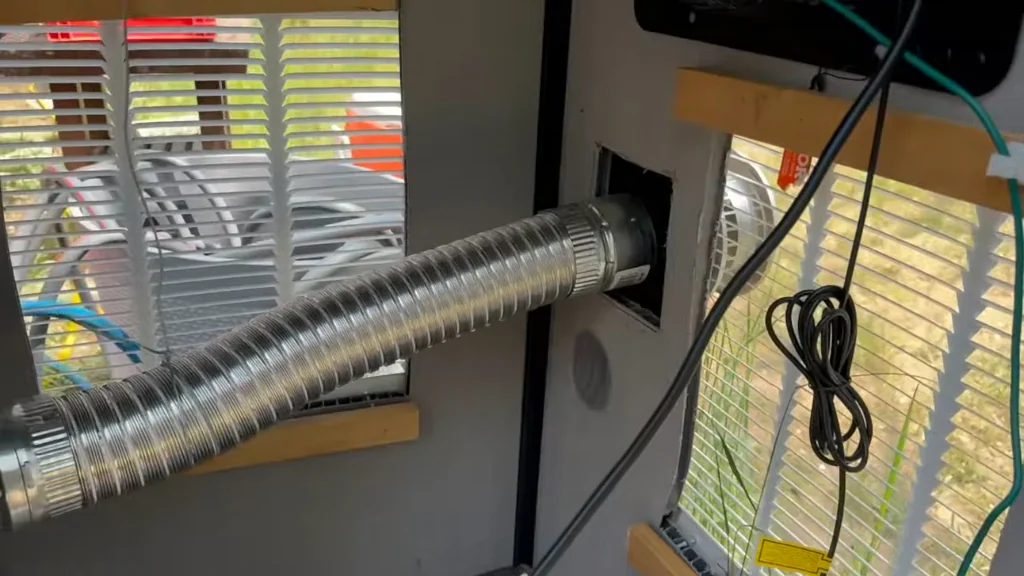
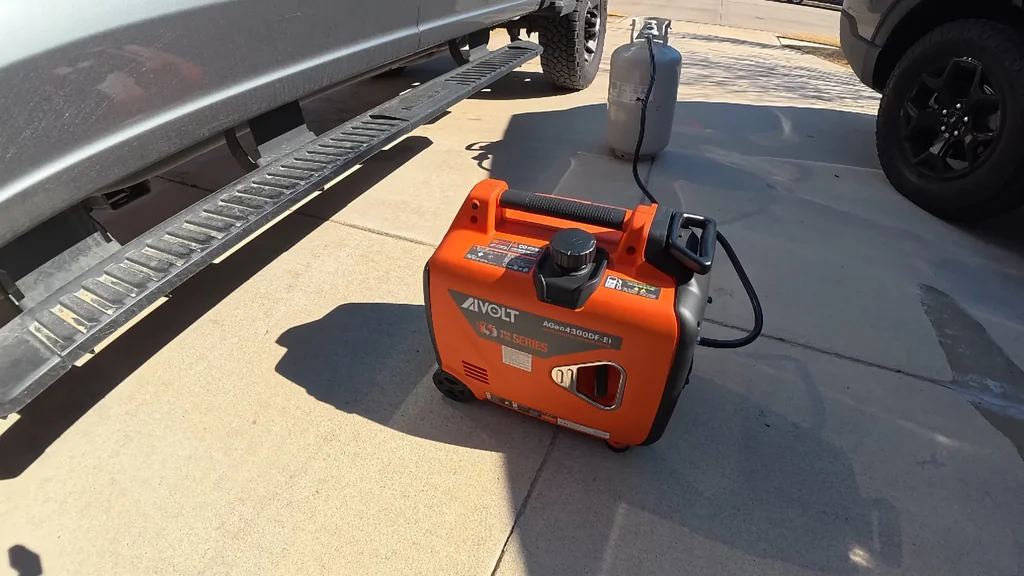
I sliced the shipping tape on a brand-new Harbor Freight Predator 4200W Dual Fuel Inverter Generator, set on running it through a battery of shop tests. The unit is rated for 4200 starting watts alongside 3200 running watts, designed to feed on either pump gas or bottled propane. I wanted hard numbers under real loads, so I wired it up to hungry RV gear like the rooftop air conditioner and microwave, and even struck an arc with a stick welder to see where it choked. Pure spec sheets do not tell the whole story. Dependable power on the job does.
⚡ Quick Guide: How to Make It in 12 Steps
- Unpack and check carburetor kit.
- Add engine oil and verify level.
- Connect propane hose for initial tests.
- Measure noise and monitor digital display.
- Review control panel and power outlets.
- Load test RV AC, fridge, and microwave.
- Confirm RV appliance performance on propane.
- Perform arc welding test with generator.
- Install parallel kit for dual generator power.
- Run combined heavy loads with two units.
- Monitor stable output under maximum demand.
- Assess overall generator power and quietness.
📋 In This Article
- Technical Specifications & Components
- Tools & Materials Used — what you will need for this project
- Unpacking and Carburetor Kit Insights
- Initial Oil Fill and Residual Check
- Connecting to Propane for First Run
- Noise Level Test and Digital Display
- Exploring the Control Panel and Outlets
- Running RV Appliances Under Load
- RV Appliance Performance and Propane Limits
- Arc Welding Test on Propane
- Setting Up Dual Generators in Parallel
- Testing Combined Heavy Loads with Parallel Setup
- Analyzing Stable Output Under Maximum Combined Load
- Final Verdict on Predator Generator Performance
- FAQ
📊 Technical Specifications & Components
| Model | PREDATOR® 4200 Max. Starting Watt Dual-Fuel SUPER QUIET™ Inverter Generator with CO SECURE® |
| Engine | PREDATOR® 187cc gas engine |
| Fuel Type | Dual-Fuel (Gasoline or Propane) |
| Starting Watts | 4200 watts |
| Running Watts | 3200 watts |
| Noise Level (Claimed) | 59.8 dB(A) |
| Noise Level (Measured at 3ft/1m) | 70 dB |
| Runtime (Gasoline) | Over 8 hours |
| Runtime (Propane) | Over 20 hours |
| RV Outlet | (1) 120V TT-30R |
| Standard Outlets | (2) 120V 5-20R |
| USB Outlets | (1) USB-C, (1) USB-A |
| Technology | Pure sine wave inverter, CO SECURE® |
| Display | Integrated digital (voltage, frequency, fuel level, run hours) |
| Compliance | ANSI/PGMA G300 standard |
| Output Voltage (Tested) | 120 Volts |
| Output Frequency (Tested) | 60 Hertz |
| AC Startup Load (Tested) | ~2200W |
| AC Running Load (Tested) | ~1100W |
| Refrigerator Add-on Load (Tested) | ~300-400W |
| Microwave Total Load (Tested with AC & Fridge) | ~2600-2700W |
| Parallel Combined Load (Tested) | 2.2-2.5 kW |
📊 Project Overview & Costs
🔧 Difficulty Level: Medium
⏱️ Time Investment: DIY: 2 hours | Pro: 45 minutes
💰 Professional Service Cost: $150-$250 (technician shop rate for unboxing, oiling, and test-running)
💡 Verdict: DIY setup saves approximately $150-$250 in basic labor costs.
🛠️ Tools & Materials Used
• Harbor Freight Predator 4200W Dual Fuel Inverter Generator
• Carburetor gasket and jet kit
• Propane supply hose with regulator
• 20-lb propane cylinder
• Flexible oil drain tube
• Predator parallel kit cables
Step-by-Step Guide
Unpacking and Carburetor Kit Insights
I hauled this new Harbor Freight Predator 4200 Watt Dual Fuel Inverter Generator out of its shipping cardboard and set it on the shop floor. The paperwork did not interest me, despite the usual stack of two hundred printed warnings, but the packaged carburetor rebuild kit caught my eye immediately. Including that bag was smart engineering. The packet holds fresh gaskets along with replacement jets, proving the manufacturer understands real shop failures. The bulk of returned power equipment stems from operators parking machines all winter with ethanol gas in the float bowl, which breaks down into green varnish and plugs the orifices. Rule number one around here is burning ethanol-free fuel exclusively. Given that this rig handles LPG right out of the box, feeding it propane avoids carburetor rot altogether.
Initial Oil Fill and Residual Check
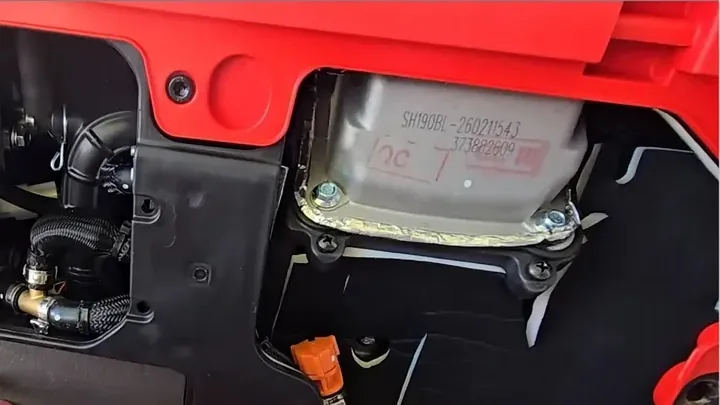
Every small engine out of a crate needs lube before turning over, so verifying the crankcase fill line was my immediate priority. I unfastened the side service cover to expose the block, and the dipstick pulled up showing an oily coating on the threads. The factory evidently test-fired this engine on the assembly line to verify ignition and compression. Always inspect the sump. The manufacturer also threw in a screw-on flexible drain hose, making future 50-hour oil drops clean without coating the frame rails. Pulsar includes identical tubing with their gear, which shows someone in product development actually changes oil.
Connecting to Propane for First Run
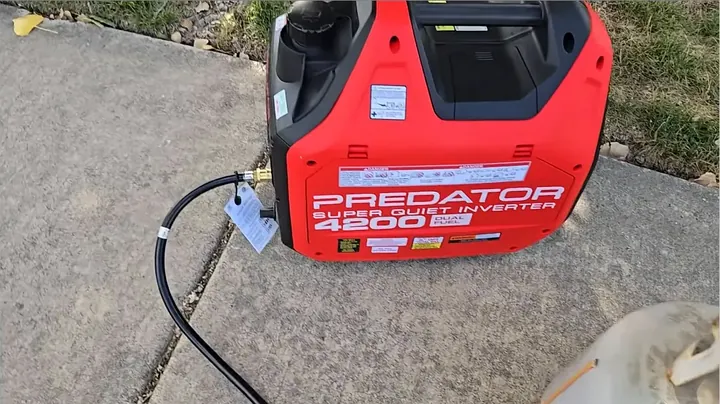
A dedicated regulator line came straight inside the carton, saving a hardware store run. I always fire up dual-fuel engines on bottled gas for their break-in cycle. Standard unleaded fuel carries a higher energy density and produces more horsepower under load. If this powerhead manages heavy amperage loads on propane, it will deliver surplus output when switched over to gasoline. Propane burns clean through the valves. It gives an honest baseline for engine capacity.
Noise Level Test and Digital Display
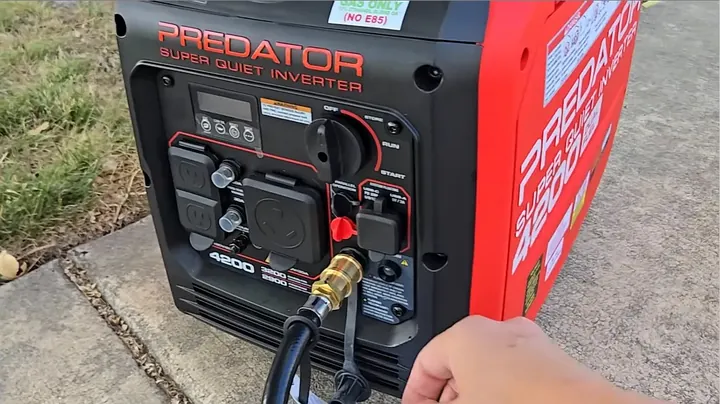
Propane remains my fuel of choice for stationary backup duty. Stored tanks do not spoil or sour over ten months of sitting, which saves headache if the unit stays parked between severe weather storms. Marketing literature rates this unit at 59.8 dB, although the literature conveniently omits testing distance from the case. Standard industrial sound testing is recorded at one meter, roughly three feet away, and my handheld decibel meter logged 70 dB right off the muffler housing. The meter showed the reality. Even at that volume, conversational speech next to the frame comes through without shouting, keeping it reasonable for a 4200-watt generator. The digital readout on the fascia scrolls through main voltage, engine running time, and output hertz. Under no load, the inverter clamped cleanly at 120 volts and 60 cycles, which protects modern electronics and switchgear. A top numerical bar tracks output kilowatts in real time, showing immediate feedback as soon as a circuit pulls load.
Exploring the Control Panel and Outlets
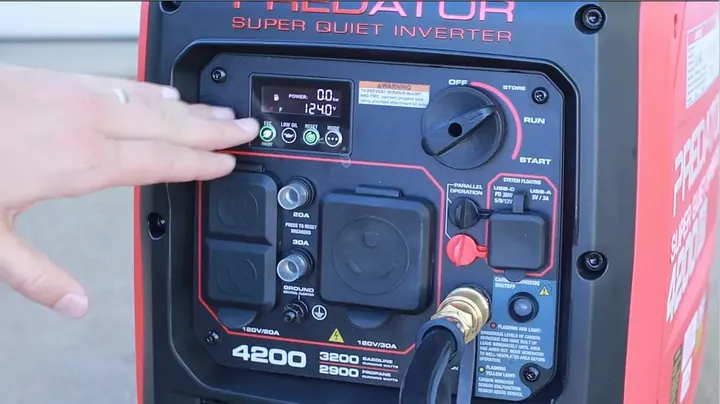
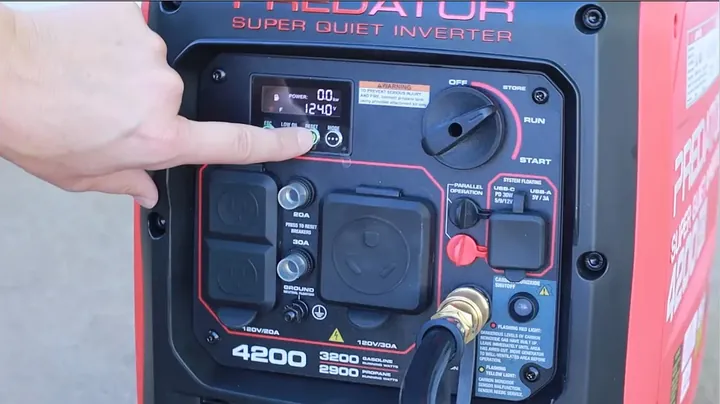
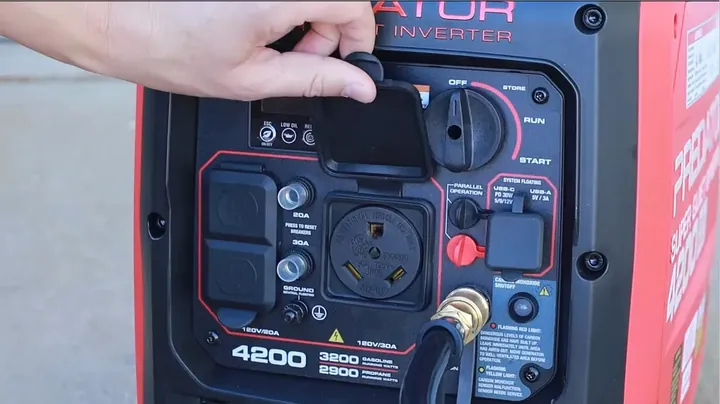
The front interface is laid out with standard shop controls. Beside the display, you get the Eco-mode rocker toggle. That throttles engine RPM down during light electrical draw to save propane, then ramps up timing when an induction motor calls for amps. A dedicated low-oil shutdown LED sits alongside the meter to protect the crank bearings, plus an hour-reset pin for scheduling oil service. Plenty of juice. The mode selector button toggles the display between working voltage, run hours, and operating hertz so you can check circuit health. Below the screen, Harbor Freight added dual USB charging ports—a standard Type-A along with a Type-C plug—so small field electronics charge directly without wall bricks. Next to those sit the heavy parallel bus jacks, which allow joining two generators into a common feed. The main board holds two circuit reset breakers, a 30-amp twist TT-30R RV receptacle, and standard dual 20-amp duplex wall plugs. The layout is solid.
Running RV Appliances Under Load
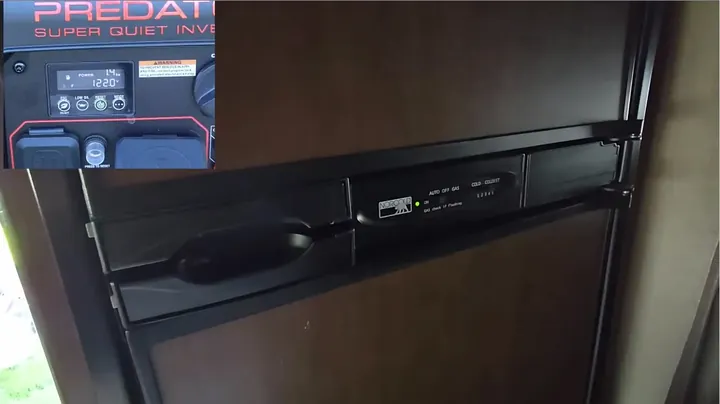
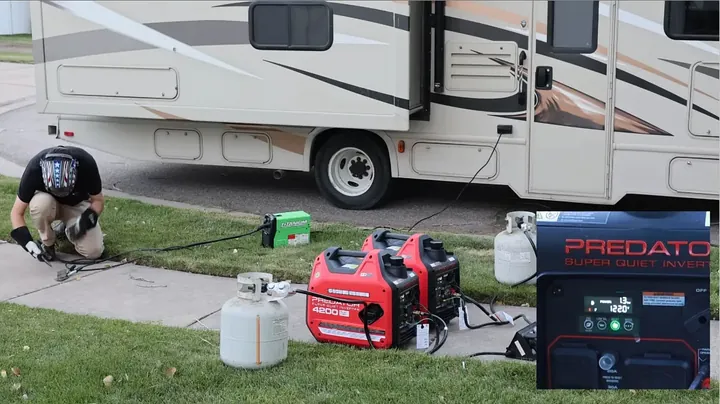
I ran the main power line out to the RV to verify how the Predator responds to heavy appliance cycling. I threw the thermostat switch on the roof air conditioning first. The compressor kicked the starting draw up to approximately 2200 watts, then dropped back to a steady 1100-watt running draw. It handled it. Then I opened the breaker for the RV refrigerator, adding another 300 to 400 steady watts to the bus. Then came the high-draw load: turning the microwave on high. That brought total continuous draw into the 2600 to 2700-watt territory, running right against the mechanical ceiling for propane operation.
RV Appliance Performance and Propane Limits
Pulling concurrent power through the air conditioner compressor, the refrigerator element, and the microwave pushed the digital load reading between 2600 and 2700 watts. That load represents the upper operating boundary on propane fuel. The inverter held the load. As for the safety stickers across the shroud—they exist because people make lethal mistakes. Never run small engines inside enclosed walls. If someone needs clarification on why exhaust gases are lethal, they should not be operating equipment.
Arc Welding Test on Propane
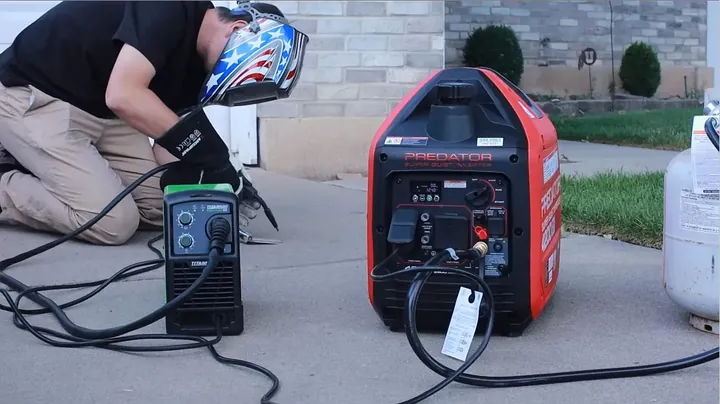
I wanted to know where the inverter tripped when running an arc welder off the panel. Running an open welding arc three feet away from a fuel bottle and a combustion engine is poor shop practice, but I needed the machine and workpiece inside the camera frame. I clamped the ground, grabbed a piece of scrap angle iron, and burned down roughly 8 inches of fillet weld. The inverter supplied clean arc current without bogging down. It held up. The arc draw rode right along the edge of maximum continuous propane output, which defines the upper limit for single-generator welding work.
Setting Up Dual Generators in Parallel
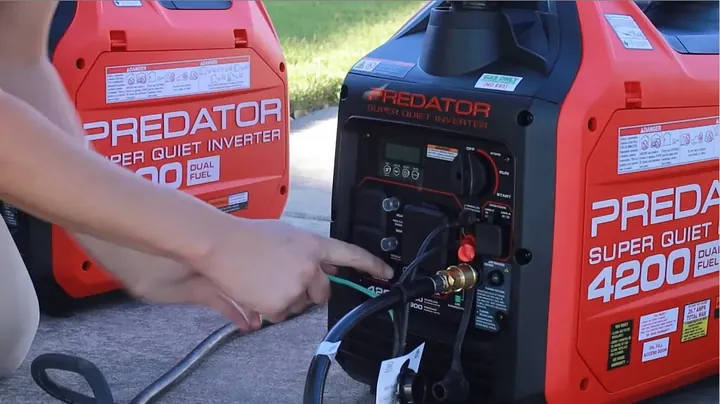
I have a second matching Predator in the bay, and bridging two identical units together through the optional parallel kit changes the setup entirely. Tying both units together takes less than three minutes at the panels. Same wire. I plugged the red and black leads into their sockets, snugged the grounding lugs to the chassis terminals, and the combined circuit was ready for load. Combining two generators effectively doubles total operational wattage, making heavy tools and home panel backfeeding feasible.
Testing Combined Heavy Loads with Parallel Setup
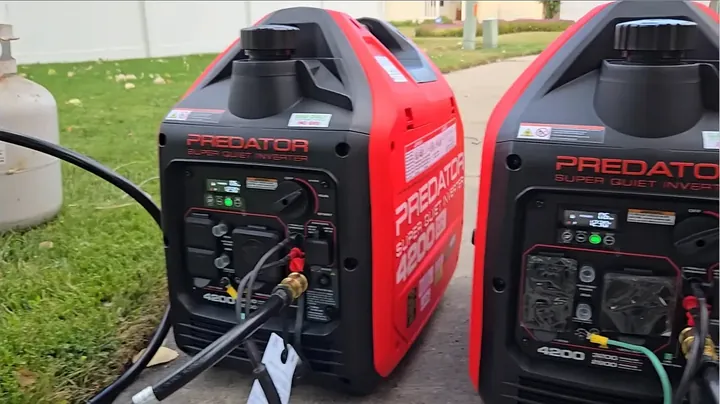
With both inverters synchronized through the harness, I dumped every load in the shop on them at once: the camper AC, the microwave heating water, and the arc welder running beads simultaneously. That serves as a brutal trial for small generators. The synchronized electronics balanced amperage across both engines without tripping. A solo generator registered roughly 1100 watts pulling the compressor alone. With all three high-current circuits demanding power at the same moment, the gauge fluctuated steadily between 2.2 and 2.5 kilowatts. Serious capability.
Analyzing Stable Output Under Maximum Combined Load
The dual-unit system did not stutter while the camper air conditioner kicked, the microwave ran, and the welding rod struck down metal simultaneously. Total wattage moved smoothly within the 2.2 to 2.5 kilowatt spread, well beneath the threshold where propane would starve the engines. Holds steady. Seeing clean sinusoidal wave delivery across sudden and heavy inductive surges is why inverter technology beats open-frame generators. The setup balanced the heavy load smoothly.
Final Verdict on Predator Generator Performance
The Predator 4200-watt dual-fuel inverter proved itself as a capable piece of power machinery on the test bench. It delivers. It supplied ample amperage to carry heavy loads—from simultaneous RV cooling and cooking equipment up to an arc welder—without screaming or vibrating loose. For the retail price, paired with dual-fuel capability between gasoline and bottle propane, it earns its place for remote site jobs and backup panel support.
⚠️ CAUTION: SAFETY WARNING!
Hazard: Carbon monoxide emissions from combustion exhaust are lethal. Operation requirement: Exterior use only in well-ventilated outdoor environments, distanced from doors, windows, and inhabited spaces.
Summary & Tips
This Predator 4200W inverter proved its ground across heavy inductive loads, carrying everything from high-draw RV units down to an arc welding rod without breaking stride. Running strictly on bottled propane—which inherently yields lower BTU output than gas—it held its rated tolerances cleanly. Sound output measured significantly lower than open-frame contractors' generators, making it practical for off-grid trailers or job trailers. At this price point, the build quality and output match up well against more expensive brands.
📋 FAQ
❓ Is the Predator 4200W generator genuinely quiet?
Decibel Output: 70 dB measured at 1 meter (3 feet) under test conditions. Manufacturer Specification: 59.8 dB(A) at unspecified distance. Acoustic Performance: Permits normal conversation in immediate proximity without hearing protection. Suitable for recreational vehicle campsites and residential standby power.
❓ Can the Predator 4200W run an RV air conditioner?
Compatibility: Fully compatible with standard RV air conditioning units. Surge Capacity: Supported startup surge measured at 2200 watts. Continuous Running Load: Maintained stable 1100 watts during compressor operation. Adequate headroom remains for auxiliary low-amperage 120V circuits.
❓ What's the best fuel to use for this dual-fuel generator?
Propane Advantages: Stable long-term storage without carburetor degradation or ethanol gumming. Gasoline Advantages: Higher energy density and maximum peak wattage under heavy continuous loads. Fuel Selection: Propane recommended for infrequent emergency standby; gasoline recommended for maximum tool power output.
❓ Is the parallel kit worth getting for the Predator 4200W?
Application: Parallel kit doubles available output capacity by synchronizing two inverter units. Capacity Utilization: Enables concurrent operation of multiple heavy inductive devices, such as welders, microwaves, and air conditioners. Installation: Direct terminal and ground connection completed in under three minutes.
❓ What does the CO SECURE® technology do?
Function: Integrated automated safety monitoring system. Operation: Automatically shuts down the engine upon detecting dangerous concentrations of carbon monoxide gas. Protection: Mitigates hazard of accidental toxic gas accumulation near inhabited structures or enclosed spaces.
Equipment Disclosure: All evaluated equipment was purchased directly at retail cost to maintain objective testing standards. This article contains affiliate tracking links; verified sales generate an affiliate commission with no increase to consumer purchase price.