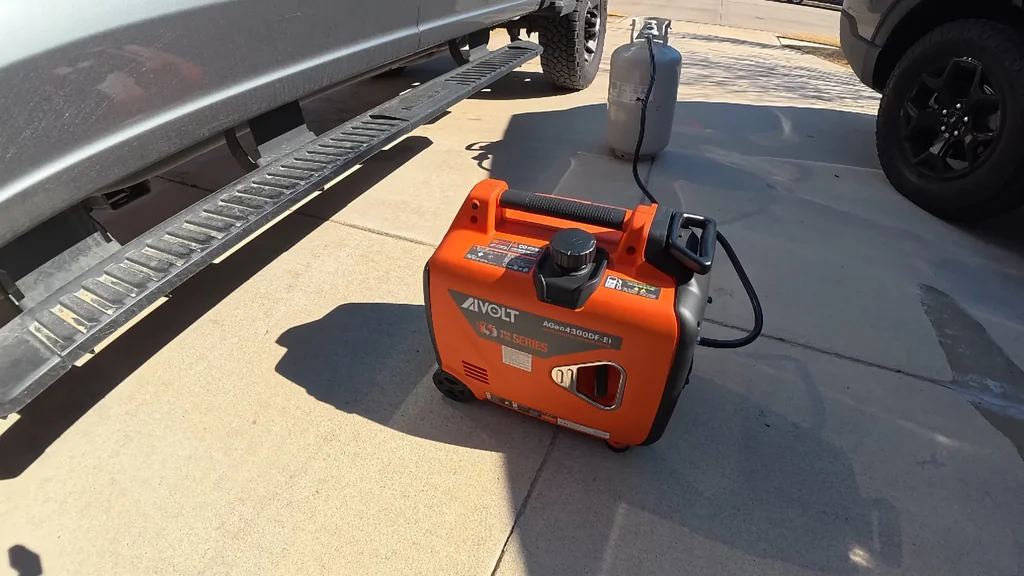
The Champion 5500-Watt Dual Fuel Inverter Generator outputs 5,500 peak starting watts and up to 4,000 running watts using gasoline or 3,600 running watts using liquid propane. Featuring an electric push-button start, an Intelligauge digital voltage/frequency display, and a dedicated 30A RV outlet, it provides reliable backup power for home emergency needs and job sites.
⚡ Quick Guide: 15-Step Process
- Unpack generator and inspect panel layout.
- Attach high-pressure propane regulator hose.
- Open propane cylinder valve fully.
- Set dial to choke.
- Press red ignition button.
- Rotate dial to propane icon.
- Confirm voltage reads 122V.
- Check frequency reads 60Hz.
- Connect triple-outlet adapter to TT-30R.
- Run extension cords to appliances.
- Test inrush current with circular saw.
- Observe load response on gauge.
- Shut tank valve to clear lines.
- Turn control dial to off.
- Disconnect fuel hose fitting.
📋 In This Article
- Technical Specifications & Power Ratings
- Tools & Equipment Mentioned — items required for this project
- Champion 5500-Watt Dual Fuel Inverter Specs
- Front Control Panel and Outlet Options
- Eco Mode and Propane Connection Setup
- Digital Display Voltage and Frequency Monitoring
- Power Output Metering and Load Testing
- Motor Surge Demand and Circular Saw Test
- Liquid Propane Fuel Maintenance Advantages
- Fuel Efficiency and Runtime Comparison
- Multi-Appliance Emergency Extension Cord Plan
- RV Plug Adapter Solution for Triple Extension Cords
- Proper Propane Engine Shutdown Procedure
- Price and Feature Comparison vs Honda EU2200i
- Power Output and Factory Dual Fuel Value
- Warranty Comparison vs Harbor Freight Predator 5000
- Extension Cord versus Transfer Switch Integration
- FAQ
📊 Technical Specifications & Power Ratings
| Starting Wattage | 5,500 Peak Watts |
| Gasoline Running Wattage | 4,000 Continuous Watts |
| Propane Running Wattage | 3,600 Continuous Watts |
| Engine Type | 4-Stroke OHV Inverter |
| Fuel Tank Capacity | 2.25 US Gallons (Gasoline) |
| Gasoline Runtime (25% Load) | Up to 11 Hours |
| Propane Runtime (20 lb LP Tank @ 25% Load) | Up to 21 Hours |
| Propane Runtime (30 lb LP Tank @ 25% Load) | Up to 30 Hours |
| AC Voltage Output | 120V AC @ 60Hz |
| DC Voltage Output | 12V DC Automotive Port |
| Outlets | (2) 120V 20A Duplex, (1) 120V 30A RV (TT-30R) |
| Warranty | 3-Year Limited Warranty |
📊 Project Overview & Costs
🔧 Difficulty Level: Easy
⏱️ Time Investment: DIY: 15 minutes | Pro: 5 minutes
💰 Professional Service Cost: $0 (DIY)
💡 Verdict: Propane use reduces long-term carburetor maintenance and fuel degradation.
🛠️ Tools & Equipment Mentioned
• 30A RV to Triple 120V Outlet Adapter
• 30 lb Propane Tank
• 7-1/4 Inch Circular Saw
Champion 5500W Generator Setup, Operation & Performance Analysis
Champion 5500-Watt Dual Fuel Inverter Specs
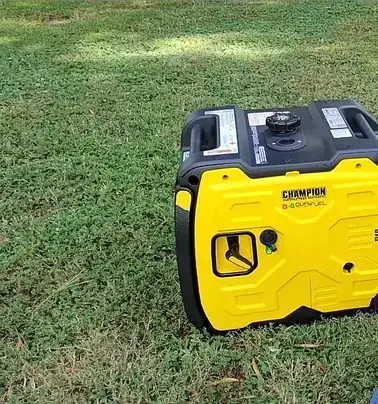
This Champion inverter generator serves as a practical home backup solution. It provides 5,500 peak starting watts to handle induction motor startup. Using gasoline, it delivers a continuous 4,000 running watts. Shifting to liquid propane drops that output to 3,600 watts. I found the setup process fast and intuitive. The slight power reduction on propane is typical for dual-fuel units, as LP gas contains less energy per unit than gasoline. I appreciate that the control panel keeps essential switches and ports in one central zone.
Front Control Panel and Outlet Options
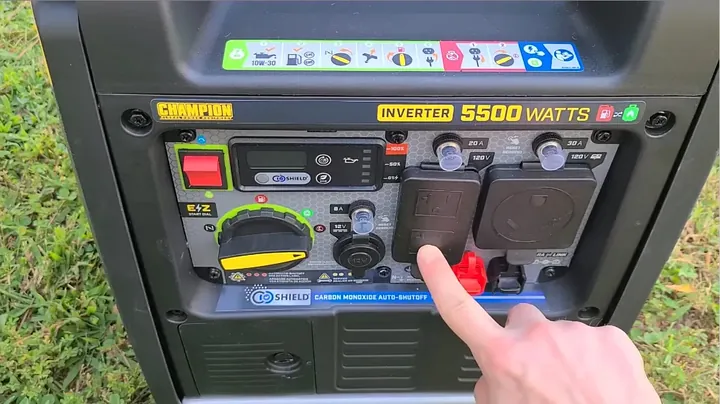
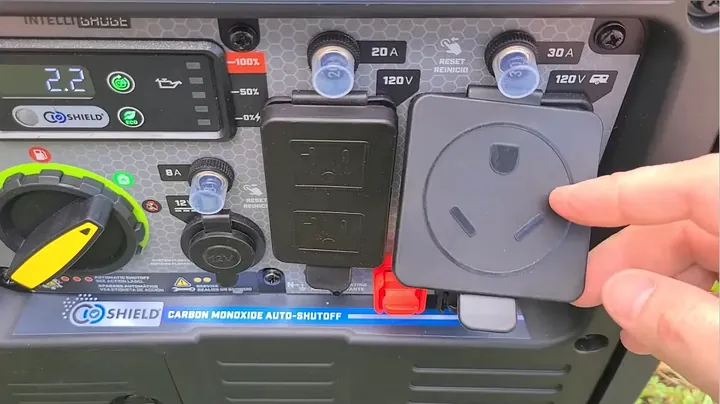
The front panel includes several outlets protected by rubber covers. I used the 12V DC automotive port, the twin 120V 20-amp duplex receptacles, and the 120V 30-amp RV outlet (TT-30R). The rubber seals are a nice touch for keeping dust out during outdoor work. I also noted the parallel operation terminals along the bottom edge. These are useful if I need to link a second unit for additional amperage capacity on a job site.
Eco Mode and Propane Connection Setup
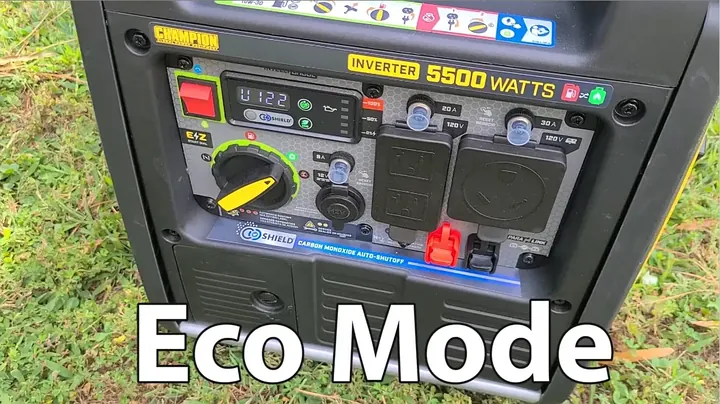
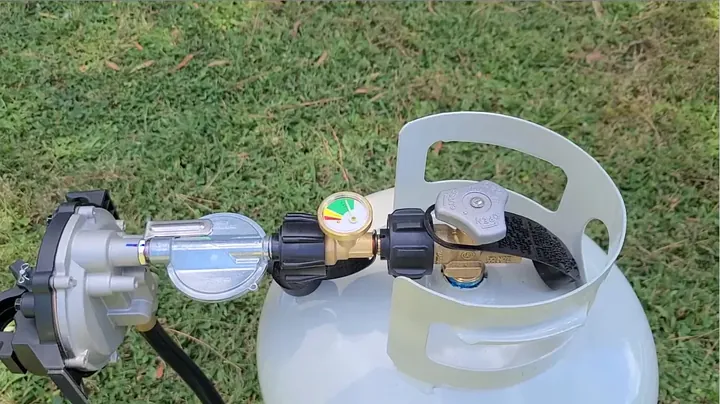
Eco Mode modulates engine speed based on the current load. This saves fuel and reduces noise while maintaining the pure sine wave quality required for household appliances. To use propane, I attached the regulator hose to the tank. Then, I pushed the coupler onto the generator's inlet until it locked. I opened the cylinder valve before adjusting any engine controls. Finally, I turned the main dial to choke and hit the start button.
Digital Display Voltage and Frequency Monitoring
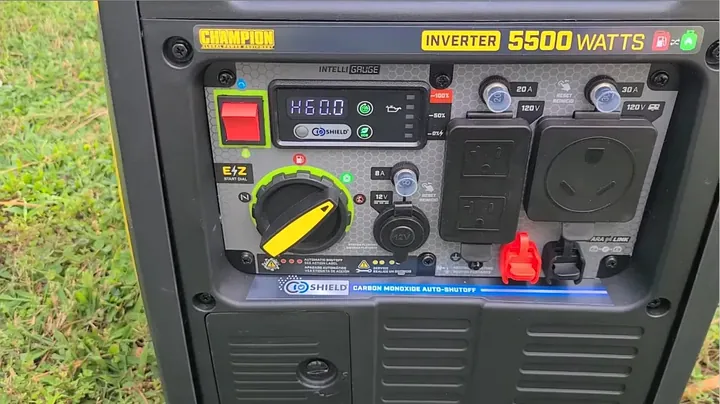
Once the engine started, I turned the dial off choke and moved it to the propane setting. The Intelligauge display cycled through the stats. It showed 122 volts and a consistent 60 Hertz frequency. The readout is clear and helpful. The display also tracked my session run time and total lifetime hours, which helps for scheduling oil changes.
Power Output Metering and Load Testing
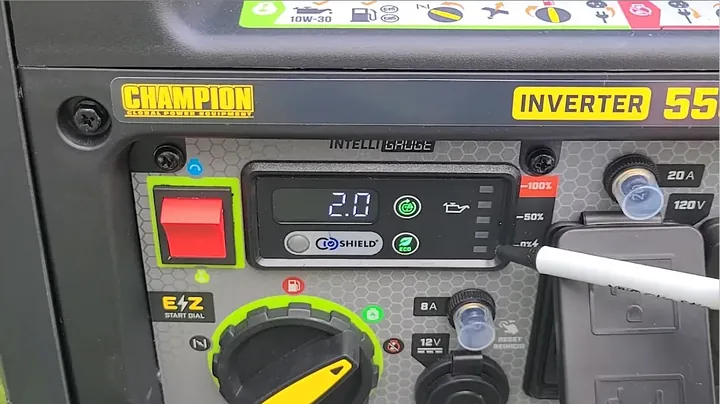
The LED bar on the panel shows my current load at 0%, 50%, or 100% capacity. I wanted to see how it handled a high-draw tool. I plugged a 7-1/4 inch circular saw into the 120V outlet. Monitoring the amperage draw helped me confirm that the generator's governor responds quickly enough to handle sudden motor engagement.
Motor Surge Demand and Circular Saw Test
When I pulled the trigger on the saw, the screen showed a spike to 2.0 kW. This is expected, as saws draw more power during startup than while cutting. Having real-time kW values on the panel is useful. It allows me to manage my load and ensure I stay under the generator's total capacity during an emergency.
Liquid Propane Fuel Maintenance Advantages
Using propane for backup power prevents typical fuel issues. Gasoline can leave deposits in a carburetor over time, causing it to fail. Propane doesn't degrade. I can store LP tanks for years without worrying about the fuel going bad. My maintenance consists of checking the supply lines and seals. This makes the dual-fuel setup much more dependable for intermittent use.
Fuel Efficiency and Runtime Comparison
Runtime depends on fuel type. The internal 2.25-gallon gas tank lasts about 11 hours at 25% load. Using a 20-pound propane tank increases that runtime to 21 hours. For this test, I swapped to a 30-pound propane tank. This gave me nearly 30 hours of continuous power. Avoiding the need to fill gas cans during a storm is a huge benefit.
Multi-Appliance Emergency Extension Cord Plan
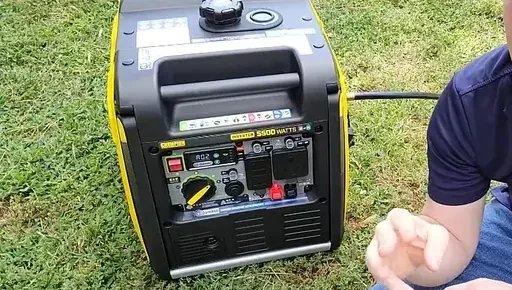
I planned to run one cord to the kitchen fridge, another to the freezer, and a third to a living room power strip for devices. This covers the essentials. However, I ran into a physical issue when attempting to plug everything into the control panel. The outlet layout made it difficult to connect three individual household cords at once.
RV Plug Adapter Solution for Triple Extension Cords
The panel lacks enough standard outlets for three cords. I solved this using a TT-30P adapter. It plugs into the 30A RV port and splits the power into three standard grounded NEMA 5-15 outlets. This approach lets me run my three circuits across separate lines without overloading any individual duplex receptacle. It’s a clean and efficient setup.
Proper Propane Engine Shutdown Procedure
Shutting down on propane requires a specific order. I don't just flip the dial to off. I close the tank valve first while the engine runs. This starves the engine of fuel. By letting the engine run until it dies, I clear all remaining propane from the hose and regulator. Only after the motor stops do I turn the dial to off and disconnect the hose.
Price and Feature Comparison vs Honda EU2200i
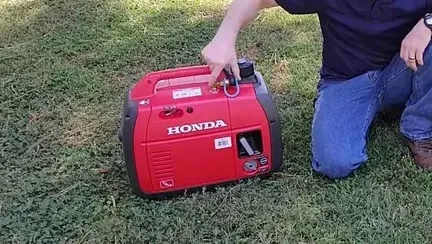
Comparing cost and features is necessary. The Champion costs about $899. A Honda EU2200i exceeds $1,100, and adding a propane kit adds another $300, bringing the total to $1,400. For the price of the Honda conversion, I get more than double the running capacity and factory support with the Champion.
Power Output and Factory Dual Fuel Value
Spending $1,400 on a smaller, modified unit makes little sense when the Champion includes built-in dual-fuel capability. You get electric start and higher output right from the box. No custom plumbing is needed. During blackouts, the higher peak capacity ensures I can power my appliances without overloading the generator.
Warranty Comparison vs Harbor Freight Predator 5000
I also weighed this against the Predator 5000. While the Predator is cheaper, it only has a 90-day warranty. Champion offers a 3-year limited warranty, matching Honda. Having that protection for three years gives me peace of mind when relying on this machine during an emergency.

Extension Cord versus Transfer Switch Integration
Extension cords are a fine temporary fix. However, a manual transfer switch integrated into the main breaker box is the better long-term choice. It lets me power internal branch circuits without running cords through doorways. Whatever method you choose, always verify your local codes and use proper wire gauges.
⚠️ WARNING: SAFETY FIRST
Do not use gas or propane generators in enclosed areas. Carbon monoxide is lethal. Always close the propane tank valve and let the engine stall during shutdown to drain remaining fuel from the hoses.
Final Take
The Champion 5500-Watt Dual Fuel Inverter is a solid value for the price. Its ability to run on propane is the standout feature for storage and maintenance. The display and port layout make it easy to manage during an outage. With a 3-year warranty, it offers more capacity and reliability than many smaller alternatives.
📋 FAQ
❓ Can this power a central air conditioner?
Most central units draw too much power at startup. It works well for window AC units or small mini-splits.
❓ Why does propane use instead of gas?
Propane does not degrade or leave deposits in the carburetor. It is better for long-term storage and reliability.
❓ What is the runtime on a 20 lb tank?
Expect about 21 hours at 25% load. A 30 lb tank will extend this to roughly 30 hours.
❓ Does propane reduce power?
Yes. Due to lower energy density, running wattage decreases from 4,000 watts on gasoline to 3,600 watts on propane.
Disclaimer: I bought these tools myself. This post contains affiliate links; I receive a small commission for purchases at no extra cost to you.