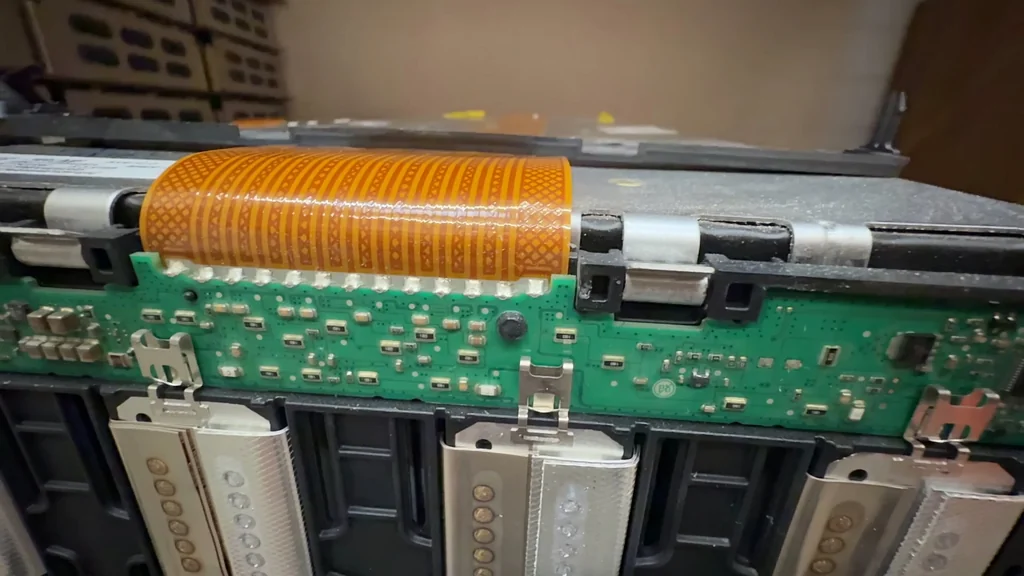
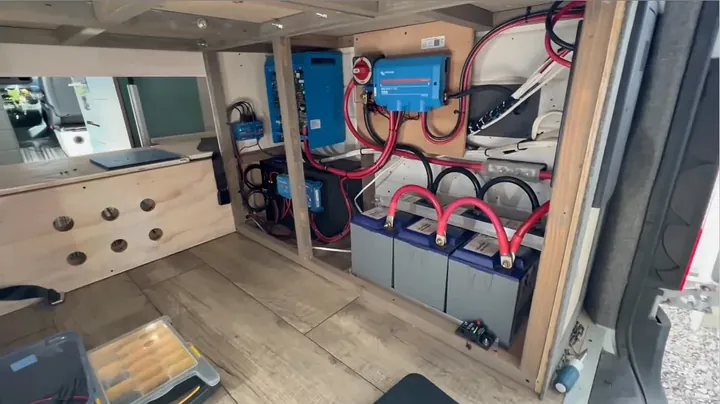
The Toyota RAV4 EV battery modules, which were manufactured by Tesla, offer an energy density of approximately 200 Wh/kg at a remarkably affordable cost, roughly $90 per kWh. These packs, produced for Toyota between 2012 and 2016, utilize standard 18650 cylindrical cells housed within robust aluminum frames. Before integrating them into an EV conversion or a solar backup system, it’s essential to understand their specific cell configuration, how their weight relates to capacity, and any associated shipping limitations.
⚡ Quick Guide: How to Make It in 12 Steps
- Identify 12S and 5S pack configurations.
- Calculate system nominal voltages accurately.
- Verify cell parallel count and capacity.
- Inspect physical state and resting voltages.
- Compare pack weight against energy output.
- Evaluate volumetric footprints for custom fitment.
- Match gravimetric density to your application.
- Check continuous discharge C-ratings for loads.
- Plan freight logistics for heavy modules.
- Select correct battery chemistry for usage.
- Verify module terminal connections and busbars.
- Finalize BMS integration and safety enclosures.
📋 In This Article
- Technical Specifications & Components
- Tools & Materials Used — what you will need for this project
- Identifying RAV4 EV Module Configurations
- Calculating System Voltage Architecture
- Analyzing Cell Capacity and Parallel Groups
- Inspecting Physical Integrity and Voltage Taps
- Comparing Weight vs Energy Density Specs
- Evaluating Physical Footprint and Envelope Volume
- Selecting Chemistry Based on Project Demands
- Verifying Continuous Discharge and C-Ratings
- Handling Freight Logistics and Shipping Rules
- Designing Modular 5S and 12S Series Strings
- Verifying Busbars and Terminal Hardware
- Final Integration and BMS Wiring Guidelines
- FAQ
📊 Technical Specifications & Components
| Manufacturer | Tesla (built for Toyota RAV4 EV 2012–2016) |
| Cell Format | 18650 Cylindrical Li-ion |
| 12S Module Nominal Voltage | 44.4V DC |
| 5S Module Nominal Voltage | 18.5V DC |
| Full Vehicle Architecture | 92S overall (6x 12S + 4x 5S modules = ~340V nominal) |
| Parallel Configuration | 45P (45 cells in parallel) |
| Large Module Capacity | ~6.3 to 6.4 kWh (~144 Ah) |
| Small Module Capacity | ~2.6 kWh (~144 Ah) |
| Energy Density | ~200 Wh/kg |
| Continuous Discharge Rating | ~3C (~400-600A peak output) |
| 12S Module Weight | ~70 lbs (31.7 kg) |
| Comparison LFP Density | ~110 Wh/kg |
| Comparison Jaguar I-Pace Density | ~250 Wh/kg |
📊 Project Overview & Costs
🔧 Difficulty Level: Medium
⏱️ Time Investment: DIY: 2 - 4 hours | Pro: 1 - 2 hours
💰 Professional Service Cost: $150 - $300
💡 Verdict: Sourcing repurposed EV modules directly saves thousands compared to buying brand-new commercial lithium storage units.
🛠️ Tools & Materials Used
• Tesla RAV4 EV 12S Battery Module
• Tesla RAV4 EV 5S Battery Module
• Freight Shipping Pallet
Step-by-Step Guide
Identifying RAV4 EV Module Configurations
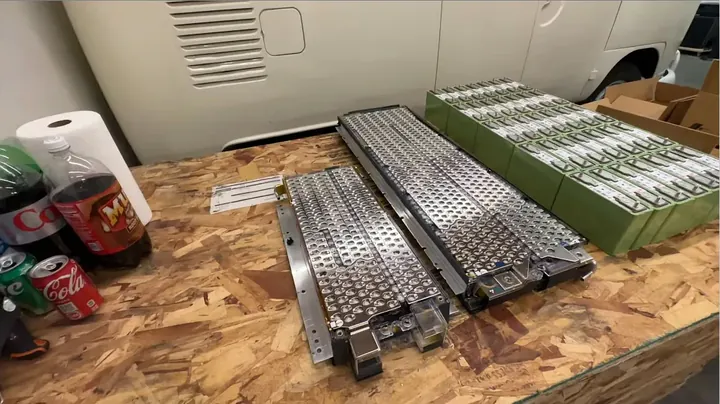
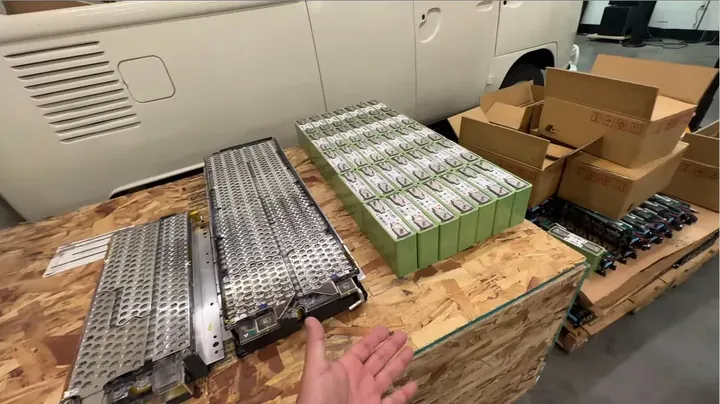
The first thing to do is figure out exactly what's being looked at when these second-generation Toyota RAV4 EV packs arrive. Tesla built these modules for Toyota between 2012 and 2016, using their standard 18650 cylindrical cells. A complete factory vehicle pack has six large 12S modules and four smaller 5S modules, all wired together.
The 12S units typically operate at about 44.4 volts nominal, while the 5S bricks are right at 18.5 volts nominal. These are the facts. Using these two distinct module sizes allowed Tesla to pack the maximum possible battery capacity into the RAV4's floorpan without needing to completely redesign the vehicle's unibody structure. It's smart engineering.
Calculating System Voltage Architecture
Adding up the total series count gives a full array configuration of 92S across the vehicle, which translates to around 340 volts nominal under load. For comparison, standard Tesla Model S packs usually run at 96S to hit about 355V nominal; that became the baseline for early electric vehicles. Newer automotive designs are pushing beyond 108S or even going straight to 800V systems for seriously fast DC charging.
Still, 340V nominal from a 92S stack works perfectly for aftermarket EV conversions, especially with common industrial motor controllers. The setup is straightforward. All that's needed is to configure the controller voltage cutoffs to precisely match the 92S chemistry windows. It's a solid, reliable setup.
Analyzing Cell Capacity and Parallel Groups
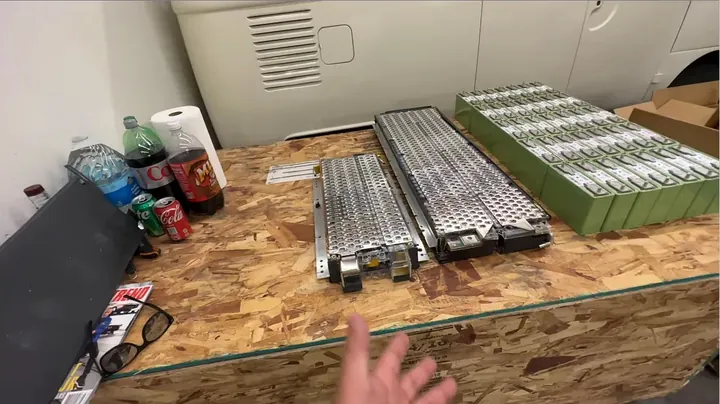
Let's talk about the raw capacity of these packs. The large 12S module, when it's in good shape, typically provides about 6.3 to 6.4 kilowatt-hours of usable energy. That's a slight drop from its original 6.5 kWh factory rating when new. Inside each block, Tesla laid out the 18650 cells in a substantial 45-parallel (45P) configuration.
Each individual cell is rated around 3.0 to 3.2 amp-hours nominal. Tesla, to be fair, never pushed these cells to their absolute maximum or minimum voltage limits in the production RAV4 EV software; that was a choice to extend their lifespan. But for custom DIY setups, they can be charged fully to pull every last bit of remaining energy storage capacity out of them. It works.
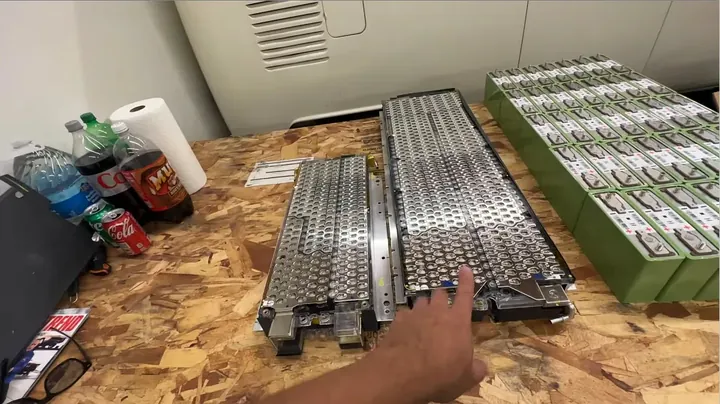
Inspecting Physical Integrity and Voltage Taps
Running a full capacity test on these massive 6.4 kWh packs takes hours of charging and discharging under heavy loads. Instead of putting every used module through full bench burn-in cycles, the focus stays on measuring the open-circuit voltage across every parallel group tap and checking for any terminal corrosion. It's crucial to ensure the structural aluminum cooling plates show no signs of swelling or physical punctures.
If all parallel groups read within a tight 10 to 20 millivolt window and show no physical damage, then the pack is healthy and ready for secondary energy storage builds.
Checking individual terminal voltages first helps catch any dead cells early, saving time that would otherwise be wasted installing compromised modules. It's a quick, effective check.
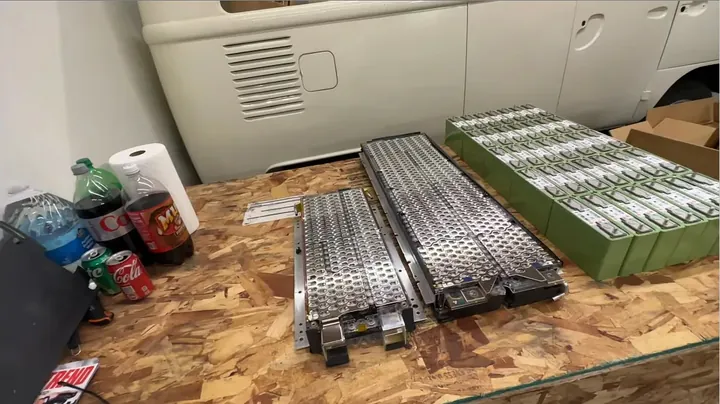
Comparing Weight vs Energy Density Specs
Weight is a big factor when building custom vehicles. The 12S Tesla RAV4 EV module weighs about 70 pounds, and it packs 6.4 kWh of total energy. That often gets compared to a standard, more expensive Lithium Iron Phosphate (LiFePO4) solar block, which weighs 164 pounds (70 kg) for 8.5 kWh. That's a significant difference.
The LFP module weighs more than twice as much, yet it only gives about 30% more total usable energy. The gravimetric energy density on these Tesla nickel-cobalt-aluminum (NCA) modules comes in at around 200 Watt-hours per kilogram, while typical prismatic LFP modules are closer to 110 Wh/kg. The numbers speak for themselves.
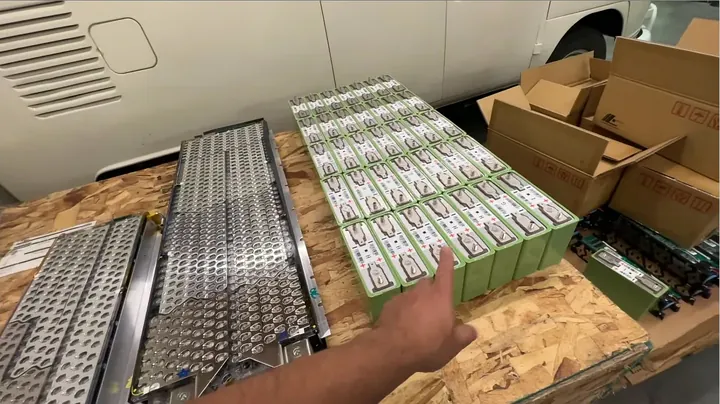
Evaluating Physical Footprint and Envelope Volume
Volumetric energy density dictates how tightly the battery enclosure can be packed into a car chassis. Both the LFP prismatic casing and the Tesla 12S module have similar overall lengths, but the Tesla module is noticeably narrower and has a lower profile.
The LFP block takes up roughly 40% to 50% more physical space for a comparable capacity rating. That's a huge difference in this line of work. If space is tight inside a small vehicle's engine bay or transmission tunnel, the dense packing ratio of the 18650 cells gives a massive advantage over those bulky prismatic formats. It's just a better fit.
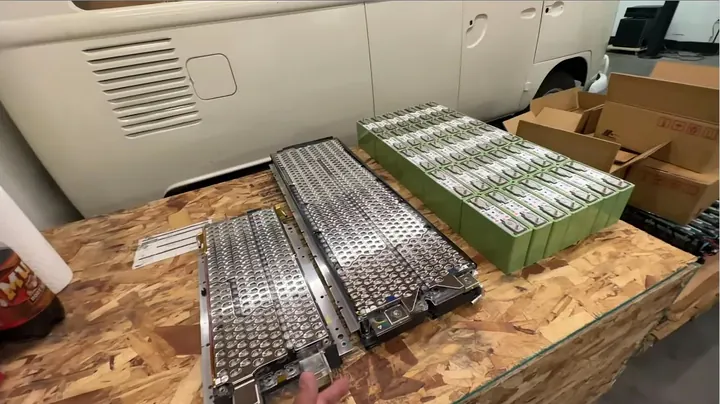
Selecting Chemistry Based on Project Demands
Not all lithium chemistry is right for every job. High-end pouch-cell modules, like those found in the Jaguar I-Pace, hit almost 250 Watt-hours per kilogram; they're top-tier for high-performance EV conversions. Meanwhile, LFP blocks are excellent for stationary home solar storage wall systems where weight and physical footprint just don't matter.
LFP gives you fantastic thermal stability and extreme cycle counts, while Tesla NCA cells offer light weight and high volumetric density. The right tool should always be picked for the job. Slapping heavy, bulky LFP packs into a lightweight sports car conversion would only result in terrible handling. That's just common sense.
Verifying Continuous Discharge and C-Ratings
Current delivery capacity is what really separates performance batteries from standard storage units. Some specialized high-discharge LFP packs can hit 5C to 6C continuous discharge rates, meaning they can dump over 600 amps instantly for things like SPL car audio competitions or drag racing launches.
The Tesla RAV4 EV modules, on the other hand, are closer to a solid 3C continuous discharge rating. That works perfectly well. A 3C rating on a 144 Ah parallel pack means over 400 amps can be pulled continuously without any risk of overheating the internal busbars. That's more than enough punch to get a standard conversion vehicle moving down the highway. It's solid performance.
Handling Freight Logistics and Shipping Rules
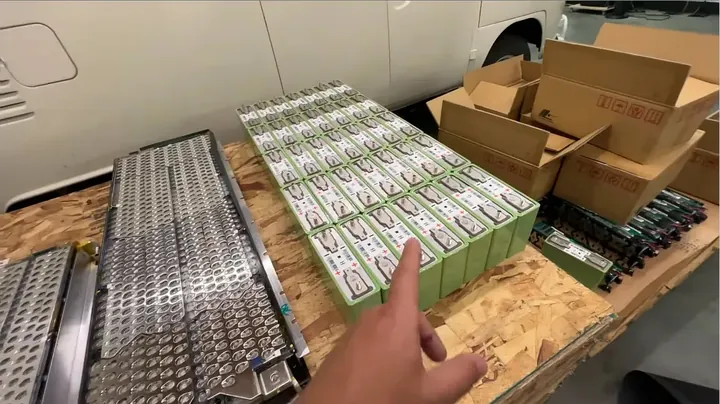
Shipping these large lithium-ion modules means dealing with strict hazmat safety regulations. The smaller 5S Tesla modules usually stay under the weight limits, so they can be shipped via standard ground parcel packaging in certified hazardous boxes. However, the 70-pound 12S modules are a different story; they exceed standard consumer shipping limits. Freight only for those.
To buy or move the 12S modules, they need to be strapped, corner-protected, and shrink-wrapped onto standard wooden shipping pallets for freight carrier transport. If possible, local pickup in Southern California is always the easiest way to go, especially to avoid those high residential delivery surcharges for freight.
Designing Modular 5S and 12S Series Strings
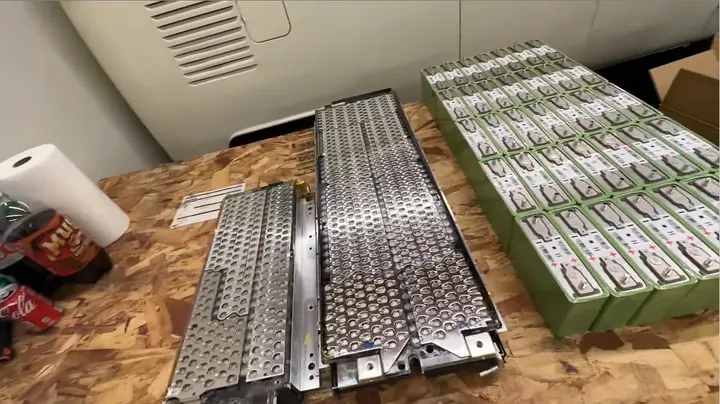
When building a custom battery bank from these surplus modules, there are a lot of flexible wiring options. The smaller 5S modules, which are rated at 18.5V nominal and 144 Ah, are often paired up to create 24V or 48V off-grid power walls or auxiliary vehicle power units.
These 5S boxes fit easily inside standard aluminum toolboxes or custom rack mounts. Simple and effective. Since they weigh a good deal less than the 12S bricks, a single person can safely handle and mount these 5S modules without needing any mechanical hoist equipment or a second pair of hands for lifting. It makes the job easier.

Verifying Busbars and Terminal Hardware
All the exposed copper and aluminum terminal pads should always be inspected before making any high-current bolted connections. Watch for micro-pitting, oxidization, or any loose factory spot-welds along the internal cell fuse wire arrays. Clean contact surfaces are essential; they ensure zero resistance buildup under high current loads.
Zero play is key. When bolting custom copper busbars onto the module's main terminals, calibrated torque wrenches should be used. This prevents stripping out the internal threads or cracking the surrounding plastic insulator housing. It's a critical step for safety and performance.

Final Integration and BMS Wiring Guidelines
Repurposed Tesla EV modules should never be operated without a dedicated Battery Management System (BMS) connected directly to the factory voltage tap harness. Individual balance leads must be wired to every 1S parallel tap point on the board, and the polarity must be double-checked.
Overvoltage cutoffs should be set strictly to 4.2V per cell maximum and low-voltage cutoffs to no less than 3.0V per cell. This is critical to prevent permanent cell degradation. Done deal. Once these modules are encased in a rigid, non-conductive, fire-resistant protective enclosure, they'll provide high-density electrical power reliably for years. It's a tried and true process.

⚠️ CAUTION: SAFETY WARNING!
High-voltage DC battery modules carry extreme short-circuit hazard risks capable of arc flash and rapid thermal runaway. Always wear insulated safety gloves and use rated insulated hand tools when working near uninsulated module terminals or busbars.
Summary & Tips
These repurposed Tesla RAV4 EV battery modules offer incredible energy density, around 200 Wh/kg, at a price point that's tough to beat. Matching the 12S and 5S module options to space constraints really makes vehicle conversions a lot simpler. Parallel cell group voltages should always be verified, and a proper BMS with active balancing should be installed before putting any used packs into service. Respect the high DC potential, and these modules will reliably power DIY projects for years to come. It's a solid investment.
📋 FAQ
❓ What is the cell chemistry inside Toyota RAV4 EV battery modules?
Modules utilize Panasonic 18650 cylindrical cells with Nickel Cobalt Aluminum (NCA) chemistry. NCA chemistry provides high energy density, approximately 200 Wh/kg, optimized for traction power. However, NCA requires rigorous thermal monitoring and a precise Battery Management System (BMS) compared to Lithium Iron Phosphate (LFP) chemistry.
❓ Can I use Tesla RAV4 EV battery modules for off-grid solar storage?
Modules are suitable for stationary solar storage, but thermal mass and energy density must be considered. A BMS managing 12S (44.4V nominal) or 5S (18.5V nominal) voltage ranges is required for inverter system compatibility. If weight and spatial volume are not constraints, LiFePO4 cells typically offer simpler integration for shed-based systems.
❓ How do you ship 70-pound EV battery modules safely?
Modules exceeding 70 pounds surpass standard parcel ground freight limits due to weight and hazardous material Class 9 lithium regulations. They require palletization, strapping, and commercial motor freight transport with hazmat declarations. Smaller 5S modules may be shipped via ground in insulated boxes if hazmat labeling rules are strictly observed.
❓ What is the difference between the 12S and 5S RAV4 EV modules?
The 12S module features 12 series cell groups with approximately 44.4V nominal voltage, weighs around 70 lbs, and stores ~6.4 kWh. The 5S module features 5 series cell groups with 18.5V nominal voltage and stores ~2.6 kWh. Both modules share an identical 45-parallel (45P) cell configuration and output current capacity.
❓ Do I need a BMS when wiring these modules together?
Operation of Tesla NCA 18650 modules without a dedicated Battery Management System (BMS) will result in unbalanced cell groups, accelerated capacity degradation, or dangerous overcharge thermal events. Multi-pin voltage tap wire harnesses must be connected to every parallel group, and strict upper (4.2V) and lower (3.0V) cell cutoffs must be programmed.
Disclaimer: All tools for this guide were purchased with personal funds to ensure an unbiased review. This post contains affiliate links, meaning a small commission is earned if you make a purchase at no extra cost to you.