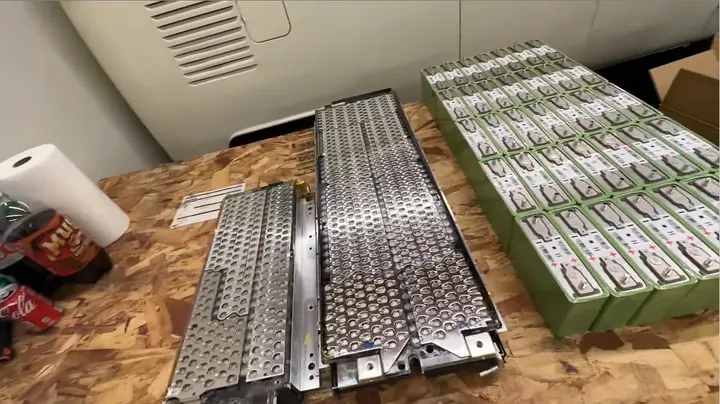
These Cadillac Lyriq battery modules represent a significant leap in energy density for automotive power storage. While they share a similar physical footprint with common modules like those found in the Volkswagen ID.3 or ID.4, they pack two additional kilowatt-hours of capacity. This teardown and inspection look at their unique construction, including integrated cooling plates and wireless communication architecture, to determine their viability for DIY power wall projects.
⚡ Quick Guide: How to Evaluate Cadillac Lyriq Modules
- Assess physical dimensions against standard EV module form factors.
- Inspect the integrated cooling plate for structural integrity.
- Identify the internal daughter board for BMS communication.
- Verify access points for cell terminal connections.
- Determine if manual wiring is required to bypass proprietary wireless BMS.
📋 In This Article
- Technical Specifications & Components
- Tools & Materials Used — what you will need for this project
- Evaluating Energy Density and Form Factor
- Inspecting the Internal BMS Daughter Board
- Analyzing Wireless Communication Architecture
- Assessing Project Viability and Complexity
- Bypassing Proprietary BMS for Custom Packs
- Identifying Unknown Cell Specifications
- Community Collaboration and Batch Tracking
- Integrating Modules into Solar Installations
- FAQ
📊 Technical Specifications & Components
| Module Capacity | 8.5kWh |
| Cooling | Integrated cooling plate |
| Communication | Wireless ECU integration |
| Form Factor | Comparable to VW ID.3/ID.4 modules |
📊 Project Overview & Costs
🔧 Difficulty Level: Medium
⏱️ Time Investment: DIY: 1-2 hours for initial inspection | Pro: 30-45 minutes
💰 Professional Service Cost: Varies by market availability
💡 Verdict: High energy density makes these modules a space-efficient choice for custom storage if the wireless BMS can be bypassed.
Step-by-Step Assembly, Repair, Testing & Inspection
Evaluating Energy Density and Form Factor
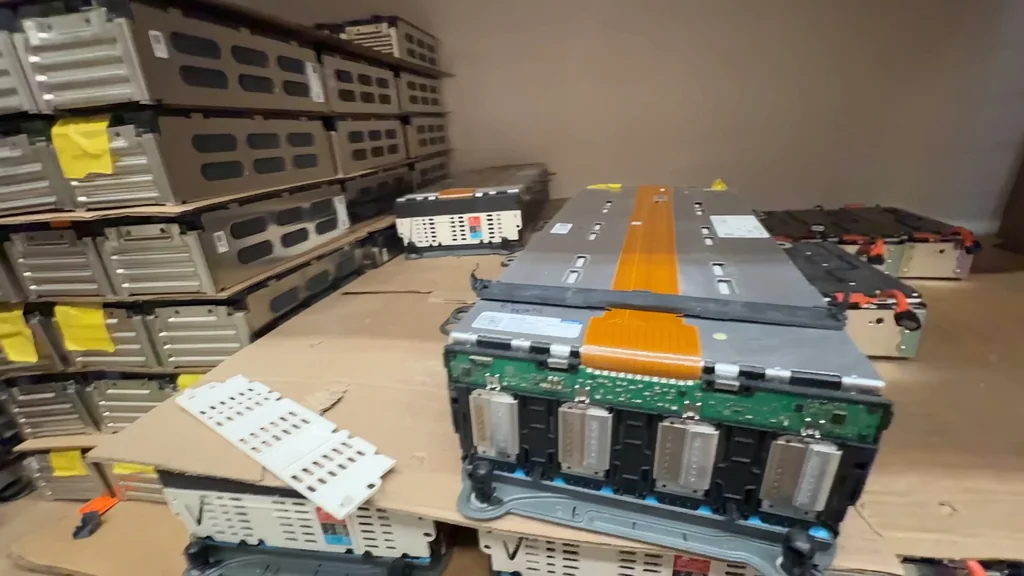
These new modules are remarkably energy-dense for their size. When compared to standard Volkswagen ID.3 or ID.4 units, the physical dimensions and weight are nearly identical, yet these provide an extra two kilowatt-hours of capacity. One standout feature is the inclusion of a built-in cooling plate. This is a significant upgrade over older modules that rely on external heat management, making the thermal design much more compact.
Inspecting the Internal BMS Daughter Board
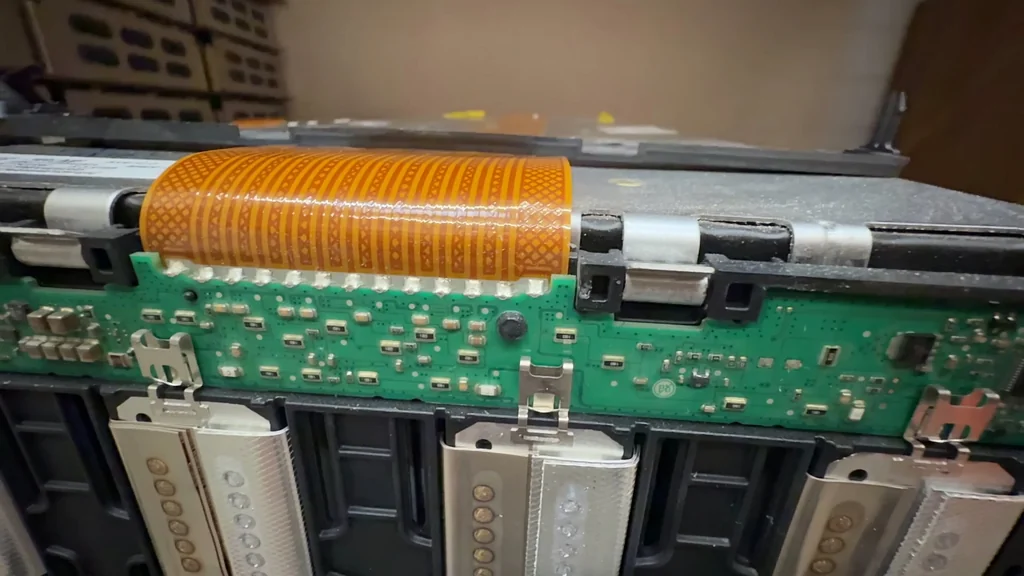
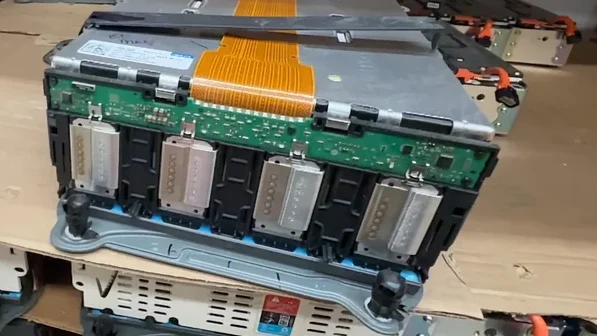
Looking closely at the socket, it's clear these aren't standard cell taps. The module utilizes a partial BMS or daughter board located internally. This board acts as a local controller that communicates with a main ECU unit. Unlike traditional setups where you might expect a direct connector for cell monitoring, this module lacks a standard external port, complicating the standard balancing and management approach.
Analyzing Wireless Communication Architecture
The main vehicle computer connects to these modules wirelessly. These are essentially self-contained units that don't have traditional low-voltage sensing wires running out of them. While this reduces wiring complexity, it introduces another potential point of failure. Simple, hardwired connections are often more reliable for DIY applications, so this wireless requirement is an unusual hurdle to overcome.
Assessing Project Viability and Complexity
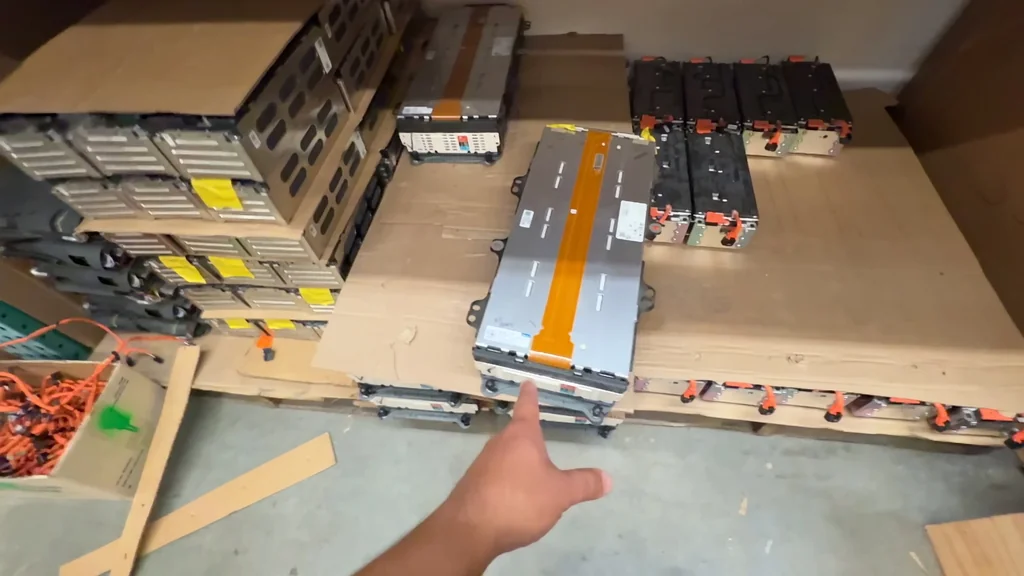
Determining how to interface with these modules is the primary challenge. If the technical requirements to bridge the wireless communication are too complex, it might not be worth the effort for smaller projects. If these modules become widely available in the secondary market, developing a solution would be more practical. For now, the limited supply makes it a niche research project rather than a standard upgrade.
Bypassing Proprietary BMS for Custom Packs
Should the wireless BMS prove too difficult to integrate, you still have physical access to the cell terminals. This allows for the possibility of ignoring the proprietary board entirely. You can simply use regular wiring to build a pack using these cells. This bypass method is the most straightforward path if you want to utilize the high-density cells without needing to reverse-engineer the manufacturer's wireless protocol.
Identifying Unknown Cell Specifications
A major unknown remains the specific cell chemistry and performance metrics. These are often custom, proprietary cells manufactured specifically for the vehicle, meaning public spec sheets don't exist. Sometimes, these cells are shared with other products, which can help in finding data. Without that, testing remains the only way to verify their true capacity and discharge limits.
Community Collaboration and Batch Tracking
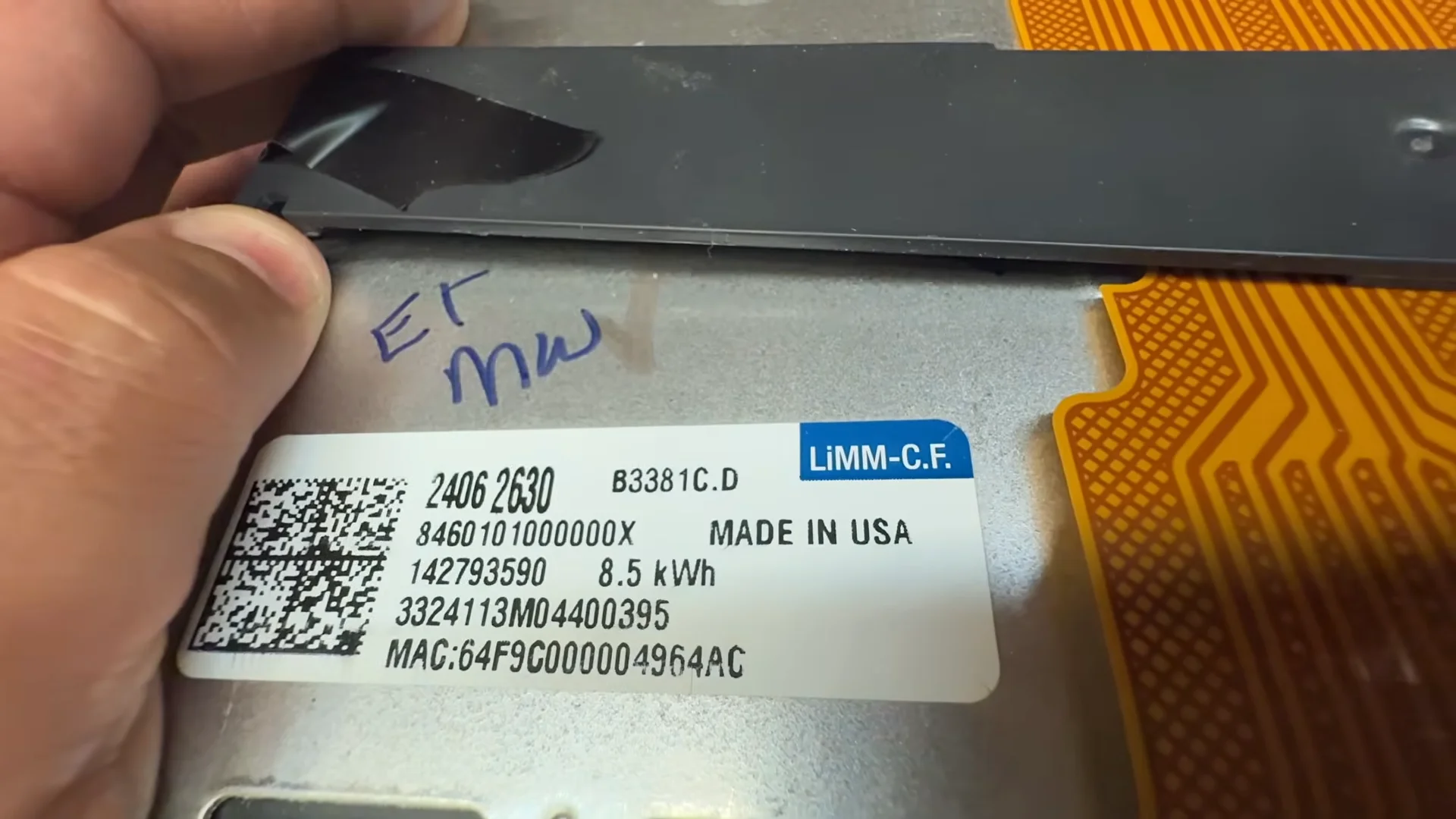
If you have any technical information regarding these specific modules, sharing it is encouraged. The community is actively trying to figure out the communication protocols and internal architecture. These modules arrived in a small batch, which is why they haven't been featured extensively until now. Keeping track of these labels is essential for identifying potential future batches or hardware revisions.
Integrating Modules into Solar Installations
These modules are currently being evaluated for use in solar installations. They are intended to serve as part of a plug-and-play battery offering. Check the website for updates on stock and availability. As more of these units are processed, they will be integrated into larger, more accessible storage solutions for off-grid power needs.
⚠️ CAUTION: SAFETY WARNING!
These high-density battery modules store significant amounts of energy. Always treat the terminals as live and use insulated tools to prevent accidental short circuits.
Summary & Tips
The Cadillac Lyriq modules offer impressive energy density in a compact form factor. Their reliance on wireless communication presents a unique challenge for DIY integration. Bypassing the internal BMS remains a viable option for those comfortable with manual cell monitoring. Further testing is required to fully understand the performance characteristics of these proprietary cells.
📋 FAQ
❓ Can I use these modules without the original car's ECU?
Yeah, you can likely bypass the proprietary wireless BMS by connecting directly to the cell terminals. It requires a custom BMS solution to monitor the cells safely. Just make sure you know what you're doing with high-voltage DC.
❓ Why is the wireless BMS a potential problem?
Honestly, it's just another layer of complexity that can fail. Simple, wired connections are much easier to troubleshoot and repair in a DIY setup. Wireless systems add proprietary software hurdles that are hard to crack.
❓ Are these modules better than standard 18650 cells?
Depends on your build goals. These modules offer much higher energy density and integrated cooling, which is great for space-constrained projects. However, standard cells are much easier to source and document.
❓ Where can I find the spec sheet for these cells?
Usually, you can't. These are custom, proprietary cells made specifically for the manufacturer. You'll have to rely on your own testing to determine their discharge and capacity limits.
Disclaimer: I purchased all tools for this guide with my own money to ensure an unbiased review. This post contains affiliate links, meaning I earn a small commission if you make a purchase at no extra cost to you.