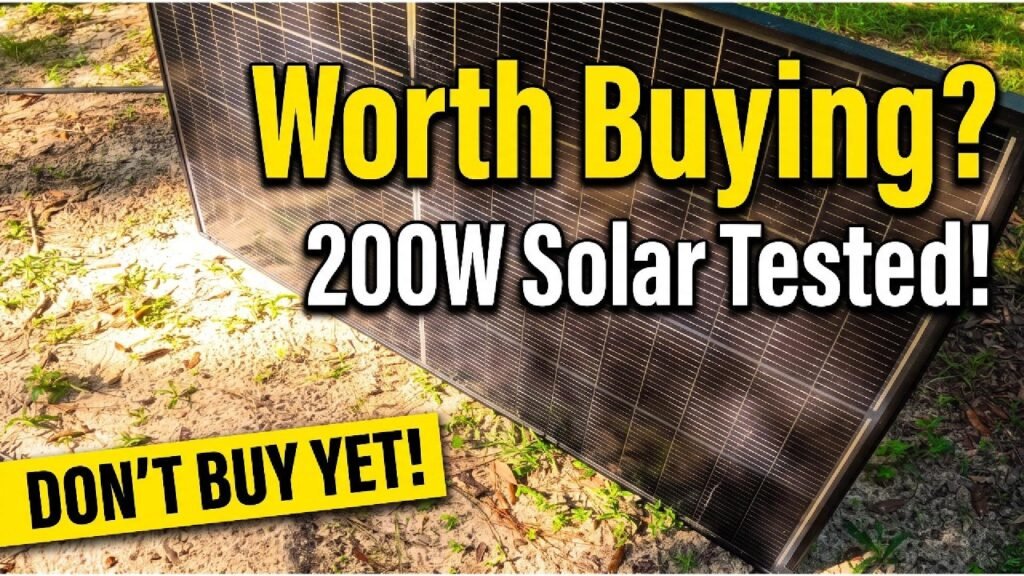
Testing solar panels in the Oklahoma heat isn’t for the faint of heart. I put the new 210W CallSun bifacial module head-to-head against a 200W Renogy ShadowFlux to see how they handle high temperatures and partial shading. The goal is simple: find out which panel actually delivers when the conditions turn against you. It’s time to see if the specs hold up in the real world.
⚡ Quick Guide: How to Make It in 15 Steps
- Verify panel specifications and Voc ratings.
- Set up monitoring equipment for real-time tracking.
- Perform baseline tests in full, unshaded sun.
- Monitor performance during peak heat hours.
- Compare energy yield at the end of the day.
- Test panel cooling methods to improve output.
- Simulate shading scenarios with physical obstructions.
- Analyze how internal bypass diodes handle partial shade.
- Check recovery times after removing obstructions.
- Evaluate overall efficiency versus cost.
📋 In This Article
- Technical Specifications & Components
- Tools & Materials Used — what you will need for this project
- Analyzing Solar Panel Specifications
- Setting Up the Test Bench
- Baseline Performance Testing
- Peak Heat Performance Check
- Evaluating Daily Energy Yield
- Extreme Heat and Cooling Tests
- Simulating Partial Shading
- Testing Shade Technology Response
- Recovery and Peak Solar Output
- Final Summary of Three-Day Test
- Bonus: CallSun vs. CallSun Comparison
- Monitoring Daily Tally
- Why Solar Panels Underperform
- Environmental Factors Affecting Output
- Final Results and Battery Check
- FAQ
📊 Technical Specifications & Components
| CallSun Panel Power | 210W |
| Renogy Panel Power | 200W |
| CallSun Voc | 40.3V |
| Cell Type | N-Type 16BB Monocrystalline |
| Design | Bifacial Dual-Module Parallel |
| Test Location | Oklahoma |
| Peak Temperature | 114°F |
📊 Project Overview & Costs
🔧 Difficulty Level: Medium
⏱️ Time Investment: DIY: 3 days | Pro: 3 days
💰 Professional Service Cost: $250 - $400
💡 Verdict: Real-world testing prevents buying underperforming gear for your off-grid setup.
🛠️ Tools & Materials Used
• MT50 Remote Meter
• Accu-Rite Thermometer
• Portable Power Station
Step-by-Step Assembly, Repair, Testing & Inspection
Analyzing Solar Panel Specifications
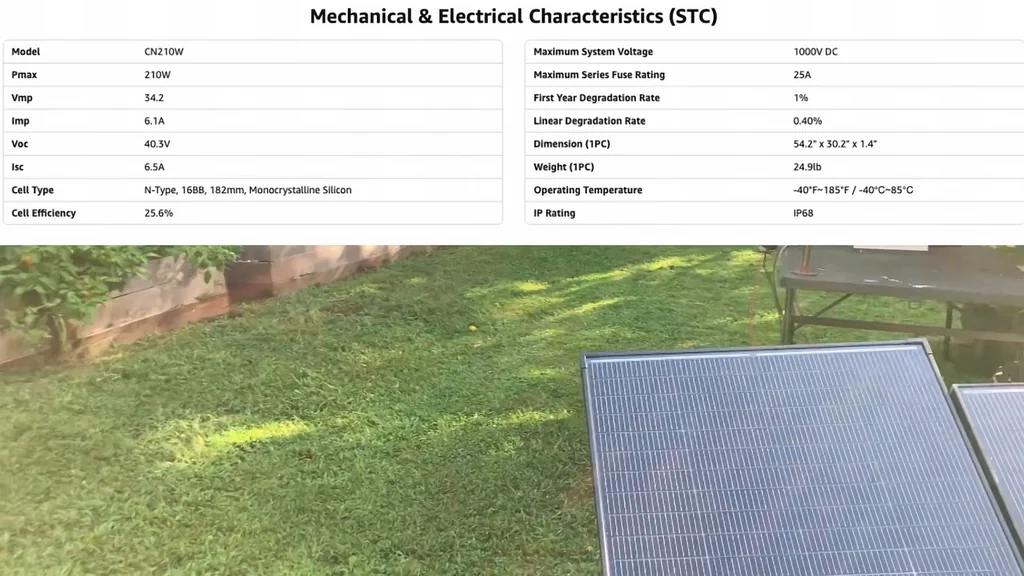
First thing — check the specs. The CallSun 210W bifacial panel is a beast on paper with a 40.3V Voc. It's an N-type 16BB monocrystalline module designed for dual-module parallel operation. I'm comparing it to the Renogy 200W ShadowFlux, which uses different anti-shading tech. It's not a perfectly level playing field, but that's the point. We need to see how they handle the heat. It's already 80 degrees at 9 AM. This is going to be a long day.
Setting Up the Test Bench
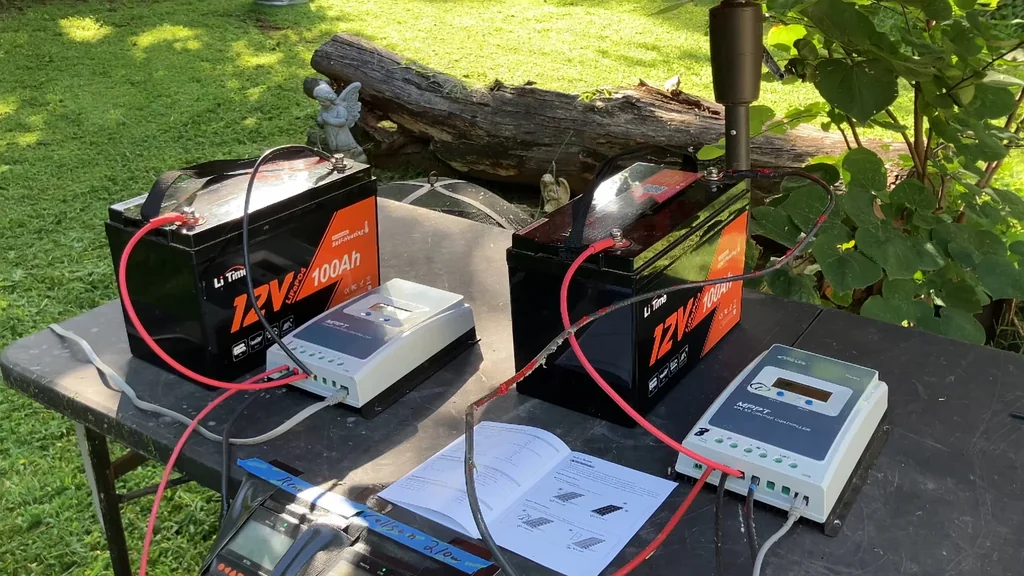
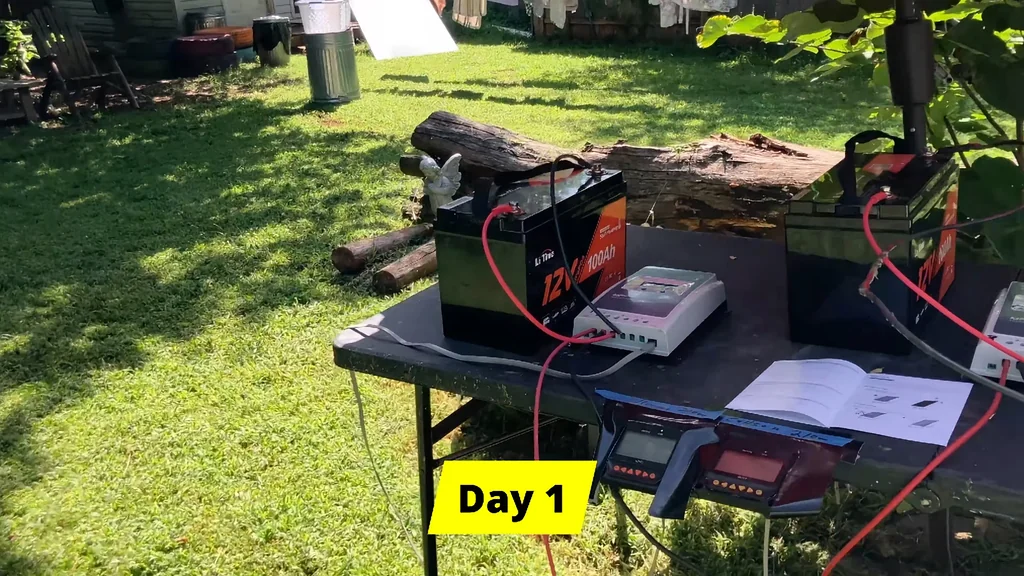
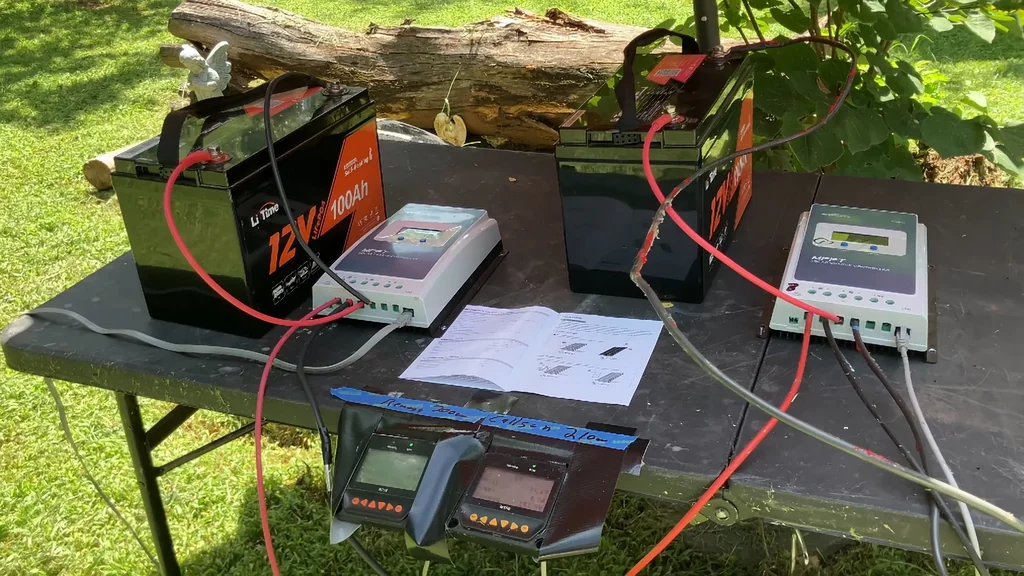
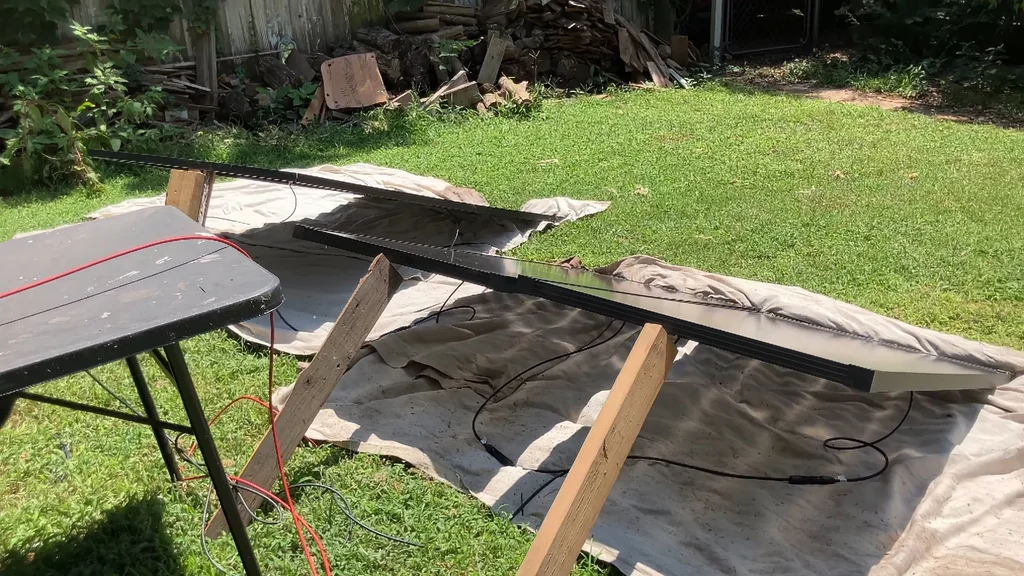
I'm keeping this setup as balanced as humanly possible. I've got both panels sitting out in the grass, ready for the sun to hit them. I'm monitoring everything in real-time on the same screen so there's no guessing. I'm a fan of the CallSun gear, but I'm keeping my bias out of this. I just want to see the numbers. It's all about the data. Let's see if it hits that 210W rating.
Baseline Performance Testing
Check the 11 AM readings. CallSun is pulling 116W while the Renogy sits at 87W. Both are in full, direct sun with zero shade. It's a clear lead for the CallSun. I'm going to track this all day to see if that gap holds up. I even adjusted the tilt of the panels for the late July sun here in Oklahoma. It's working.
Peak Heat Performance Check
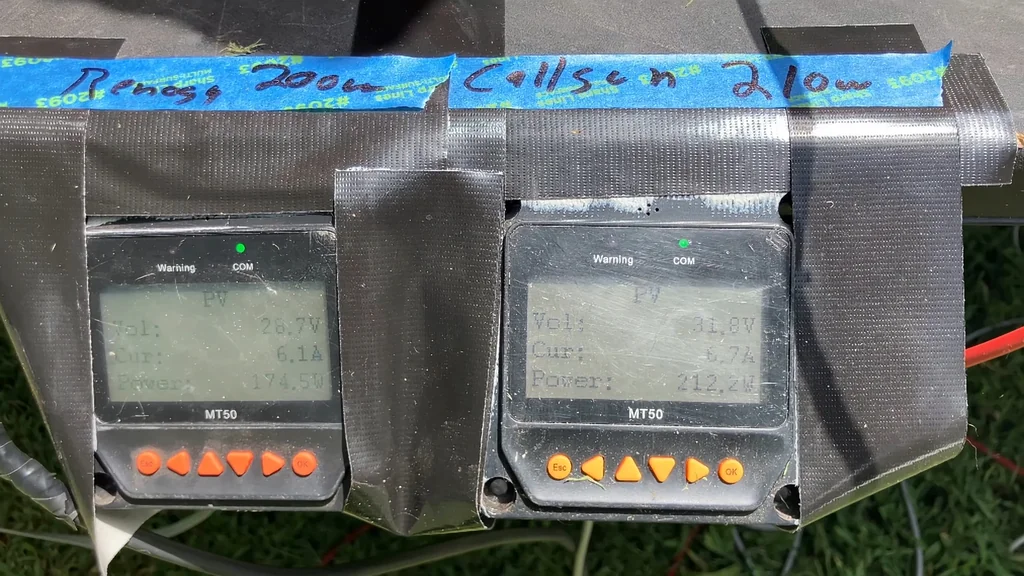
It's 1:30 PM and the heat is brutal. We're looking at 179W for the CallSun and 147W for the Renogy. The air is thick with moisture today, which is definitely killing some of the potential. By 2 PM, the CallSun is pushing over 210W. The Renogy just can't keep up with that pace. It's hot out here. Everything is baking under this sun. The panels are getting dangerously hot to the touch.
Evaluating Daily Energy Yield
Clouds rolled in by 4 PM, so I'm calling it. The CallSun collected 0.73 kWh, while the Renogy managed 0.55 kWh. The performance gap is real. I had to scrap my shade test for today because the weather turned. It's mostly cloudy now. No point in continuing. The data is clear enough for today.
Extreme Heat and Cooling Tests
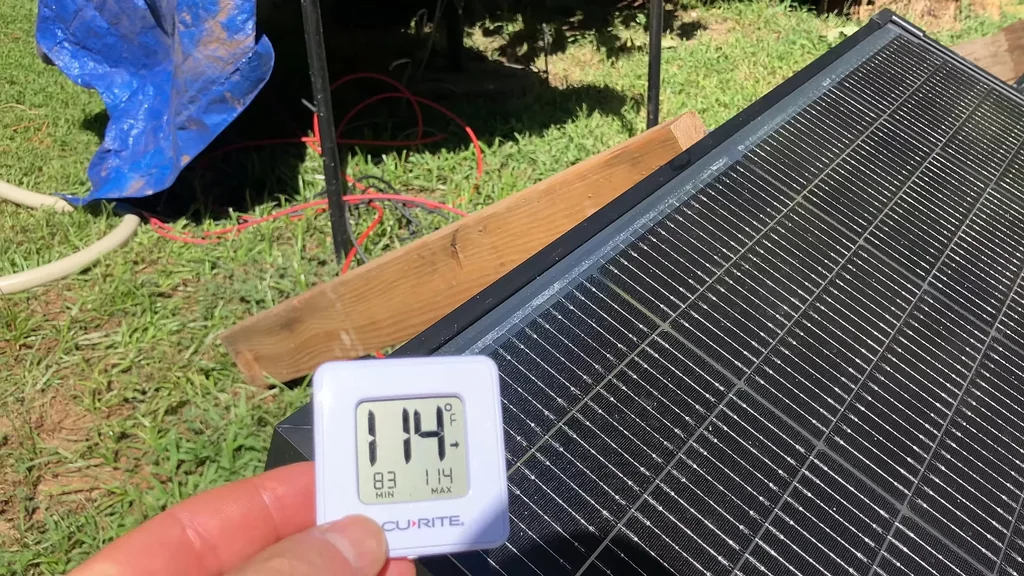
The thermometer hit 114°F on the panel surface. It's melting out here. I had to cover my gear just to keep it from failing. I tried sprinkling water on the panels to cool them down, and the output jumped immediately. Both panels struggled in this heat compared to yesterday. Still, the CallSun stayed in the lead at every single check. It's a tough environment.
Simulating Partial Shading
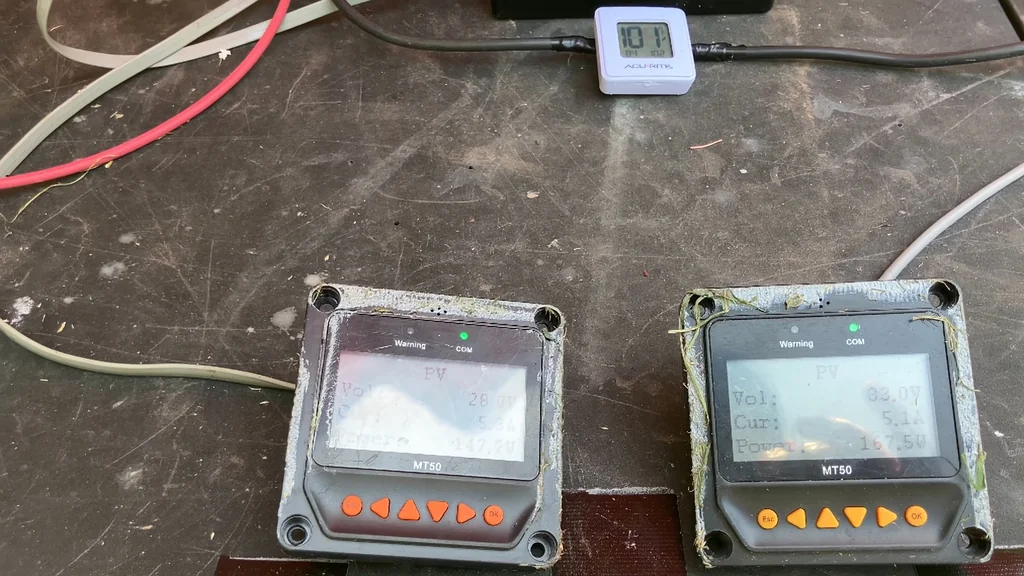
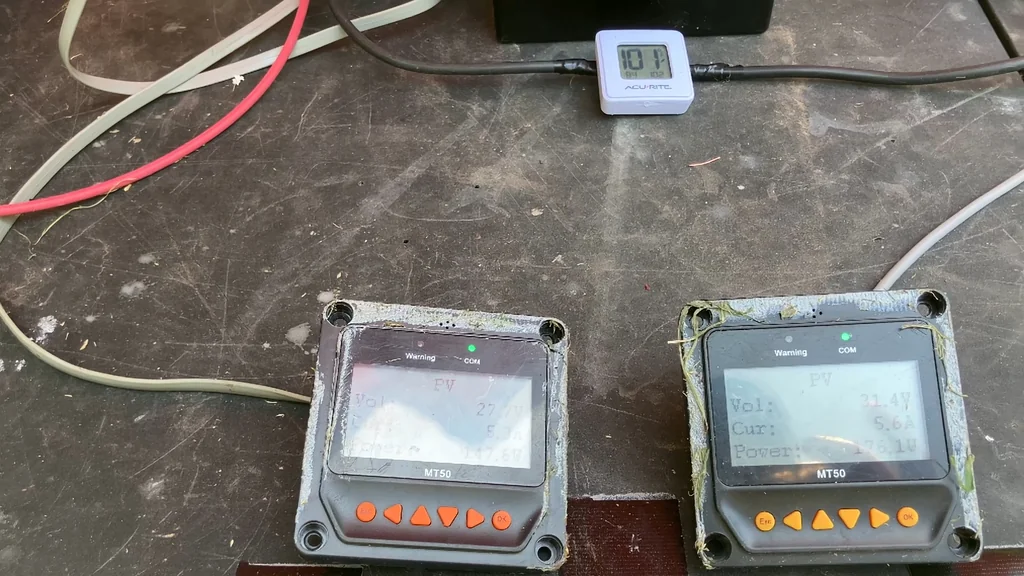
Day three and it's still over 100 degrees. I'm wetting the panels again because it helps with the heat. CallSun is putting out 176W, Renogy is at 148W. Now, I'm having my assistant run a board across the panels to simulate a tree branch. The performance drop is immediate for both. It's a significant hit. Renogy actually handles the shade a bit better in some spots.
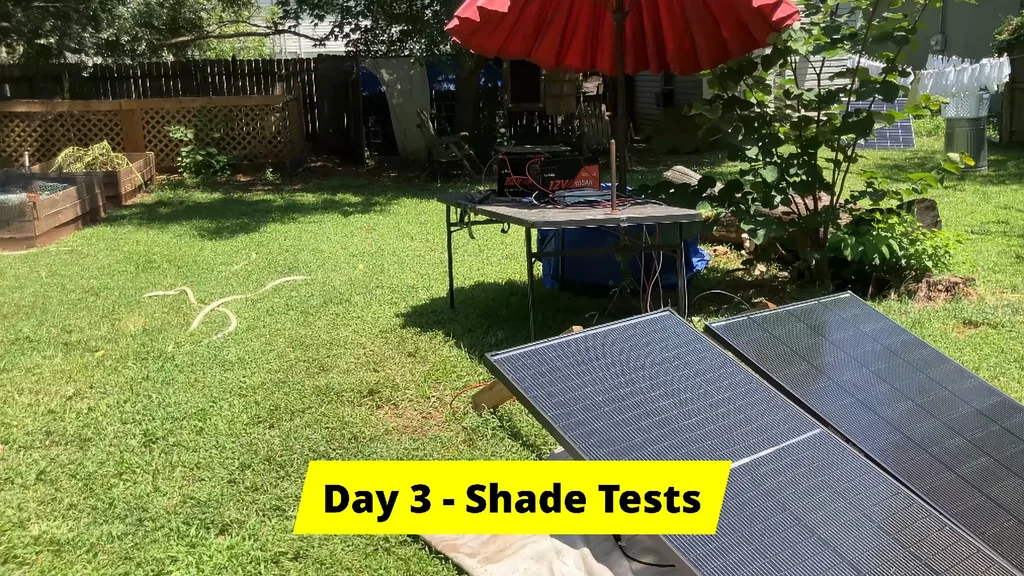
Testing Shade Technology Response
Moving the board around shows the difference in tech. When the board is at the bottom, CallSun likes it. When it's at the top, CallSun still performs better. But put that board right in the middle, and the CallSun output tanks. Renogy isn't affected nearly as much in that specific configuration. It's a trade-off.
Recovery and Peak Solar Output
Removing the board lets them recover. They're almost identical at 135W initially, then CallSun jumps back to 170W. It's 1:30 PM and we're near peak solar. CallSun is consistently producing 30 to 40 watts more than the Renogy. I'm heading inside. It's just too hot to stay out here any longer.
Final Summary of Three-Day Test
Three days of testing and I'm done. I've never tested a panel in 107-degree heat like this. It's brutal. You saw the numbers. The CallSun hit 210W and then some. It outperformed the Renogy in almost every scenario. Plus, the CallSun is cheaper. That's a win in my book. It's a solid piece of kit.
Bonus: CallSun vs. CallSun Comparison
I had an extra CallSun panel and a 450W unit, so I decided to do a bonus test. It's a 450W panel against two 210W panels. The 450W is bigger, but not by much. I'm curious to see how the total wattage stacks up. Let's see what happens. It's an interesting setup.
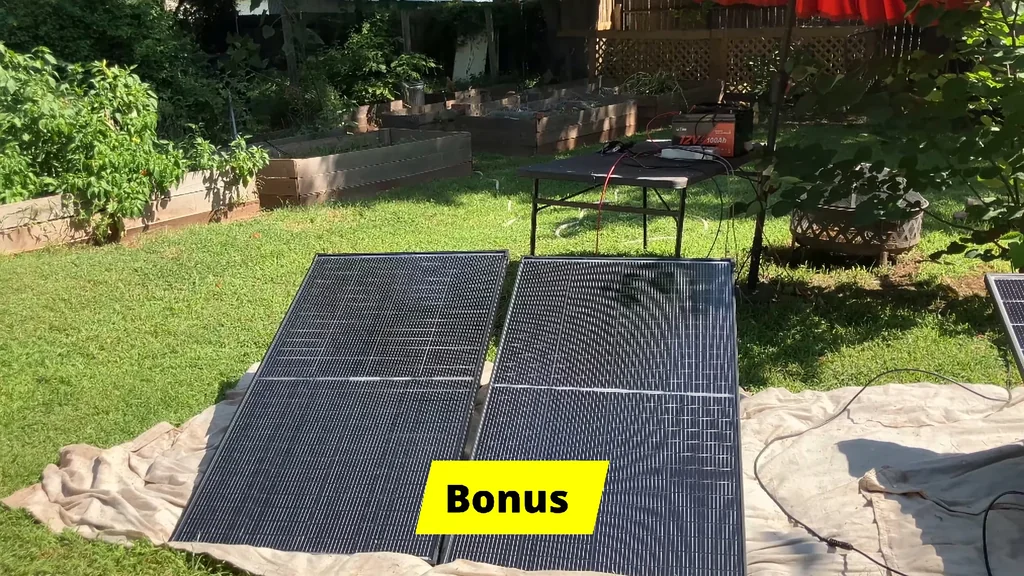
Monitoring Daily Tally
The 450W panel is pulling 362W. The two 210W panels are at 348W. It's cooler today, around 35 degrees Celsius. Humidity is lower too. The results are pretty close. I'll check back in an hour. It's working well.
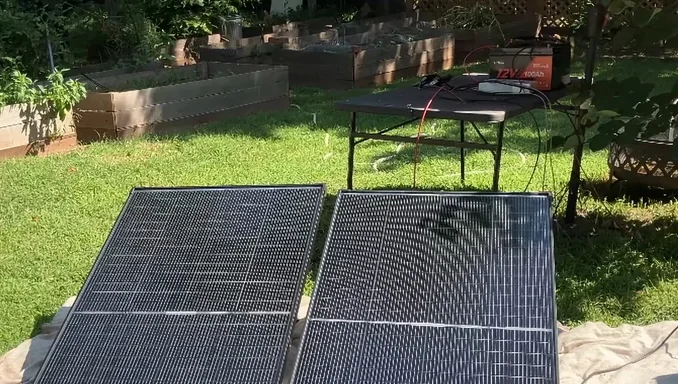
Why Solar Panels Underperform
It's 2 PM and I'm done with the checks. The 450W panel did 365W, and the pair of 210W panels did 357W. They're not far apart. None of them hit full capacity, which is unusual for CallSun. There's always a reason for that. It's rarely just the panel's fault.
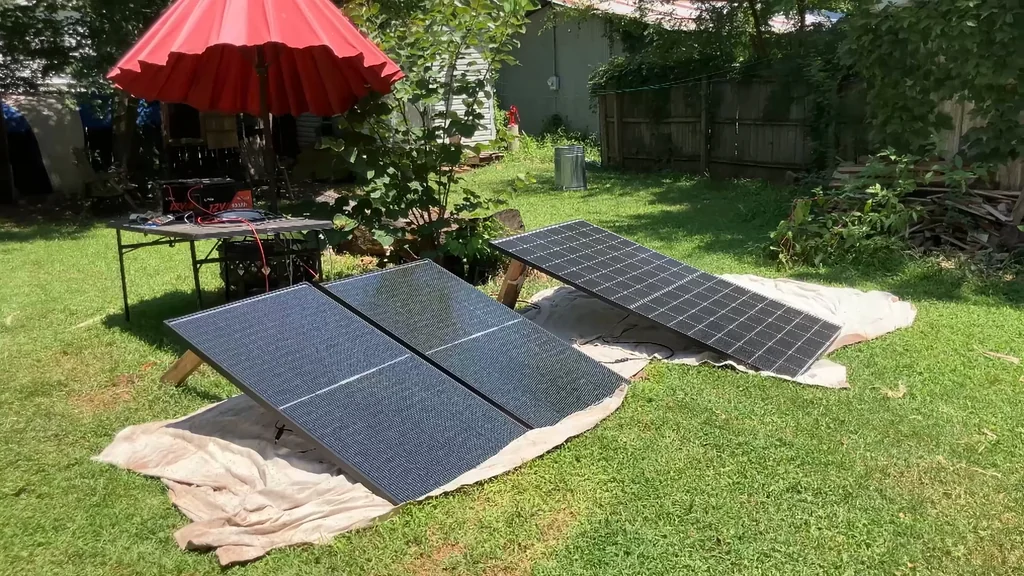
Environmental Factors Affecting Output
Air pollution and forest fire smoke are killing the efficiency. Even if it's clear, that smog settles on the glass. You have to keep them clean. If you don't, you're losing watts. It's that simple. Consider this for any panel you buy. It matters.
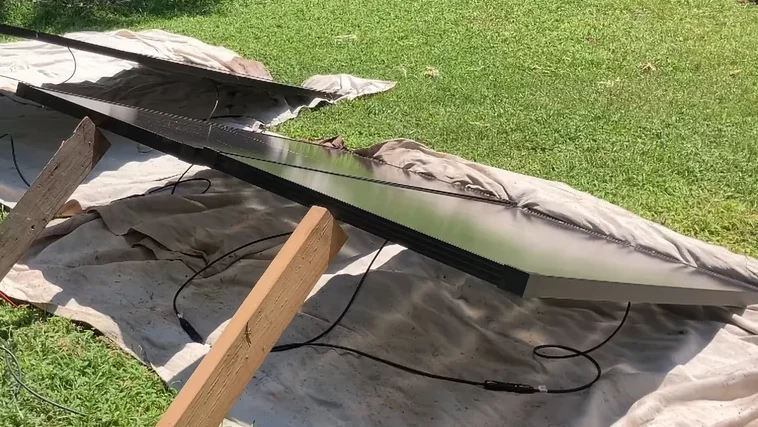
Final Results and Battery Check
The batteries were already full from the testing, so I couldn't get a perfect final tally. They were performing about the same when I checked. That's all I have for this one. Thanks for watching the bonus. We'll talk again soon. It's finished.
⚠️ CAUTION: SAFETY WARNING!
Solar panels can reach extremely high temperatures in direct sun; handle them with gloves to avoid burns. Always disconnect the charge controller before working on the wiring to avoid electrical shorts.
Summary & Tips
The CallSun 210W panel proved itself as a high-performer in extreme heat. While the Renogy has an edge in specific shade scenarios, the CallSun's overall output is hard to beat. Keep your panels clean to ensure you're getting every watt you paid for. Sometimes you save them, sometimes you don't, but data never lies.
📋 FAQ
❓ Does heat really affect solar panel output?
Yeah, it definitely does. High temperatures lower the voltage, which kills your total power output. That's why keeping them cool or ventilated is a big deal.
❓ Is bifacial technology worth the extra cost?
Usually, yes. It captures light from both sides, which gives you a nice boost if you have a reflective surface underneath. It's a smart upgrade for most setups.
❓ Why did the panels perform worse than rated?
Honestly, it's rarely the panel's fault. Things like air pollution, dust, and high humidity block the sun before it even hits the glass. You're almost never going to hit 100% of the STC rating in the real world.
❓ Should I clean my solar panels?
Absolutely. Dust and smog act like a filter that you don't want. A quick wipe down can make a measurable difference in your daily energy harvest.
Disclaimer: I purchased all tools for this guide with my own money to ensure an unbiased review. This post contains affiliate links, meaning I earn a small commission if you make a purchase at no extra cost to you.