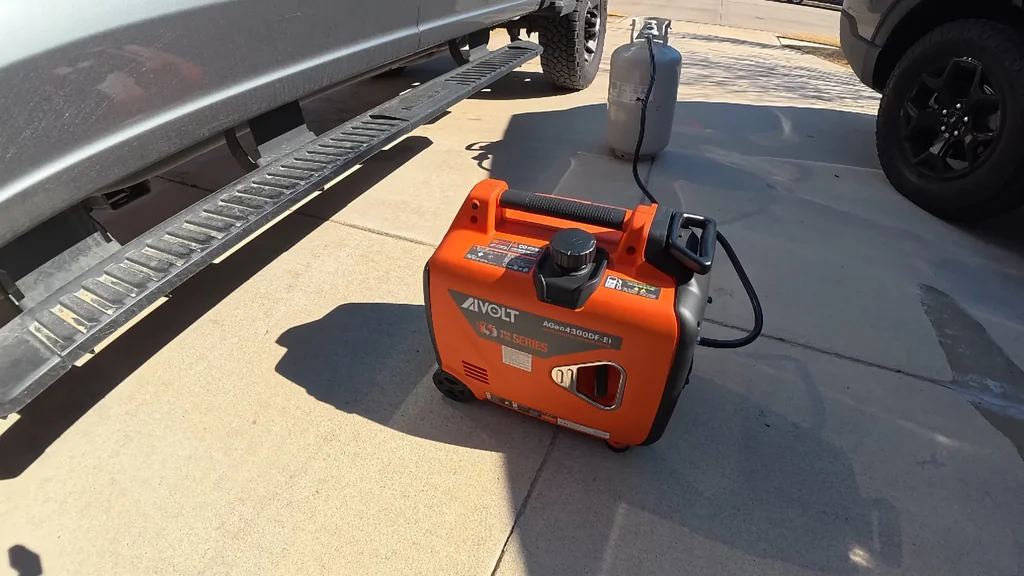
Getting the DuroMax XP13500iHT operational on its maiden start requires fresh oil, clean gasoline, and a thorough mechanical inspection before anyone presses the starter switch. Straight out of the shipping crate, this 13,500 peak-watt tri-fuel inverter is engineered to deliver substantial clean electrical power without the deafening, ear-splitting racket typical of standard contractor-grade open-frame generators. I walked through the fuel selector valve setup, fired up the four-stroke engine, monitored the AC output voltage on the digital display, and verified how the low idle feature alters the baseline operating acoustics under zero load.
⚡ Quick Guide: How to Make It in 8 Steps
- Select gas and set fuel run switch.
- Check idle sound right after cranking.
- Inspect the generator front control panel.
- Check output voltage and digital CO reading.
- Toggle low idle off to check ramp.
- Step back 15 feet for sound check.
- Inspect enclosure footprint and case clearance.
- Plug in shop fan for test load.
📋 In This Article
- Technical Specifications & Components
- Tools & Materials Used — what you will need for this project
- Fuel Selection and Electric Start Procedure
- Initial Acoustic and Idle Assessment
- Standard Run Mode Observation
- Digital Meter and CO Monitor Readings
- Cycling Low Idle Control
- Outdoor Distance Noise Check
- Visual Walk-Around and Frame Inspection
- Preparing Initial Electrical Load Test
- FAQ
📊 Technical Specifications & Components
| Model | DuroMax XP13500iHT |
| Peak Output | 13,500 Watts |
| Fuel Capability | Tri-Fuel (Gasoline, Propane, Natural Gas) |
| Engine Type | 4-Stroke Inverter |
| Measured Initial Voltage | 249V AC |
| Starting Carbon Monoxide Detection | 36 PPM |
| Idle Control | Low Idle Eco Switch |
📊 Project Overview & Costs
🔧 Difficulty Level: Easy / Low complexity
⏱️ Time Investment: DIY: 15-20 minutes | Pro: 5-10 minutes
💰 Professional Service Cost: $75 - $100 baseline technician labor fee
💡 Verdict: Direct on-site mechanical inspection and initial commissioning eliminate standard small-engine diagnostic fees while confirming equipment reliability prior to emergency field deployment.
🛠️ Tools & Materials Used
• Unleaded Gasoline: 87-octane minimum rating, fresh ethanol-free fuel
• Small Engine Motor Oil: SAE 10W-30 four-stroke formulation
• Utility Shop Fan: 120V grounded AC electric motor for inductive load testing
Step-by-Step Guide
Fuel Selection and Electric Start Procedure
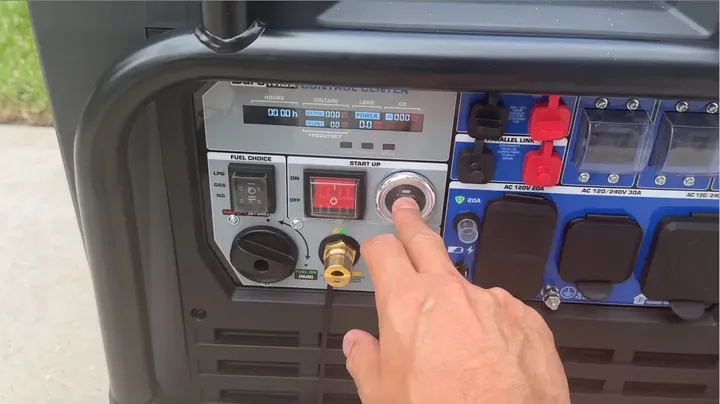
Before turning the starter motor over, I checked the crankcase oil fill level on the dipstick and confirmed there were no liquid leaks around the drain plug or fuel lines. I rotated the front selector dial squarely to the gasoline position. Next, I flipped the switch over to fuel run so the internal electric solenoid valve would energize and clear the fuel line. I pressed the electric starter switch down firmly. The starter motor engaged and turned the flywheel over instantly. The engine caught fire cleanly without coughing, stumbling, or needing any manual choke manipulation.
Initial Acoustic and Idle Assessment
Right after the combustion cycle caught, I leaned in close to evaluate the valvetrain noise and listen to the exhaust tone. The sound profile remained remarkably quiet and controlled for an internal combustion engine carrying this much displacement. No harsh metallic piston slap, rod knock, or uneven RPM hunting occurred in the block. Heavy sound-deadening isolation panels lining the interior of the plastic cabinet absorbed nearly all the mechanical gear clatter. It purred smooth.
Standard Run Mode Observation
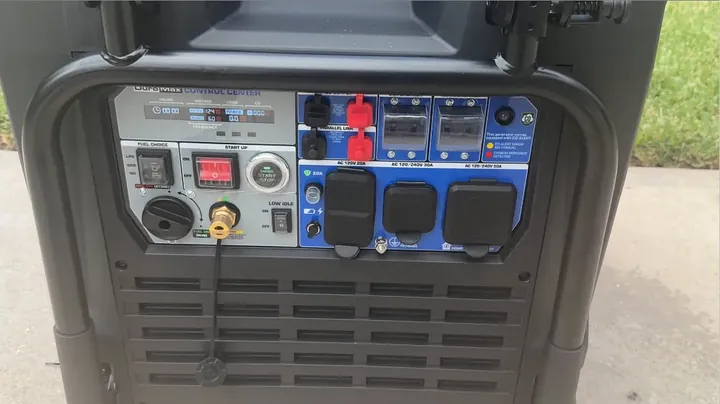
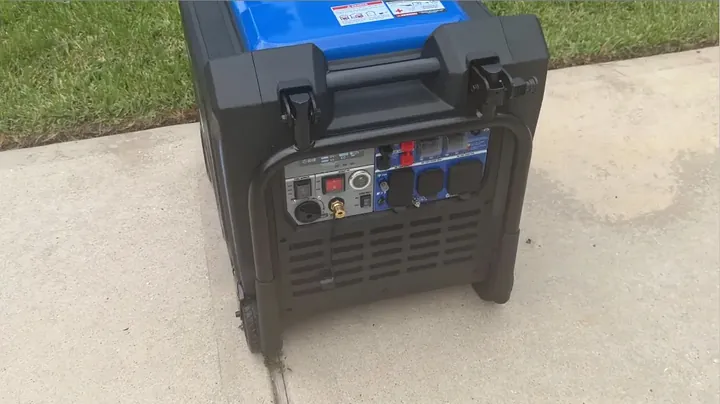
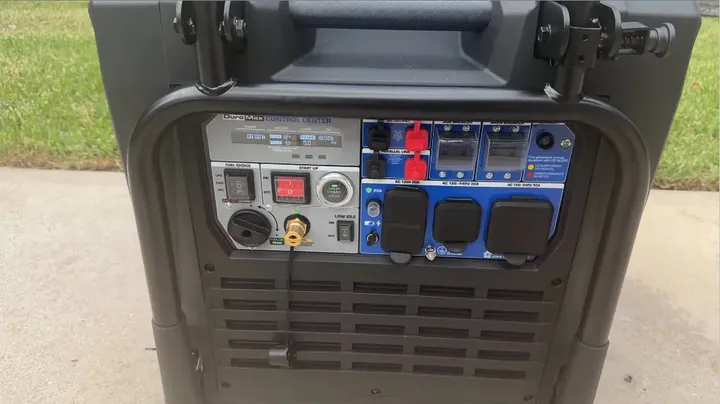
At this stage of the test run, I kept the low idle switch toggled completely off. That forced the internal electronic governor to hold the engine at full standard operating RPM right from the initial crank. I visually scanned across the front instrument cluster to confirm all primary diagnostic and warning lights stayed cleared. The green pilot output status light remained illuminated without triggering any amber overload fault warnings. All systems looked solid.
Digital Meter and CO Monitor Readings
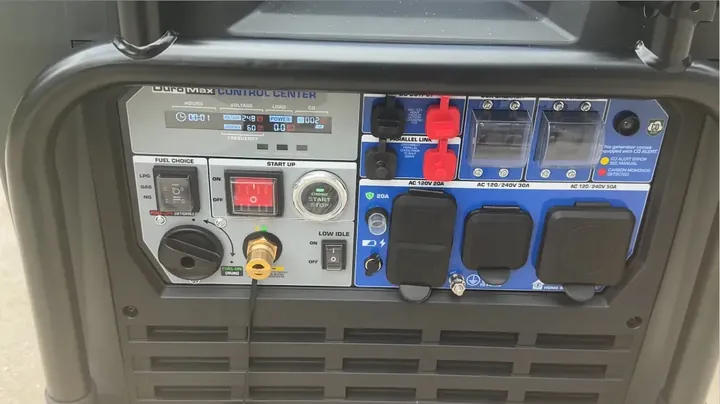
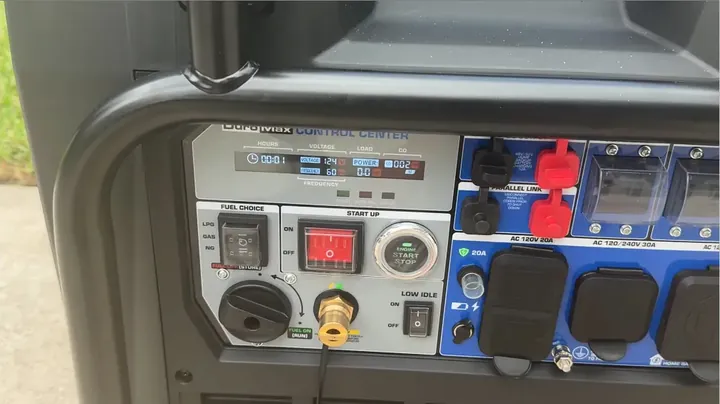
Engaging the low idle toggle switch immediately throttled the engine speed down to an easy, quiet purr. The digital multi-meter display cycled through active run time, showing one minute on the internal clock. Alternator output stabilized firmly at 249 volts with dead-accurate 60 Hz line frequency. Down near the lower frame, the integrated carbon monoxide monitoring sensor registered 36 parts per million in the immediate ambient perimeter. Right on target.
Cycling Low Idle Control
A light breeze picked up across the pavement, and the CO sensor readout dropped rapidly as moving air swept combustion exhaust away from the perimeter frame. Flipping the low idle switch back to the off position commanded the governor to open the throttle plate and wind the engine revs straight back up. I felt the vibration frequency shift subtly through the tubular handles when the throttle bore opened wide. The transition happened seamlessly without the carburetor stumbling or hunting for idle stability. Crisp throttle response.
Outdoor Distance Noise Check
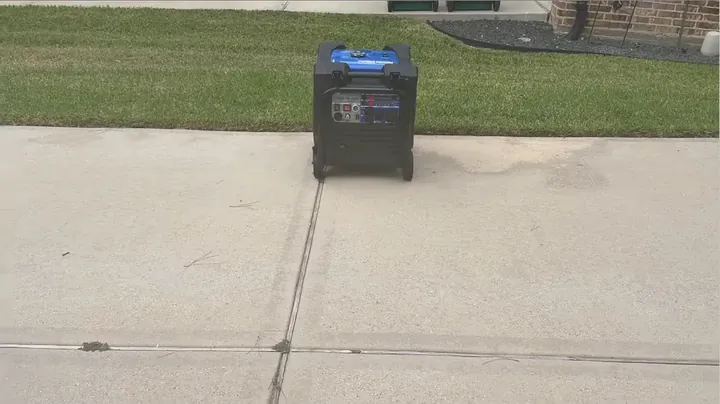
Backing away roughly 10 to 15 feet from the running machine revealed just how thoroughly the plastic casing dampens the exhaust note. At that working distance, the low-frequency mechanical rumble blended straight into the ordinary background neighborhood ambiance. Compared to a standard contractor-style open-frame generator screaming at fixed speed, the sound level reduction is night and day. A person could easily hold a normal conversation right beside the work zone. Excellent acoustic baffling.
Visual Walk-Around and Frame Inspection
Moving back in for a close inspection, the thick polymer outer housing kept hot exhaust shielding and spinning engine parts securely isolated. The physical footprint remains surprisingly compact and manageable for a high-output plant rated at 13,500 peak watts. The heavy plastic eliminates the annoying tinny rattles and buzzing harmonics commonly found on bare tubular steel transport frames. The machine sat firmly on its heavy-duty rubber wheels without wandering across the slick concrete floor. It stayed planted.
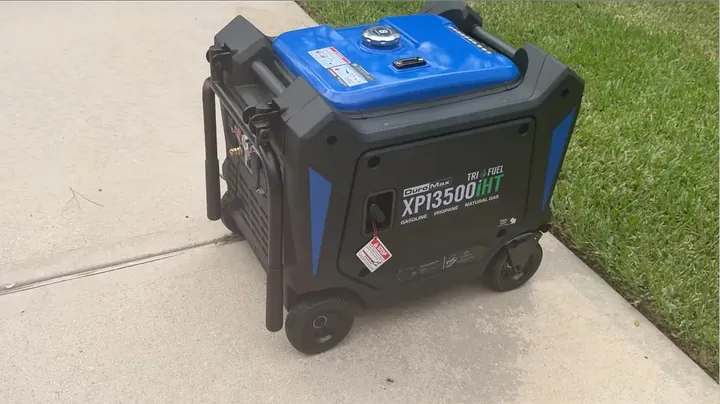
Preparing Initial Electrical Load Test
Running an inverter generator without an electrical draw is fine for a preliminary mechanical health check, but verifying the inverter module requires pulling real current. A standard portable shop fan provides an easy inductive load to confirm real-time power draw on the digital front meter. Reaching across to the main breaker and outlet cluster, I plugged the grounded power cord firmly into the 120V duplex outlet. Time for testing.
⚠️ CAUTION: SAFETY WARNING!
Operating Hazard: Never operate an internal combustion generator inside a home, enclosed workshop, or garage space, because toxic carbon monoxide emissions build to lethal levels within minutes regardless of built-in ambient detection sensors.
Summary & Tips
The initial startup cycle on this dual-fuel inverter confirmed crisp factory carburetor tuning and a steady 249-volt baseline output straight out of the crate. Flipping into low idle mode slashes the acoustic footprint down dramatically, making the unit practical for close-quarters residential power outages. The integrated front-panel carbon monoxide monitor provides an essential safety readout while the engine runs under observation. My next round of garage testing will introduce heavy resistive and inductive loads to measure voltage stability and THD percentages.
📋 FAQ
❓ Why does the voltage read 249V without a load?
Unloaded generator alternating current output typically hovers slightly above nominal 240V specifications to offset transient voltage drop when high-draw inductive equipment energizes. Internal solid-state inverter circuitry actively manages phase output to maintain balanced legs between 120V and 125V across individual split-phase circuits. Introducing an electrical load or transferring power through a residential interlock panel pulls system potential down to standard operating levels. Output variance within this range represents standard factory calibration for large inverter platforms.
❓ What does the low idle mode do on this inverter?
Activation of the low idle system commands the electronic throttle actuator to reduce engine revolutions per minute during periods of minimal electrical draw. Rather than maintaining a continuous 3,600 RPM baseline like conventional mechanical governor systems, the engine modulates operating speed to minimize fuel consumption and suppress operational decibel output. Circuit sensors detect connected electrical loads instantaneously, commanding the servo throttle to increase rotational speed to accommodate inductive current spikes without voltage collapse. Operation in this mode maximizes fuel economy and limits overall mechanical wear on rotating components.
❓ Why does the carbon monoxide reading fluctuate outdoors?
Ambient wind patterns and air turbulence directly influence exhaust gas concentration around chassis-mounted atmospheric monitoring modules. Shifting crosswinds disperse combustion byproduct plumes away from intake vents, reducing measured concentrations from 36 PPM down toward zero. Stagnant atmospheric conditions permit localized accumulation of combustion exhaust near chassis perimeter sensors, resulting in temporary sensor readout elevations. Telemetry fluctuations reflect active detection and continuous sensor sampling of adjacent atmospheric air.
❓ Can this tri-fuel generator run on propane or natural gas immediately?
Multi-fuel operation requires connecting dedicated liquid propane or natural gas regulator lines and rotating the mechanical fuel selector to the corresponding supply port. Initial commissioning utilizes standard unleaded gasoline to establish baseline mechanical verification and assess baseline engine acoustics prior to plumbing external pressurized gas sources. Gaseous fuels exhibit lower energy density than liquid gasoline, producing a predictable derating of peak electrical wattage and requiring circuit capacity recalculations. Proper operational safety protocol mandates line purging and leak detection procedures prior to ignition on pressurized fuel sources.
❓ Is it normal to hear the engine speed change when switching idle modes?
Auditory changes during idle control state changes indicate proper function of the electronic governor and throttle stepper motor. Deactivating low idle commands the throttle assembly to advance engine speed to standard nominal operating RPM, eliminating electrical transition latency under sudden heavy amperage demands. Re-engaging the switch signals the engine management system to restrict throttle plate opening and settle combustion speed back to baseline low idle. Throttle response latency remains minimal during cycling between commanded operational speeds.
Disclaimer: Independent procurement of all testing equipment and evaluation hardware was executed without commercial sponsorship or manufacturer influence to maintain strict testing objectivity. Content includes affiliate tracking links; qualifying acquisitions generate fractional referral commissions without increasing transaction costs for the end purchaser.