I hear plenty of complaints online about DIY CATL battery pack assemblies and their spot-welded bus bars or lack of individual cell serviceability. The reality is simple enough: if I can handle basic shop hand tools, I can modify these factory packs, slice through bus bars, and adapt individual cells for off-grid solar setups without hassle. I’ll break down how these commercial modules are put together and show the proper method I use to teardown the hardware safely.
⚡ Quick Guide: How to Make It in 10 Steps
- Inspect spot-welded module layouts
- Plan cell series string configurations
- Cut inter-cell connections
- Verify aluminum bus bar properties
- Bend bars and drill mounting holes
- Add cells for 48V setups
- Inspect 400A connectors and cooling
- Select pre-built module options
- Strap modules for pallet transport
- Wedge bottom glue loose cleanly
📋 In This Article
- Technical Specifications & Components
- Tools & Materials Used — what you will need for this project
- Inspecting Spot-Welded CATL Modules
- Planning Cell String Configurations
- Cutting Welded Cell Interconnections
- Evaluating Aluminum Bus Bar Properties
- Bending Bus Bars and Drilling Holes
- Configuring 13S Inverter Voltage Setups
- Inspecting 400A Connectors and Cooling Loops
- Reviewing Pre-Built Purchase Options
- Strapping Modules for Pallet Transport
- Wedging Factory Glue Loose Cleanly
- FAQ
📊 Technical Specifications & Components
| Cell Chemistry | LiFePO4 |
| Cell Type | CATL Prismatic |
| Bus Bar Material | Aluminum |
| Connector Rating | 400 Amp |
| Module Voltage Configuration | 13S / 48V setup options |
| Cell Rating | 1C continuous discharge |
📊 Project Overview & Costs
🔧 Difficulty Level: Medium
⏱️ Time Investment: DIY: 3-4 hours | Pro: 1-2 hours
💰 Professional Service Cost: $150
💡 Verdict: Custom module fabrication reduces overall storage expenditure significantly.
🛠️ Tools & Materials Used
• Rotary cutting wheel, abrasive disc
• Non-marring plastic pry wedges
• Material handling forklift, 2000lb+ capacity
DIY Build Walkthrough
Inspecting Spot-Welded CATL Modules
Internet critics constantly write off these CATL packs as useless junk simply because of their factory spot welds. Keyboard experts claim nobody can repurpose the layout once it leaves the plant floor. I see that as a clear lack of hands-on shop experience. Armed with a standard rotary cutting wheel and a hand drill, I modify these assemblies easily. Simple job.

Planning Cell String Configurations
I found that prying individual cells apart from a factory welded string wastes valuable shop time. My solar applications demand fixed series configurations regardless, such as four cells for a 12V bus, eight cells for 24V, or paired eight-cell banks for 48V output. I leave the intact cell blocks connected as complete units wherever possible. Smart choice.

Cutting Welded Cell Interconnections
Doubtful internet users claim a person cannot service a spot-welded battery pack if one cell fails over time. I prove that theory wrong in seconds using an abrasive cutting disc. I slice clean through the bridge tabs, fold the soft metal up out of the way, and isolate whichever sub-assembly needs service. Easy fix.

Evaluating Aluminum Bus Bar Properties
I see forum members complain about aluminum bus bars as if utilizing aluminum violates basic electrical engineering rules. Every commercial prismatic cell anode features an aluminum terminal post by design. Standard residential electrical systems relied on aluminum conductors for many decades safely. Provided the cross-sectional area matches the amperage draw, aluminum carries high continuous current cleanly. No complications. I found these factory aluminum strips bend into position smoothly and accommodate drilled mechanical fasteners without cracking.

Bending Bus Bars and Drilling Holes
Customizing these stock bus bars takes minimal shop effort once I get my layout workflow locked down. I bend the soft aluminum stock into shape, drill precise mounting holes, and bolt standard crimped ring terminals directly to the metal. I installed M5 studs here, whereas factory prismatic cells frequently employ M6 or M8 hardware. Custom fabrication gives me complete flexibility to tap any bolt size needed. Total control.

Configuring 13S Inverter Voltage Setups
I built a 13S configuration yielding roughly 43 nominal volts, which interfaces directly with certain off-grid inverters without altering the original factory cell assembly. To match a conventional 48V inverter bank instead, I simply integrate three additional cells into each series line. I grab my cut-off wheel, vacuum up metal dust, and blast all fine debris out with compressed air before sealing the case. Pure precision.

Inspecting 400A Connectors and Cooling Loops
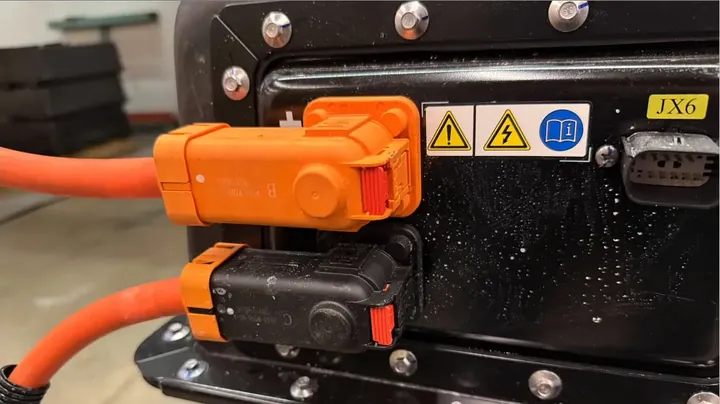
Factory CATL modules incorporate heavy industrial fuses alongside 400-amp quick-disconnect terminals capable of supporting high current discharge. I inspected the integrated liquid cooling loop and quick-connect fittings designed for extreme ambient heat or continuous heavy duty operation. Because these high-grade prismatic units carry a 1C continuous rating, I measure negligible heat buildup under standard bench loads. Solid performance.
Reviewing Pre-Built Purchase Options
Sourcing complete factory modules directly from the supplier yields the lowest cost per unit, bringing expenses down to approximately thirty-eight dollars per cell. Builders who prefer to avoid cutting aluminum or scraping structural adhesive can purchase pre-built enclosed modules built with Grade-A cells. The vendor fully charges and top-balances every block prior to shipment. Plug and play.

Strapping Modules for Pallet Transport
Transporting heavy lithium battery assemblies safely demands proper shop rigging equipment. I loop heavy nylon lifting straps under the module frame before applying hoist tension. I use my shop forklift to transfer the entire load straight onto heavy-duty wood pallets. I cinch tie-down ratchets tightly across the upper casing to prevent shifting during transit. Safety comes first.

Wedging Factory Glue Loose Cleanly
The factory structural glue bonding these prismatic cells to the bottom aluminum tray seems stubborn at first glance, but I break it loose cleanly with the right technique. I drive non-marring plastic wedges down along the side seams and tap them lightly with a hammer until the adhesive bond snaps free. I hoist the cell block straight upward out of the enclosure tray. Clean break.

⚠️ CAUTION: SAFETY WARNING!
High-capacity LiFePO4 battery modules store extreme short-circuit electrical energy capable of vaporizing tools and igniting surrounding materials. Wear rated safety glasses and eliminate metallic debris prior to energizing system.
Summary & Tips
Rebuilding commercial battery modules cuts thousands of dollars off retail off-grid energy storage systems. Solid shop trade skills and careful preparation win out over online critics every single time. I take my time on the bench, torque every bus bar connection twice, and run a reliable custom solar storage rig. Back in business.
📋 FAQ
❓ Can spot-welded CATL battery modules be repurposed for DIY systems?
Yes. Spot-welded bus bar interconnects can be modified or sectioned using standard mechanical cutting tools and hand drills without compromising individual cell stability.
❓ Is aluminum suitable for battery module bus bar interconnections?
Yes. Prismatic cell anode terminals consist of aluminum material; properly dimensioned aluminum bus bars maintain sufficient current-carrying capacity for continuous heavy loads.
❓ What cell series of configurations are suit standard of solar inverters?
Voltage specifications depend on inverter requirements. A 13S layout operates at approximately 43V nominal, whereas standard 48V systems utilize 16S configurations requiring three additional series cells.
❓ Do CATL prismatic modules require active liquid cooling systems?
Active liquid cooling is unnecessary under standard operating conditions. CATL 1C-rated prismatic cells generate minimal thermal resistance under nominal load profiles.
❓ What procedure does the factory release bottom adhesive layer?
Structural adhesive breaks away cleanly by inserting non-marring plastic wedges along side seams and applying mechanical tap pressure until bond adhesion releases.
Disclaimer: All test equipment and modules featured were purchased independently for evaluation. Contains affiliate links yielding compensation upon purchase without end-user cost adjustments.